Eating Healthy but Still Feeling Stiff?
You're eating better.
You're staying active. You've made changes most people haven't.
So why does your body still feel stiff?
If you've ever felt like you're doing everything right—but your joints aren't responding the way you expected—you're not alone.

For many, 'healthy' eating patterns can sometimes mask hidden factors that influence daily mobility.
🪞 When 'Healthy Choices' Don't Feel That Way
You might be choosing:
- Green smoothies
- Nuts and plant-based snacks
- Whole, unprocessed meals
These are all considered healthy habits.
But what if part of the issue isn't what you're doing wrong… but something hidden inside what you're doing right?
🧠 A Lesser-Known Factor: Oxalates
Many healthy foods contain natural compounds called oxalates.
They're not harmful on their own. In fact, they're found in many nutrient-rich foods.
But in some people—especially when eaten frequently—oxalates can:
- bind with minerals like calcium
- accumulate over time
- contribute to sensitivity in joints or tissues
🧩 The Pattern Most People Don't Notice
When you're eating "clean," it's easy to stack the same foods every day without realizing it.
A typical healthy routine might look like this:
Morning
Spinach smoothie
Snack
Almonds or almond butter
Lunch
Sweet potato bowl
Evening
Dark chocolate + tea
Individually, these foods are beneficial.
The Hidden Cumulative Effect:
they may create a cumulative load your body has to process every single day
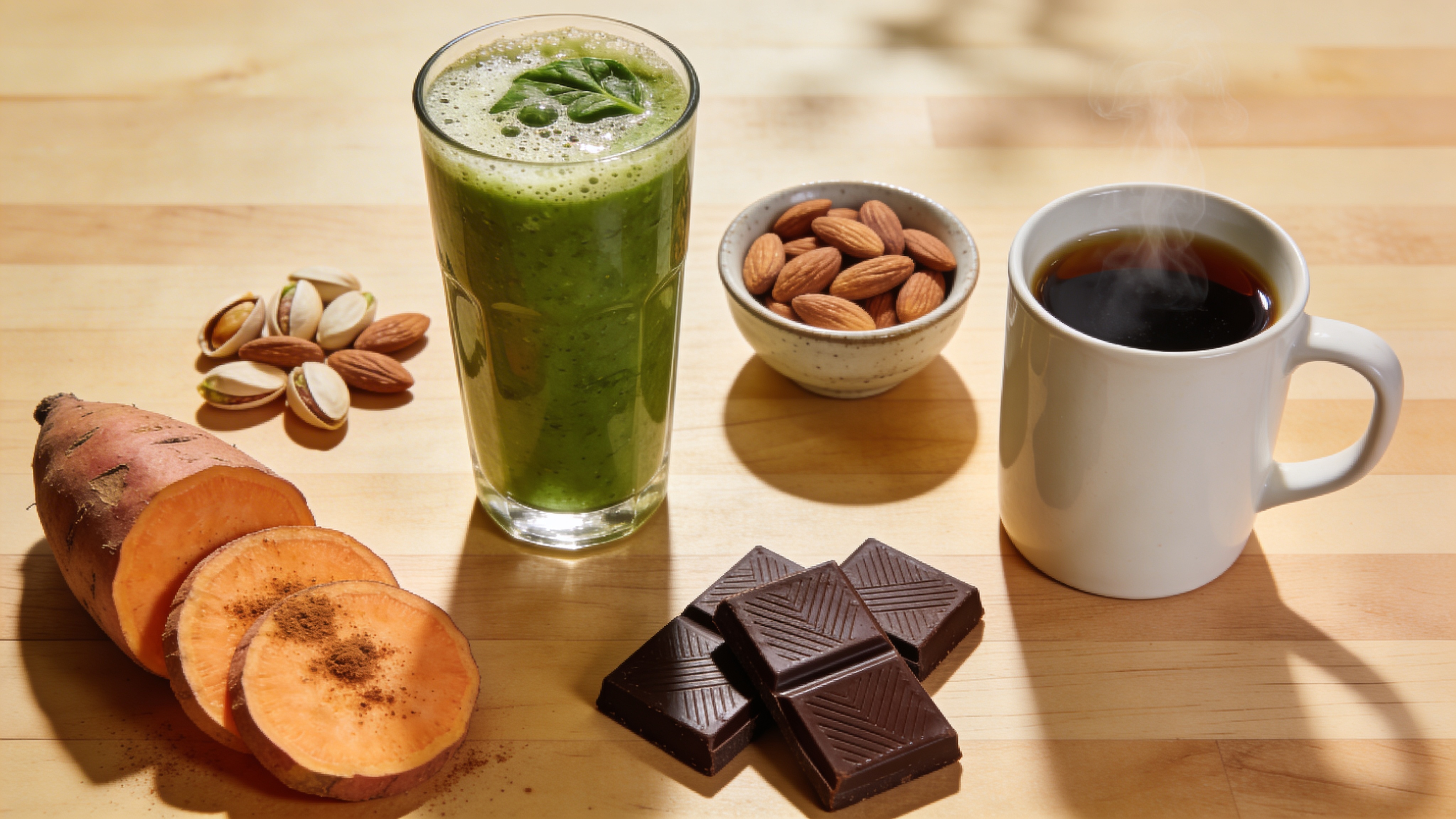
Foods that are otherwise nutrient-dense can contribute to a high oxalate load when consumed in combination daily.
📚 Common 'Healthy Foods' That May Contribute
🥬 Leafy Greens
Spinach, Swiss chard, beet greens
These are extremely high in oxalates. Daily smoothies can quickly stack intake.
🥜 Nuts & Plant-Based Products
Almonds, cashews, almond milk, almond flour
Almonds are one of the most concentrated sources—and easy to overconsume.
🍠 Healthy Staples
Sweet potatoes, quinoa
Nutritious—but when eaten daily, they contribute to the overall pattern.
🍫 Everyday Habits
Dark chocolate, black tea
Small daily habits can quietly add to total intake.

Identifying high-oxalate staples is the first step toward creating a more balanced daily pattern.
✅ It's Not About Eliminating Foods
This isn't about cutting out healthy foods.
It's about understanding that your body responds to: patterns, not just individual choices
- Rotate greens instead of relying on spinach daily
- Reduce frequency of high-oxalate snacks
- Add more variety across your week
🤯 Why This Feels So Confusing
This is where many people get stuck.
You're following the advice you've always heard.
But the issue often comes down to:
- Delayed response → symptoms show up later
- Cumulative effect → it's not one meal, it's repetition
- Conflicting advice → these foods are still considered 'healthy'
"I'm doing everything right… so why don't I feel better?"
🧠 Your Body May Be Responding Differently
Not everyone reacts to oxalates the same way.
Some people tolerate them easily. Others may be more sensitive—especially when intake is consistent and repeated.

Limber Nation Framework
The Walking Mobility Framework
Understand the six pillars of sustainable movement after 50 — including how nutrition patterns, recovery, and daily habits all connect to how your body feels.
🎯 A Simple Next Step
If you've been eating well, staying active… but still feeling stiffness or discomfort— your body may be responding to patterns you haven't noticed yet.
Find Your Walking Pattern