The Limber Nation
Walking Mobility Framework
Understand how walking affects your joints, balance, and recovery — and how to walk in a way that supports long-term mobility after 50.
Free · No login required · Takes 2 minutes
The 3 Things Every Walker Over 50 Should Know
Many adults begin noticing changes in walking comfort after 50, especially during longer walks or on uneven terrain. Understanding the key factors behind walking mobility is the first step toward staying active with confidence.
Walking load matters more than distance
How much impact your joints absorb each step matters more than how far you walk. A shorter, high-quality walk can be more beneficial than a long walk that strains your mechanics.
Joint support affects long-term mobility
The knees and hips absorb thousands of impacts per walk. Supporting them wisely with the right tools and awareness helps maintain mobility for years to come.
Recovery determines how well your body adapts
Without adequate recovery, walking can strain rather than strengthen. Recovery isn't a break from walking — it's an essential part of the walking routine.
Below is the full mobility walking framework.
Quick Self-Check for Walkers
Take a moment and consider these simple questions about your walking routine.
- 1Do your knees feel stiff after longer walks?
- 2Do hills or stairs cause hip discomfort?
- 3Does recovery take longer than it used to?
- 4Do your feet feel fatigued during longer walks?
If you answered yes to any of these, your walking pattern may be placing extra strain on certain joints. Understanding how your body adapts to walking is the first step toward improving long-term mobility.
Find out which of the 4 walking patterns fits you.
Find Your Walking PatternFree · 2 minutes · No login required
The Walking Comfort Guide
Download our free guide with 7 practical, simple tips for adults 50+ who want to walk farther and feel better.
Start Here Based On Your Situation
Not sure where to begin? Choose the challenge that sounds most like you.
The Limber Nation Mobility Walking Framework
Walking mobility depends on several interconnected factors. The Limber Nation framework organizes them into six pillars.
Sustainable walking after 50 involves six interconnected factors — each one plays a critical role in how your body moves, feels, and recovers. When these pillars are balanced, walking feels easier and more sustainable.
Finding the balance between too much strain and not enough movement for joint health.
Understanding how the knees and hips manage impact and where they need extra help.
Improving your body's awareness and confidence on uneven terrain to prevent slips.
The active habits that allow your muscles and joints to bounce back after activity.
Selecting shoes and supportive aids that align with your specific walking mechanics.
Supporting blood flow and reducing leg fatigue to help your body recover and stay ready for your next walk.
Walking Load, Endurance & Recovery: How They Work Together
These three factors form the core of sustainable walking after 50. Understanding how they interact helps you walk more, feel better, and recover faster.
Walking Load
What it is
The total stress placed on your joints, muscles, and soft tissue with each step and over the course of a walk.
Why it matters
Too much load without adequate preparation leads to soreness and fatigue. Too little means your body doesn't adapt and get stronger.
"Load isn't just about distance — pace, terrain, and footwear all affect how much stress each step creates."
Endurance
What it is
Your body's ability to sustain walking effort over time without breaking down.
Why it matters
Walking endurance after 50 is built gradually. Pushing too hard too soon increases injury risk; gradual progression keeps it sustainable.
"Endurance isn't just cardio fitness — it includes how well your joints, posture, and mechanics hold up over a longer walk."
Recovery
What it is
The process by which your muscles, joints, and circulation bounce back after a walk.
Why it matters
Recovery determines whether walking strengthens you or strains you. It's not a break from the routine — it's part of the routine.
"Poor recovery is one of the most common reasons adults over 50 slow down or stop walking — not the walk itself."
The Connection
Walking load tells you how much your body is doing. Endurance tells you how long it can keep going. Recovery tells you how well it bounces back. Together, they determine how walking affects your long-term mobility.
Walking Support & Mobility Tools
The right tools make a real difference. Here are the best-reviewed guides for walkers over 50.
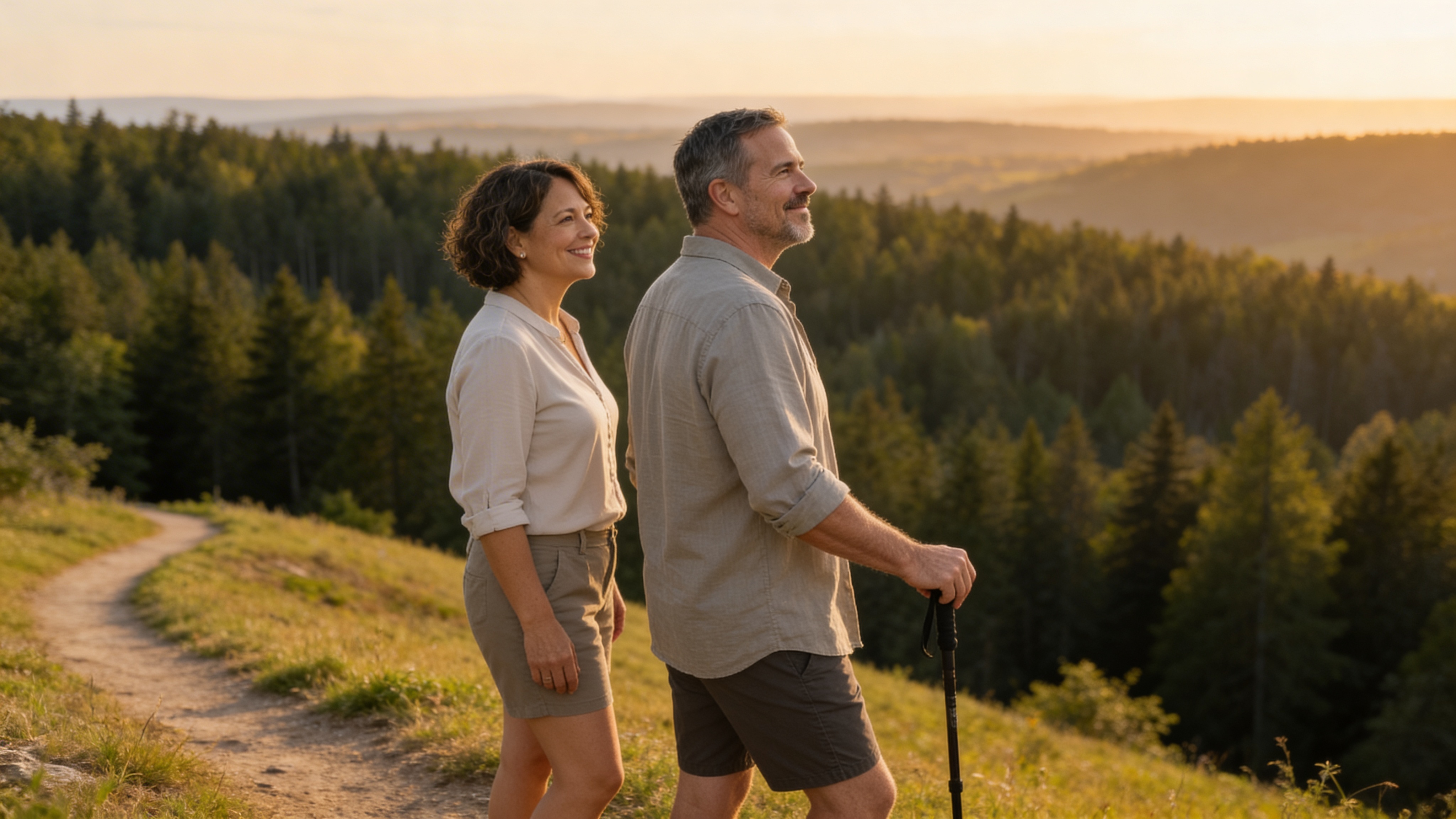
Understanding which walking pattern fits you is the first step toward walking more comfortably.
The 4 Walking Patterns
Most walkers over 50 naturally fall into one of four patterns. Knowing yours helps you find the right adjustments — and avoid the wrong ones.
High Load Walkers
- You walk longer distances — and feel it
- Fatigue builds late in the walk
- Sore feet or legs after longer sessions
Joint Sensitivity Walkers
- Knees or hips let you know they're there
- Stiffness during or after walking
- Discomfort on hills or stairs
Stability-Focused Walkers
- Balance and confidence on varied terrain matter most
- Uneven ground feels harder than it used to
- Prefer cautious or slower pace
Focus
Stability, support tools, and building walking confidence.
See Balance Aids Best Walking Shoes for Support →Recovery-Focused Walkers
- You feel it the day after more than during
- Tight muscles after walking sessions
- Slow recovery between walks
Focus
Supporting recovery so your body bounces back ready.
See Recovery Tools Best Compression Socks →Which of the 4 patterns sounds most like you?
Most walkers recognize themselves in one of these patterns right away. If you're not sure, find Your Walking Pattern identifies where you are — and what to focus on first.
Find Your Walking PatternFree · 2 minutes · No login required
Most Common Walking Challenges for Adults Over 50
These are the walking challenges most commonly reported by adults over 50. Each one has distinct patterns and proven solutions worth understanding to keep your routine enjoyable and your joint support for walking effective.
Why Knees Hurt When Walking
Knee pain while walking is often caused by something above or below the knee — not just the joint itself. Learn the real patterns behind it.
Read: Why Knees Hurt When WalkingWhy Legs Feel Heavy When Walking
Heavy or tired legs during a walk are often a sign of poor circulation, weak hip drive, or recovery issues — not just lack of fitness.
Read: Why Legs Feel Heavy When WalkingWalking Slower Than You Used To
Slowing down with age isn't inevitable. Stride length, hip mobility, and balance all play a role — and most are improvable.
Read: Walking Slower Than You Used ToFeet Hurt After Walking
Foot pain after a walk usually starts above the feet. Tight calves, poor footwear, and walking pattern all contribute to how your feet feel.
Read: Feet Hurt After WalkingBalance Getting Worse When Walking
Balance problems while walking often start in the hips and ankles — not the feet. Understanding the movement chain is the key to improving confidence.
Read: Balance Getting Worse When WalkingHow to Walk Longer Without Getting Tired
Walking endurance isn't just about fitness. Load management, joint mechanics, and recovery habits all determine how far you can comfortably walk.
Read: How to Walk Longer Without Getting TiredWalking Posture Problems
Poor posture while walking is usually a movement problem — not a willpower problem. Learn what actually causes it and what helps.
Read: Walking Posture ProblemsCompression Socks for Walking
Compression socks can help with leg fatigue and swelling — but they work best when your walking pattern is also working well. Here's the full picture.
Read: Compression Socks for WalkingFeet Swell When Walking
Foot and ankle swelling during or after walking is often related to circulation, walking duration, and how well your legs pump fluid back. Learn what's behind it.
Read: Feet Swell When WalkingLower Legs Ache After Walking
Lower leg aching is usually a walking mechanics problem — not just a leg problem. The calves and shins often work too hard when other parts of the walking chain aren't doing their share.
Read: Lower Legs Ache After WalkingMost Popular Walking Guides
The most-read guides for walkers over 50 — from shoes to recovery.
Explore Our Resource Hubs
Each hub organizes all of our guides and articles into one easy-to-navigate page. Start with the hub that matches your current focus.
Walking Problems Hub
Find articles on every common walking problem — from heavy legs to knee pain to balance issues.
Explore HubWalking Gear Hub
Shoes, insoles, braces, poles, and more — all the gear guides in one place.
Explore HubRecovery Tools Hub
Compression, red light therapy, and recovery tools to help you bounce back faster.
Explore HubMobility Tools Hub
Stability aids, joint support, and footwear guides for walkers who need extra support.
Explore HubReady to Find Your Walking Pattern?
Take the free 2-minute mobility assessment to discover your walking pattern and get personalized recommendations.
Free · 2 minutes · No login required