Cheap vs Premium Compression Socks: What Older Walkers Should Know Before Buying
If you've ever browsed for compression socks, you've likely seen the shock: one pair on Amazon costs $15, while a premium brand costs $60. Is there really a $45 difference in how they squeeze your legs?
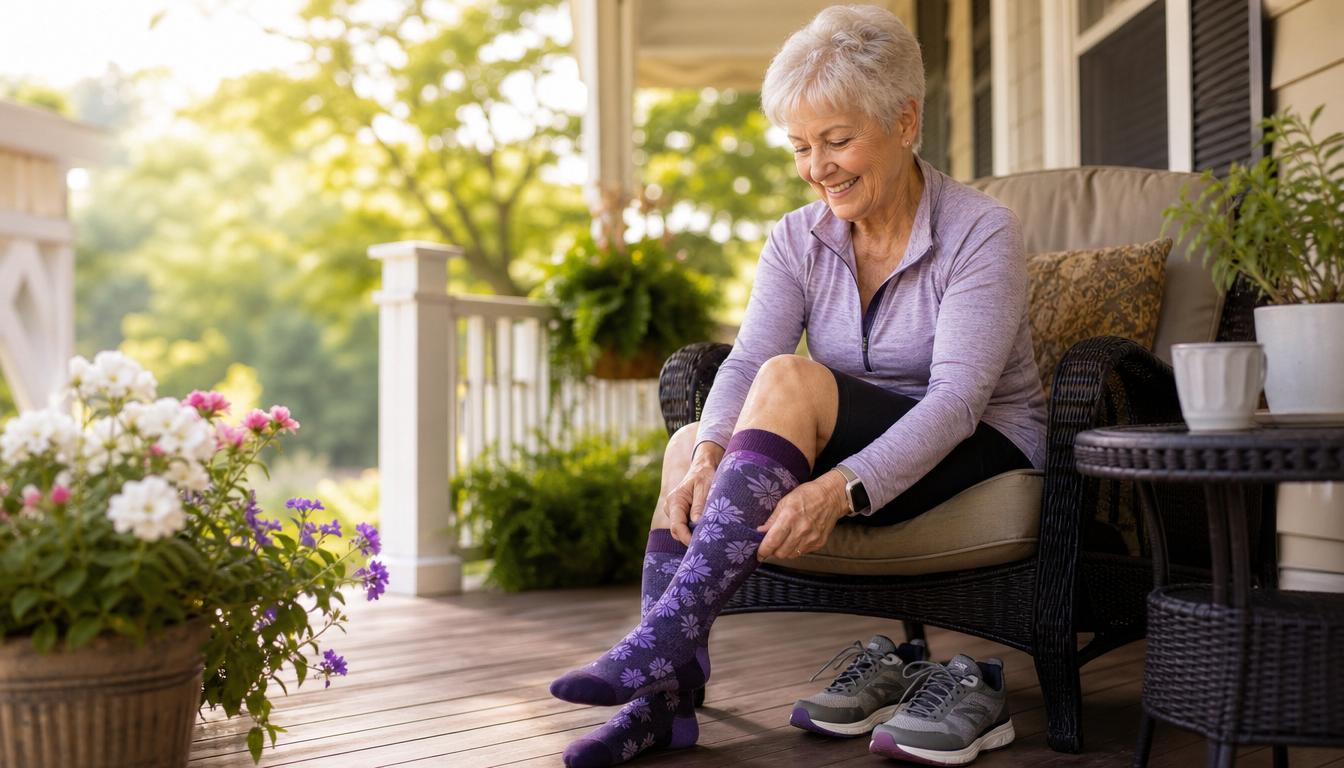
"Why would I spend $50 on one pair when I can get a pack of six for the same price?"
It's a fair question. When you're managing feet swelling after walking or trying to keep your legs from feeling like lead, the price tag on premium compression can feel like a typo.
But here's the reality: the difference isn't just "better compression." In fact, compression quality itself is often comparable between mid-range and high-end pairs. The real difference—the one that determines whether those socks help you walk further or end up forgotten in the back of your drawer—is comfort, materials, and durability.
In this guide, we'll look past the marketing hype to help you understand exactly what you're paying for, when it makes sense to invest, and when a budget pair is perfectly fine.
What Actually Makes Compression Socks Work?
To understand the price difference, we first have to understand what a compression sock actually is. It isn't just a tight sock; it's a piece of graduated compression engineering.
Graduated compression means the sock is tightest at the ankle and gradually loosens as it moves up the leg. This specific pressure profile helps your veins push blood back toward your heart, reducing the fluid buildup that causes feet swelling after walking or that heavy, aching feeling in your calves.
The Fabric "Secret"
Many people believe premium socks use "better" compression fabrics. In reality, virtually every compression sock—from $10 to $100—uses a blend of nylon and elastane (like Spandex or Lycra). Compression comes from the way these fibers are knitted, not the fibers themselves. Be wary of claims that natural fibers like cotton or wool create the compression; they are almost always "plated" over a synthetic core that does the heavy lifting.
Where Premium Socks Really Earn Their Price
If the compression mechanism is similar, why the higher price? Premium brands invest in three key areas that matter most for long-term use:
Brands like Sockwell and Bauerfeind are where these three investments become obvious. Sockwell's merino wool plating makes the premium feel immediate on your skin, while Bauerfeind's knit precision is why their socks hold medical-grade pressure after a hundred washes.
- Precision Knitting: Better machines create a smoother gradient with fewer 'hot spots' that can pinch or dig into your skin.
- Consistency: Premium socks maintain their exact pressure level for 6-12 months of daily washing. Cheap pairs often lose their 'squeeze' after 10 washes.
- Material Quality: This is the biggest factor. Higher-end socks use finer yarns that feel softer and regulate temperature better.
"The best compression sock is the one you actually wear."
Premium construction reduces bunching at the ankle and behind the knee—two of the most common reasons walkers stop wearing their socks mid-way through a vacation.
Why Materials Matter More After Age 65
When you're 25 and wearing compression for athletic recovery, a bit of itchiness or heat is a minor annoyance. For older walkers, these "minor" issues can become deal-breakers.
As we age, our skin naturally becomes thinner and more sensitive. Dry skin is more common, and our bodies' ability to regulate temperature through our extremities changes. This makes merino wool compression socks or high-end synthetic blends significantly more valuable than the basic polyester found in budget packs.
| Material Type | Comfort & Skin Feel | Breathability | Moisture & Odor | Best Use Case |
|---|---|---|---|---|
| Polyester Synthetic | Can be scratchy; prone to 'itching' | Low; can feel hot and sweaty | Poor; holds onto odors | Short periods; tight budgets |
| Cotton Blends | Soft initially; gets rough over time | Medium | Absorbs moisture; slow to dry | Casual daily wear; cool weather |
| Merino Wool | Very soft; ideal for sensitive skin | High; excellent temp regulation | Naturally odor resistant; wicks sweat | Daily walking; all seasons |
| Alpaca Wool | Luxuriously soft; hypoallergenic | Excellent; very lightweight | Highly breathable and dry | Premium comfort; sensitive feet |
Two Premium Brands Worth Considering
After testing dozens of pairs, walkers over 60 keep coming back to two names for completely different reasons. One wins on everyday comfort. The other wins on medical-grade performance. Here is how to decide between them.
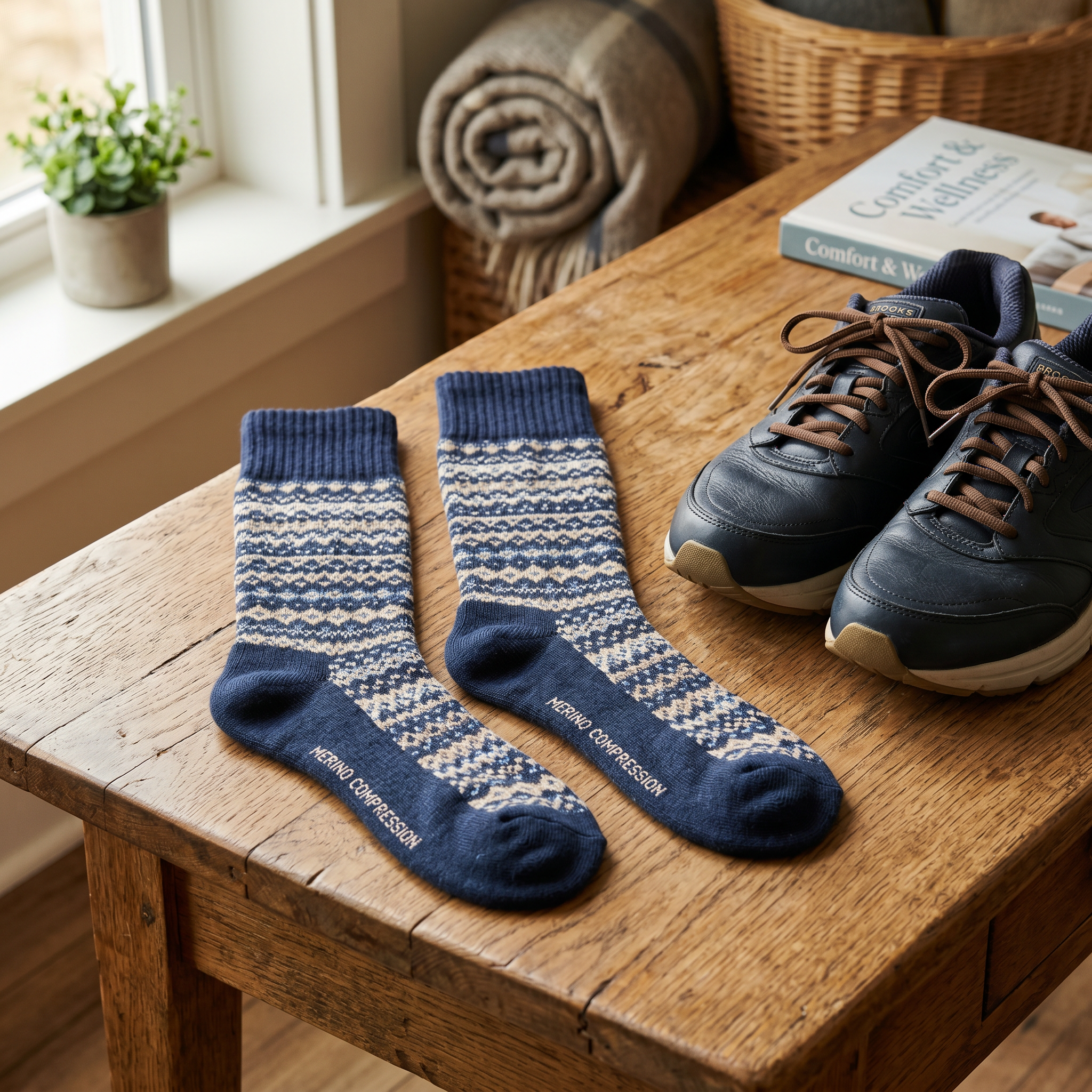
Sockwell
Comfort-First Everyday Walking
Sockwell plates ultra-fine merino wool and alpaca over a synthetic compression core. You feel cozy, breathable softness against your skin, but the graduated squeeze underneath is still doing the work.
Natural temperature magic
Cool in summer, warm in winter — merino regulates without feeling damp or clammy.
Sensitive-skin approved
Seamless toe, non-binding top, and no itchy synthetics rubbing all day.
Doesn't look medical
Beautiful knits and colors you actually want to wear with walking shoes.
Choose Sockwell if: You want a sock you will actually wear for hours — on daily walks, errands, and travel — because it feels like a favorite cozy sock, not a medical device.
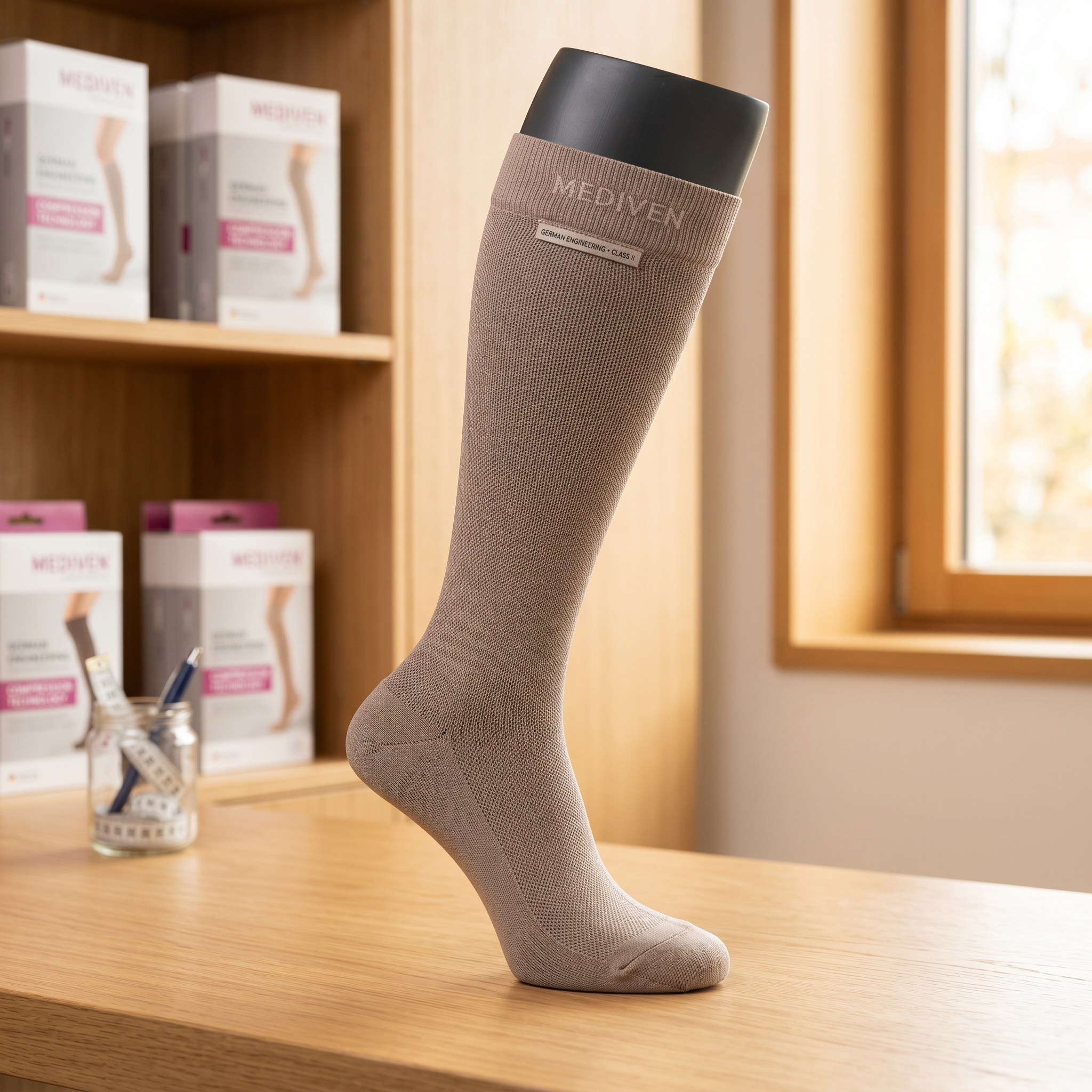
Bauerfeind
Clinical Precision for Persistent Issues
Made in Germany to medical-device standards, Bauerfeind focuses on one thing: exact, measurable pressure that holds its rating wash after wash — precisely where swelling needs it most.
Surgical-precision gradient
Tightest at the ankle, measured release up the calf — verified compression levels, not approximate.
Anatomical left/right fit
True left and right shaping plus reinforced Achilles and arch zones for stable support.
Built for the long haul
Holds medical-grade pressure after 100+ washes — the lowest cost per wear for daily use.
Choose Bauerfeind if: You deal with persistent swelling, varicose veins, or have been told to wear daily graduated compression and need durability and exact pressure you can trust.
Both brands solve the same core problem — heavy, swollen legs after walking — but they solve it for different people. Sockwell wins when comfort determines whether you wear them at all. Bauerfeind wins when clinical consistency matters most. Many of our readers own one pair of each.
Why Cheap Socks Often End Up in the Drawer
We aren't here to bash budget brands. For some people, they work fine. But for the majority of our readers, the "Amazon special" pack usually ends up tucked away because of three common frustrations.
The 'Swamp Foot' Effect
Budget socks often use high-denier polyester. This traps heat, leading to sweaty feet and, eventually, itching. For older walkers, this can irritate dry skin and make the socks unbearable after just two hours.
The 'Tourniquet' Band
Cheap manufacturing often results in a top band that is too tight or too narrow. Instead of a gentle hold, it can feel like a rubber band cutting into your calf, which is exactly the opposite of the circulation support you need.
The Disappearing Squeeze
After 10 or 15 washes, inexpensive socks often lose their shape. You might put them on and realize they feel like regular tube socks, providing zero therapeutic benefit for heavy legs or swelling.
A Common Walker's Scenario
Imagine you're on a walking vacation. You're exploring a new city, on your feet for six hours. About three hours in, you realize your budget socks are bunching at your ankle and your shins are starting to itch.
You stop in a coffee shop, not to rest your legs, but to find a bathroom where you can pull the socks off. This is the "ownership experience" that premium socks aim to eliminate.
When is "Premium" Actually Worth It?
You don't always need to spend $60 on a pair of socks. Let's be honest about when the budget option is enough and when the investment pays off.
When Budget Socks Are Enough
If you're in one of these situations, go ahead and start with an inexpensive pair. There's no need to overspend if your needs are temporary or low-intensity.
- You're trying compression for the first time and aren't sure if you'll like it.
- You only need them for a single short flight (under 3 hours).
- You have zero skin sensitivity and don't mind synthetic fabrics.
- You only plan to wear them for 1-2 hours of targeted recovery after a walk.
Tip: If you go budget, look for 'graduated' in the description and read reviews specifically mentioning the top band comfort.
When Premium is Worth Every Dollar
If compression is part of your daily health routine, the "cost per wear" of a premium pair is often lower than budget options that need replacing monthly.
- You are a daily walker who wants to prevent leg fatigue and aching.
- You struggle with persistent feet swelling after walking.
- You have thin, dry, or sensitive skin that reacts to rough fabrics.
- You are planning a walking vacation with long days on your feet.
- You want a pair that will last 50+ washes without losing compression.
The Longevity Math
A $60 pair of Sockwells or Bauerfeinds typically lasts 8-10 months of regular use. A $15 pair often fails after 2 months. Over a year, the investment actually levels out—but the comfort is worlds apart.
Not sure what your legs are telling you?
Choosing between budget and premium socks gets a lot easier when you understand your own walking pattern. Our free mobility assessment helps you see whether swelling, endurance, balance, or walking confidence is the real thing to address first.
Free, simple, and designed for older walkers.
Our Two Recommended Premium Brands
We've tested dozens of brands. For older walkers, two brands consistently rise to the top for very different reasons.
The Merino Wool Masterpiece
Sockwell has become the "gold standard" for our readers for one reason: Comfort. By plating fine merino wool and alpaca fibers over a compression core, they've created a sock that feels like a cozy sweater but works like a medical device.
- Natural temperature regulation (cool in summer, warm in winter)
- Odor-resistant and moisture-wicking natural fibers
- Beautiful patterns that don't look like 'medical' socks
- Seamless toe closure to prevent rubbing on daily walks
The Clinical Heritage of Germany
If you struggle with mild venous discomfort or persistent swelling that doesn't go away with rest, Bauerfeind is the investment you need. Their German-engineered micro-knit provides a more intense, surgical-precision gradient.
- Highly accurate graduated compression levels
- Exceptional durability (retains pressure after 100+ washes)
- Anatomical fit with specific left and right foot shaping
- Reinforced zones to support the Achilles and arch
The 10-Second Buying Decision
Choose Sockwell If...
You want comfortable, breathable socks for daily walking, travel, or standing that look like normal socks but keep your legs fresh.
Choose Bauerfeind If...
You have clinical swelling, varicose veins, or need the absolute highest level of medical precision and long-term durability.
Final Thoughts for the Active Walker
At the end of the day, the best compression sock isn't necessarily the one with the highest price tag or the most advanced technology.
The best sock is the one you actually wear.
If a $15 pair from Amazon feels great and helps you stay active, then it's a win. But if you find yourself leaving your socks in the drawer because they're too hot, too itchy, or too hard to put on, we encourage you to try a premium pair.
Invest in your comfort, protect your skin, and keep those daily walks enjoyable. You've earned the right to have gear that works with you, not against you.
Continue Your Mobility Journey
Heads up:
Some links on this page are affiliate links. If you click through and make a purchase, we may earn a small commission — at no extra cost to you. This helps us keep our guides free. We only recommend tools we believe are genuinely helpful for walkers. Read our full Affiliate Disclosure