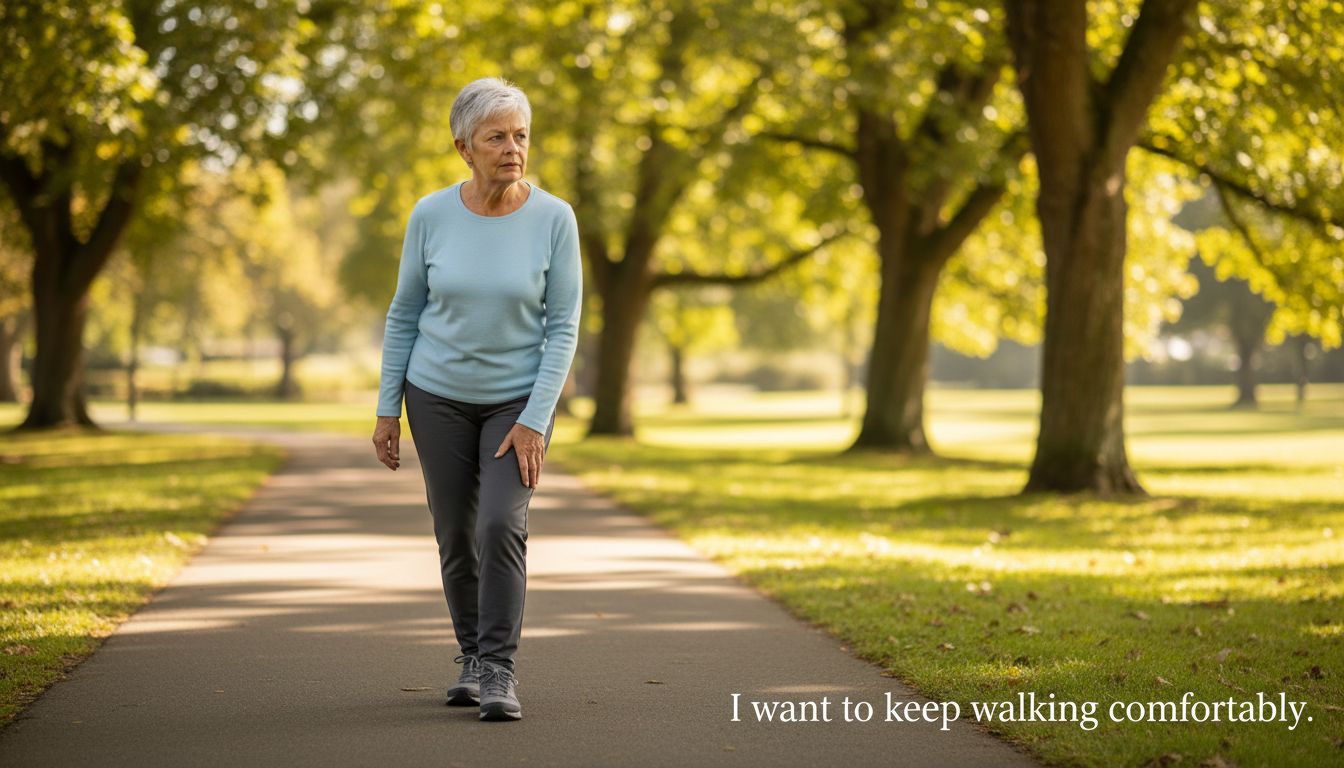
Why Do My Knees Hurt When I Walk?
You go for a walk expecting to feel better. Fresh air, movement, and the freedom to stay active.
But a few minutes in, your knees start to ache. Maybe it's a dull throb that builds up. Maybe it's a sharp pinch on stairs or hills. It's frustrating when the very thing that's supposed to keep you healthy starts to feel like a chore.
If this sounds familiar, you aren't alone. Knee pain while walking is incredibly common, but it often isn't what it seems.
Your knee is often not the real problem.
Think of your knee as the middle of a chain. When your foot, ankle, or hip isn't doing its job, the knee has to work twice as hard to compensate.
Fixing the chain is the secret to walking without pain.
You still have choices. Understanding what's really causing your knee pain is the first step toward walking comfortably again.
Knee pain while walking is rarely just a knee problem. The Walking Mobility Framework shows how your whole body works together with every step.
The good news is that most walking-related knee pain improves when you focus on three areas: support, reducing stress on the joint, and recovering properly between walks.
You don't have to stop walking. Most people simply need the right combination of tools and habits to stay active comfortably.
What Usually Helps Knee Pain While Walking
Supporting knee comfort often comes down to two things:
Choose the path that best matches where you need help right now.
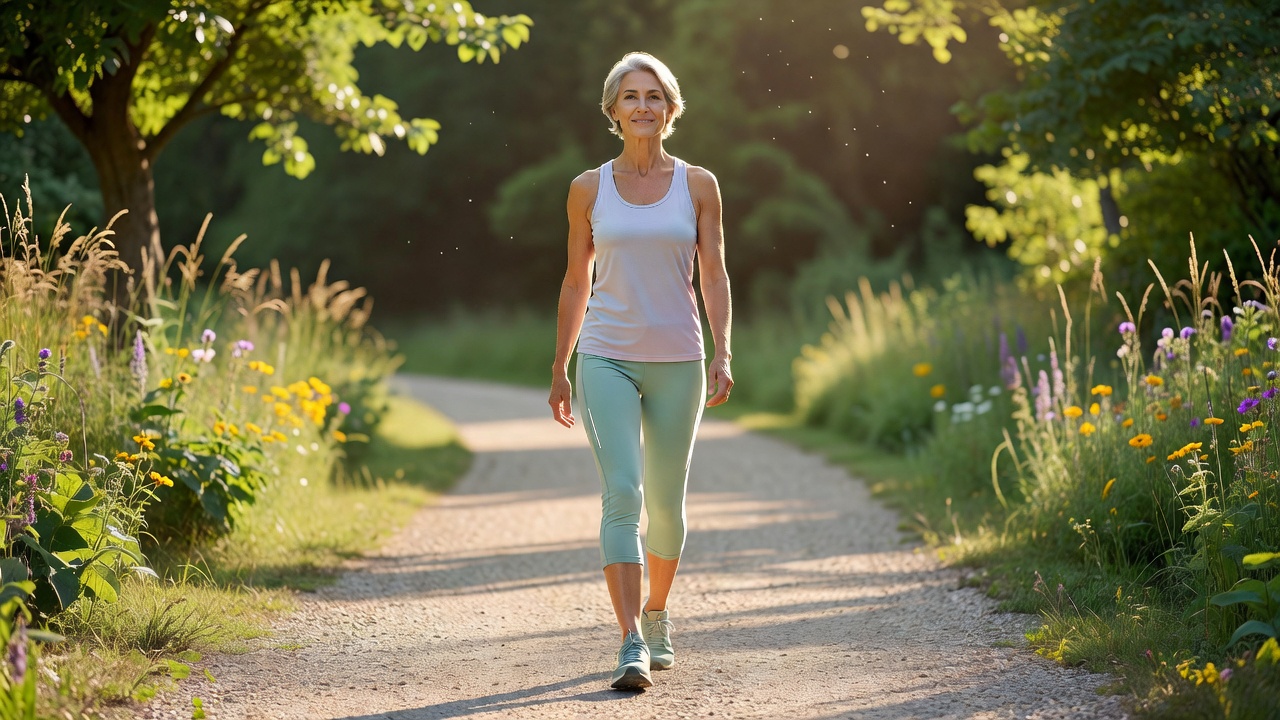
Improve Comfort While Walking
These tools help reduce stress on your knees while you're walking by improving support, stability, and impact absorption.
Better Walking Shoes
Supportive shoes help absorb impact before it reaches your knees, especially on pavement and hard surfaces.
Knee Braces
Braces provide additional support and confidence when knees feel unstable or uncomfortable.
Walking Poles
Walking poles help distribute weight through your upper body and reduce strain on knees during longer walks, hills, and uneven terrain.
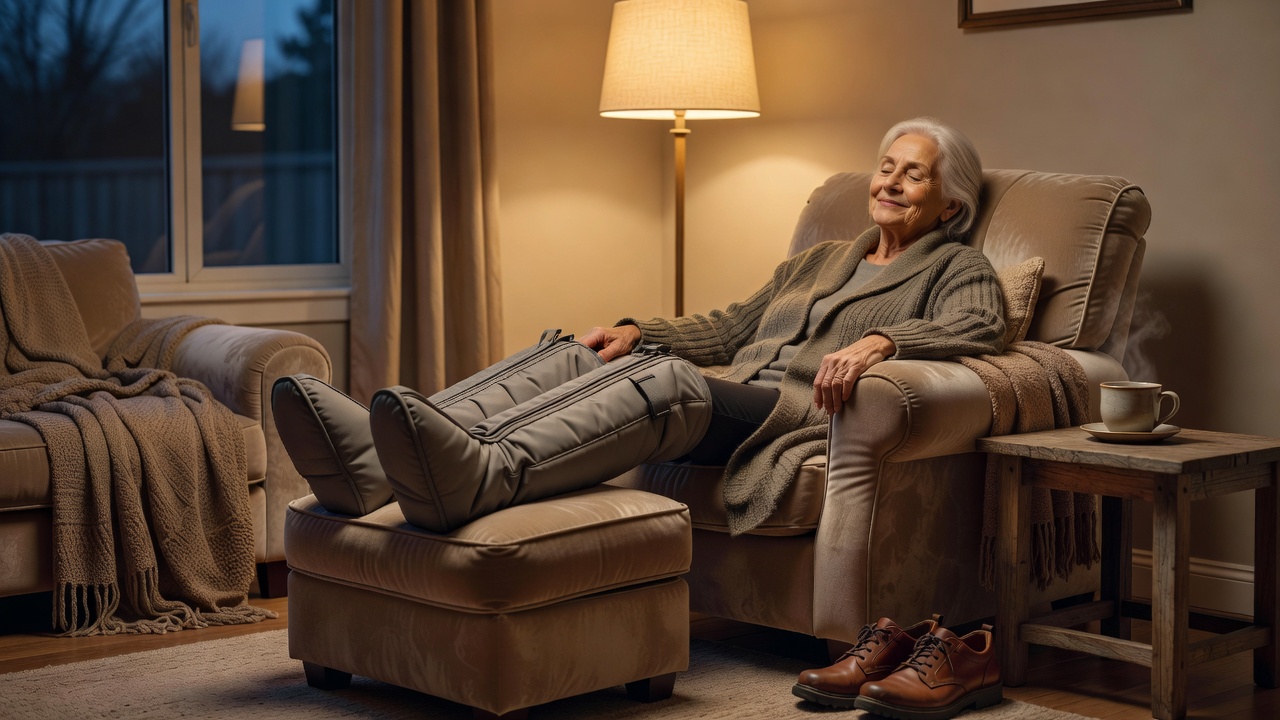
Recover Better Between Walks
Recovery tools can help reduce stiffness, muscle tension, and accumulated fatigue that often make knee discomfort worse after walking.
Compression Boots
Compression therapy helps improve circulation and reduce the tired, heavy feeling that often develops after walking.
Massage Guns
Massage therapy can release tight muscles in the calves, quads, and surrounding tissues that may contribute to knee discomfort.
Recovery Tools
Foam rollers, foot massagers, heat therapy, and similar tools help maintain mobility and reduce accumulated tension.
The Mobility Chain
Walking is a team effort. Every joint depends on the one next to it to handle the load of your body weight.
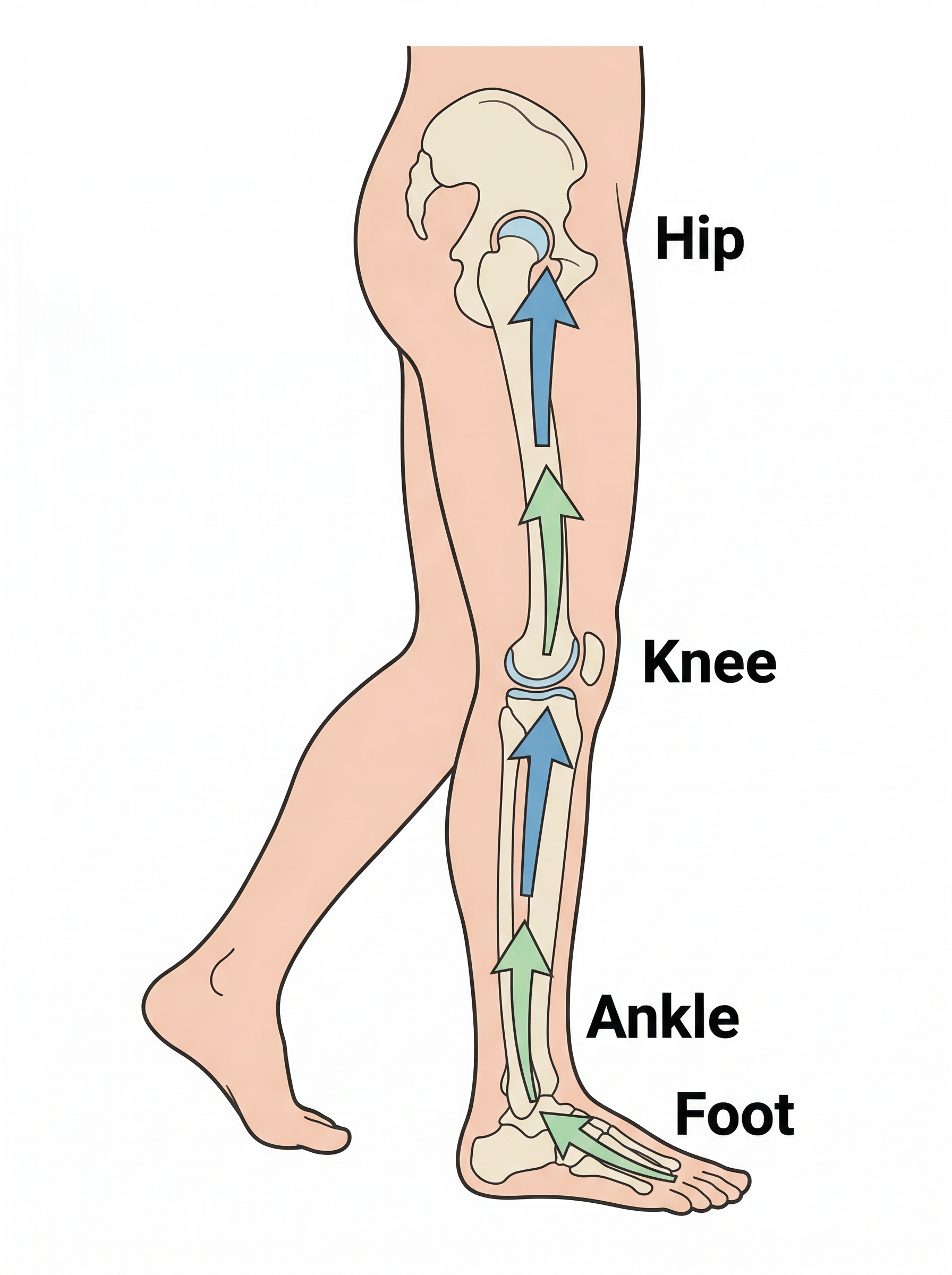
When one part of the chain is stiff or weak, the next joint (often the knee) absorbs the extra load.
When one link in the chain gets stiff or weak, the knee often absorbs the extra load.
Signs to Watch For
Where it hurts and when it hurts are your body's clues about the root cause.
📍 Pain Location Clues
- Front of kneeHip or ankle issue
- Inside kneeFoot or hip issue
- Outside kneeHip weakness
- Back of kneeTight calves
🕒 When It Happens
- Start of walkGeneral stiffness
- End of walkMuscle weakness
- DownstairsJoint overload
- UphillHip weakness
- After sittingJoint stiffness
"Understanding your chain is the first step toward walking comfortably again."
The six pillars of walking after 50 — and why the knee is just one part of the bigger picture.
The Walking Comfort Guide
7 simple ways to walk farther, feel better, and stay active after 50 — delivered free to your inbox.
Get My Free Guide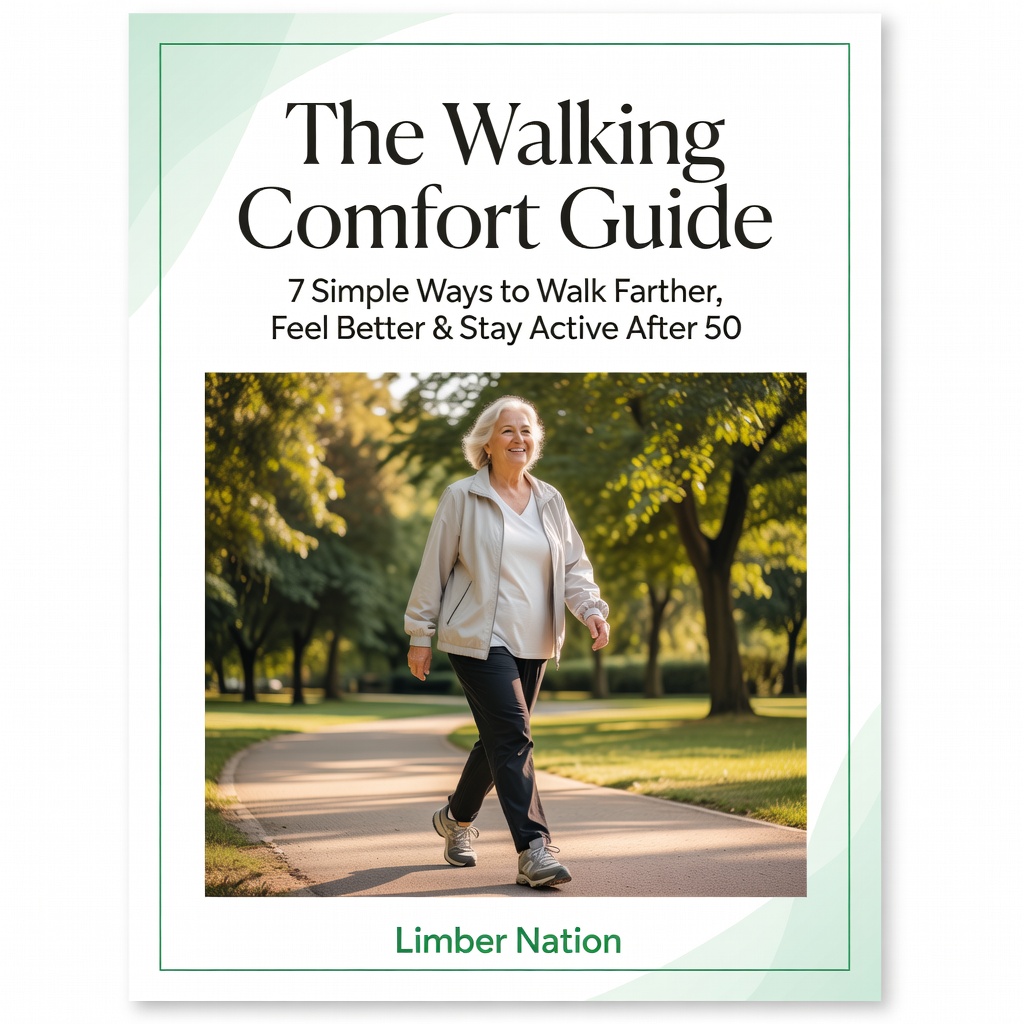
Walking Forward
Three things you can do to walk with less knee pain.
What You Can Start This Week
- Shorten your stride — smaller steps reduce impact through your knees by up to 30%.
- Check the wear pattern on your shoes — uneven wear sends uneven forces straight to your knees.
- Avoid downhill routes until your strength builds — downhill puts 3x more force through your knees than flat ground.
- Try a simple knee brace for your next walk — the external support often provides immediate relief while you work on the underlying causes.
What Tools Might Make This Easier
Knee braces provide external support that gives your joint a break while you rebuild hip and ankle strength. Walking poles can reduce knee force by up to 25% by distributing weight to your arms. Supportive walking shoes with good cushioning are the foundation. They absorb impact before it ever reaches your knee.
Your Next Step
Your knee is one link in a chain. Understanding the whole picture, your feet, ankles, hips, and walking pattern, is how you solve the real problem. The free mobility assessment shows you where your chain needs the most attention.
You still have choices. Walking without knee pain isn't out of reach.
Recommended Next Steps
Finding the right tools can bridge the gap between where you are now and walking comfortably again.
FAQ — Knee Pain & Walking
"You still have choices."
When you fix the chain, the knee often fixes itself. Most walkers who address the real causes — not just the pain — find themselves walking further and more comfortably within weeks.
Comfort is the goal. Walking is the path.
Ready to understand your walking from the ground up? The Walking Mobility Framework is the place to start.