Best Walking Shoes for Comfort, Support & Stability (Walkers 50+)
If walking leaves your knees sore, feet tired, or balance feeling off, your shoes may be part of the problem.
These shoes were selected based on:
⚡ Quick Picks: Best Walking Shoes for 50+
👉 Scroll down to see why each one helps and which is right for you
Heads up:
Some links on this page are affiliate links. If you click through and make a purchase, we may earn a small commission — at no extra cost to you. This helps us keep our guides free. We only recommend tools we believe are genuinely helpful for walkers. Read our full Affiliate Disclosure
Choosing the right shoe is part of the Tools & Equipment pillar of the Walking Mobility Framework — see how footwear fits into the bigger picture.
Walking Feels Harder Than It Should?
If walking feels:
- Slower than it used to
- More tiring
- Hard on your knees or feet
- Less stable
What Actually Helps:
Cushion shoes
Absorb impact and protect knees & hips
Support shoes
Improve foot alignment and reduce strain
Stability shoes
Improve balance and walking control
Not Sure Which One to Choose?
Quick-match your symptom to the right shoe.
Cushion Shoes
Soft, reduce impact, good for knee pain, hip pain, back pain, best for pavement walking.
Example: Hoka Bondi 8
Stability Shoes
Keep foot from rolling inward, improve balance, good for knee alignment.
Example: ASICS Gel-Kayano 30
Support Shoes
Strong arch support, motion control, good for flat feet and overpronation.
Example: Brooks Addiction Walker 2
Neutral Comfort
Balanced cushion and support, good for most people without specific alignment issues.
Example: Brooks Ghost, New Balance 990
Best Walking Shoes for Comfort & Stability
These five shoes cover almost every walking challenge. Each one is well-rated, widely used by walkers over 50, and known for lasting comfort.
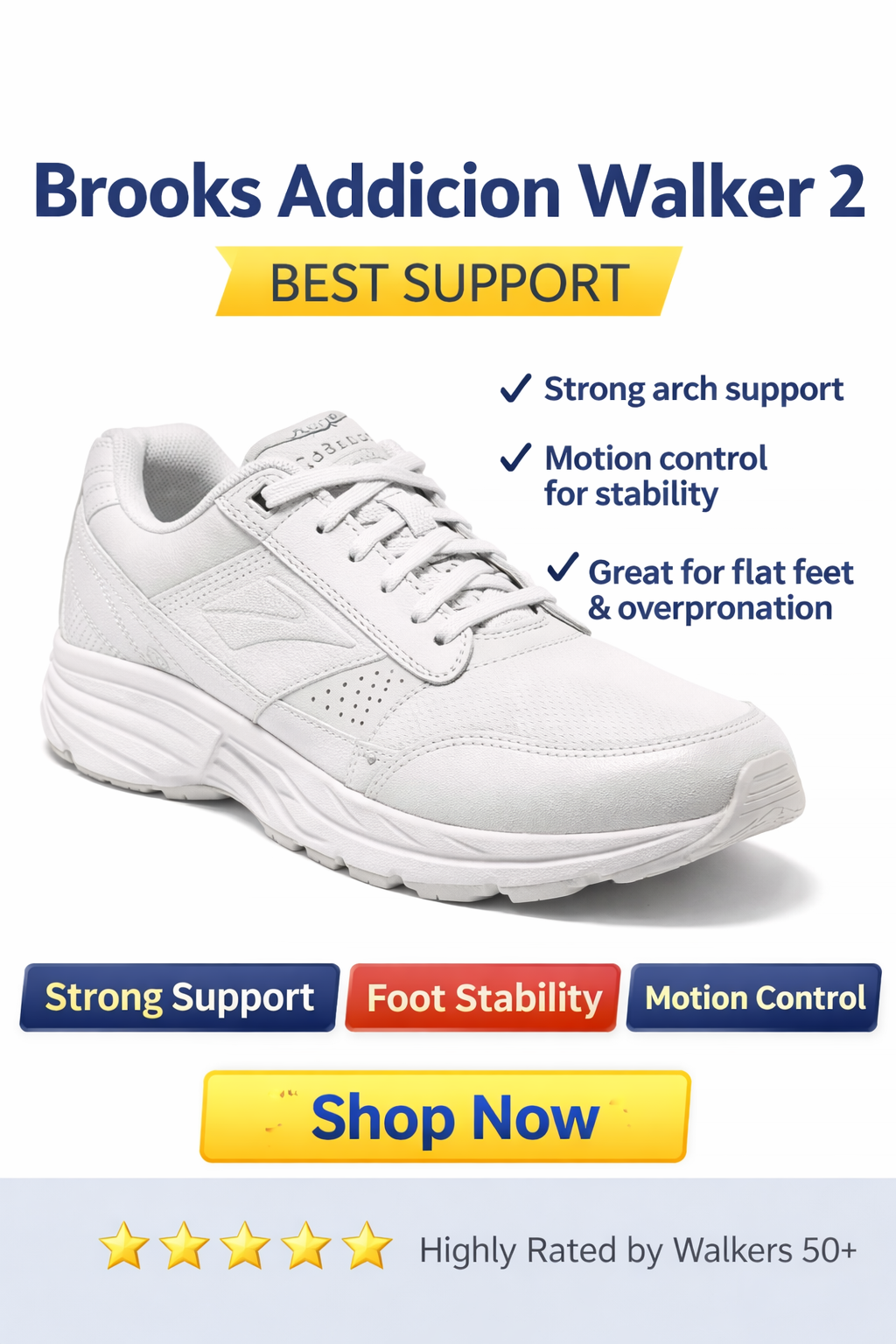
New Balance 990v6
Best Overall
If you want one shoe that works for almost everything — this is it.
- Balanced cushioning + support
- Comfortable for daily walking
- Very durable (lasts longer than most)
- Available in wide sizes
👉 Best for: everyday walking, general comfort, most people
Why it works:
It keeps your foot stable without feeling stiff, while still absorbing enough impact to protect your knees and hips.
Simple decision:
If you're unsure what to choose → choose this.
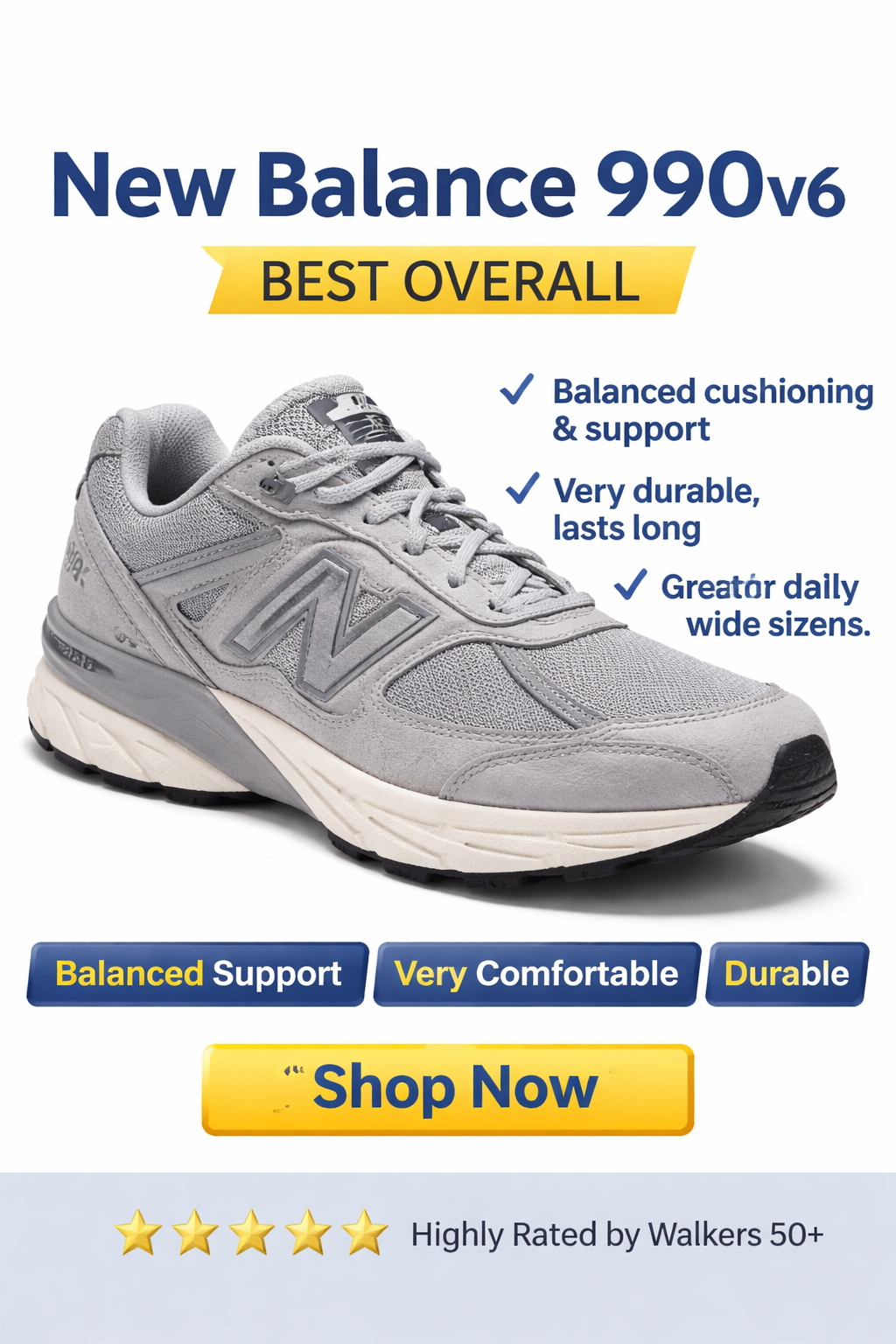
Hoka Bondi 8
Best Cushioning (Joint Protection)
If walking feels hard on your knees or joints — this helps immediately.
- Maximum cushioning
- Reduces impact on knees & hips
- Smooth "rolling" walking feel
- Great for pavement walking
👉 Best for: knee pain, joint pain, long walks
Why it works:
The thick cushioning absorbs shock every step, reducing stress on your joints.
Simple decision:
If walking feels painful → this is your relief option.
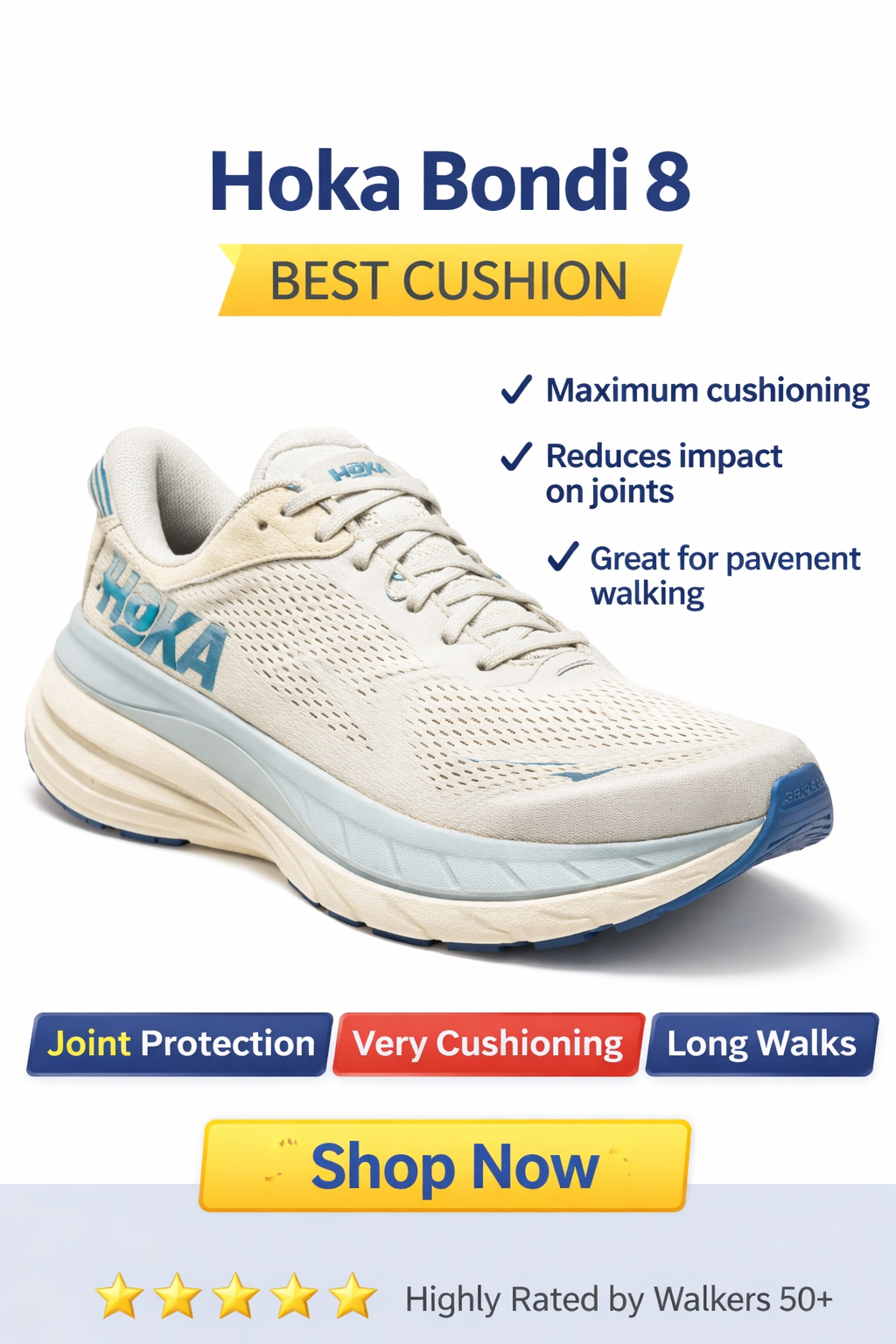
Brooks Addiction Walker 2
Best Support
If your feet collapse inward or feel unstable — this is your fix.
- Strong arch support
- Motion control (keeps foot aligned)
- Very stable feel
- Trusted by many walkers 50+
👉 Best for: flat feet, foot pain, stability, balance
Why it works:
It controls foot movement so your knees and hips don't take extra stress.
Simple decision:
If your feet roll inward or feel unsupported → choose this.
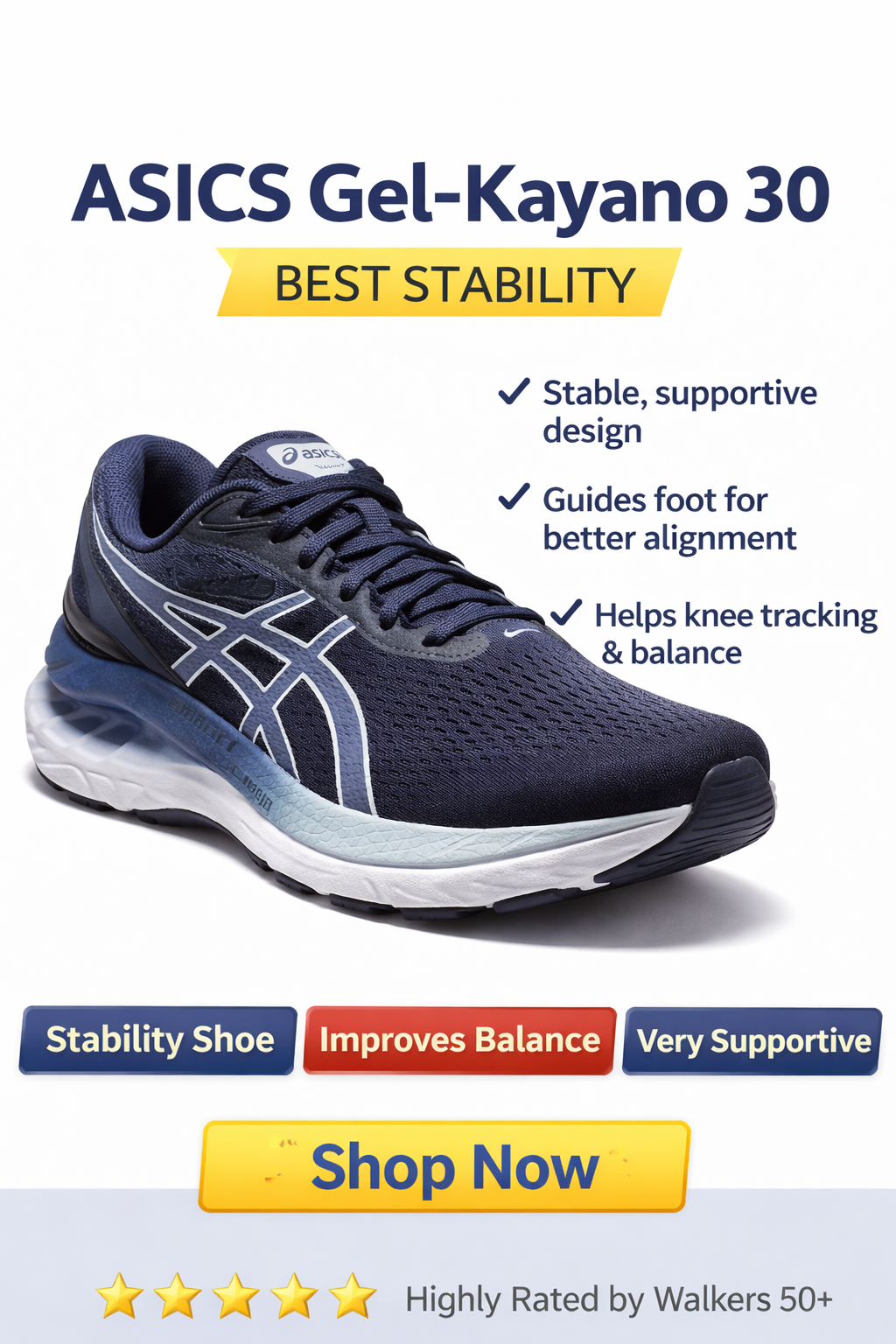
ASICS Gel-Kayano 30
Best Stability
If your walking feels off-balance or uneven — this helps guide your stride.
- Stability-focused design
- Helps keep stride aligned
- Cushioned but controlled feel
- Reduces knee strain from misalignment
👉 Best for: balance issues, overpronation, knee tracking
Why it works:
It gently guides your foot into a more stable position while walking.
Simple decision:
If you feel unstable or uneven when walking → choose this.
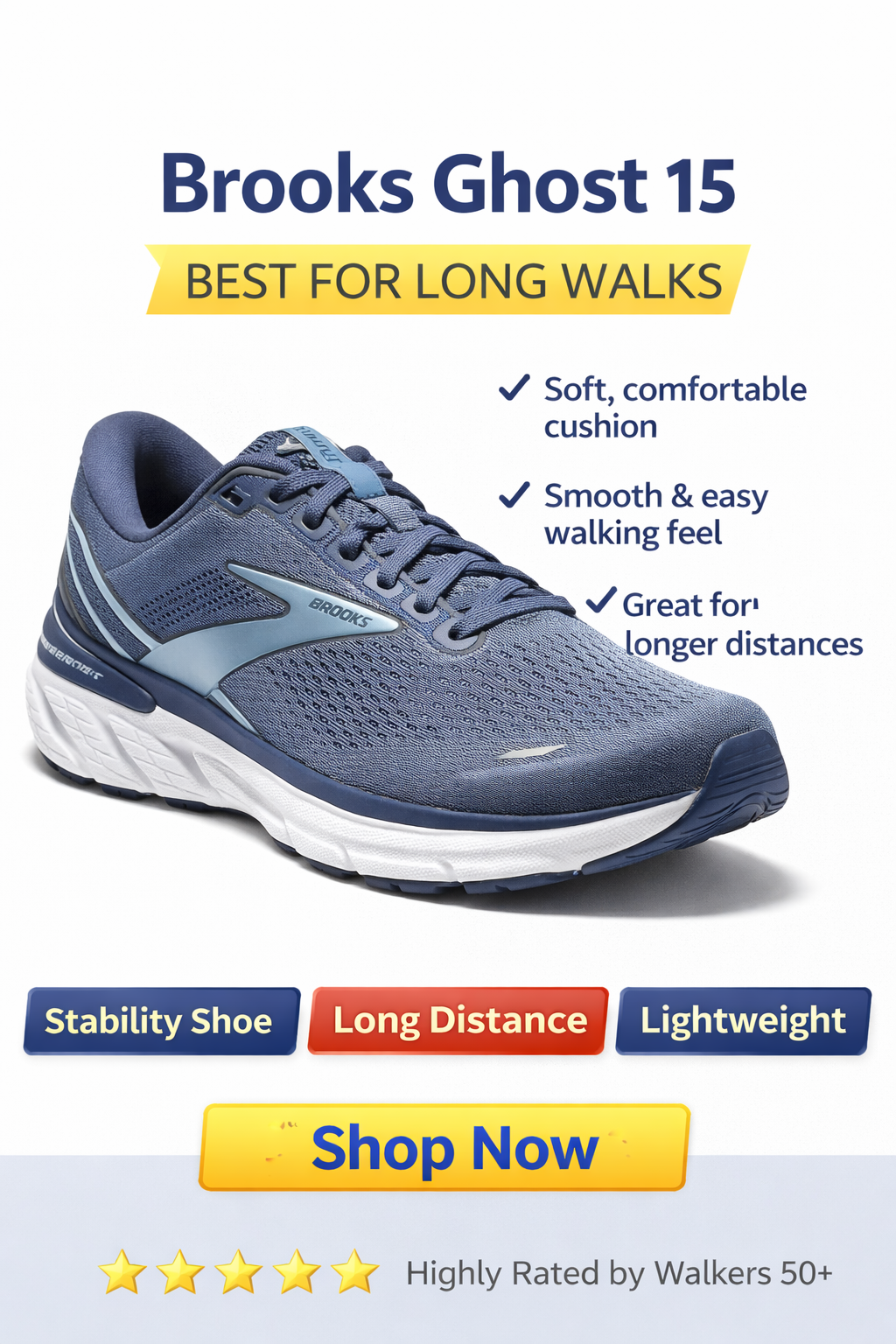
Brooks Ghost 15
Best for Long Walks (Comfort)
If you want a soft, smooth, comfortable walking experience — this is it.
- Soft cushioning
- Very smooth stride
- Lightweight feel
- Great for longer distances
👉 Best for: long walks, daily comfort, fatigue reduction
Why it works:
It reduces foot fatigue and makes walking feel easier and more natural.
Simple decision:
If your feet get tired quickly → choose this.
👉 Choose based on what your body needs most — not just what looks good
How to Choose the Right Walking Shoe
Most people choose the wrong type of shoe for their walking problem. Use this simple guide to narrow it down.
Joint pain → Cushion|Foot support → Support|Balance / stability → Stability
Shoes Don't Fix Walking Problems — They Help Manage Them
This is something most people don't realize: shoes reduce the stress caused by a walking problem, but they don't fix the root cause. Most walking problems come from the mobility chain: foot → ankle → knee → hip → posture. When one part is stiff or weak, another part works harder and becomes painful.
What shoes help with
- Shock absorption
- Arch support
- Balance and stability
- Comfort during walking
- Joint protection
What actually causes walking pain
- Stiff ankles
- Weak hips
- Tight calves
- Poor walking pattern
- Reduced mobility
- Short stride
- Poor posture
"Shoes help the walk. Mobility improves the walker."
Find your walking patternUnderstanding Why Walking Gets Harder
This is why the Walking Mobility Framework was created. It explains how walking problems are usually connected — foot mobility, ankle mobility, knee movement, hip mobility, stride length, walking posture, balance, and walking pattern. Understanding the full picture helps you improve the walk itself, not just manage the symptoms.
Read the Walking Mobility FrameworkGood footwear supports one pillar of walking well after 50. The Walking Mobility Framework covers all six.
Has Walking Become Slower, More Painful, or More Tiring?
If walking has become slower, more painful, less comfortable, more tiring, less stable, or you're covering shorter distances — it may not be just the shoes. A free mobility walking assessment helps identify your walking pattern and mobility limitations.
Take the Mobility Walking AssessmentFree · 2 minutes · No login required
Common Questions About Walking Shoes
Final Thought
The right walking shoes can make walking more comfortable, reduce pain, improve stability, increase distance, protect your joints, and improve your confidence. But the biggest improvement usually comes from improving mobility and walking mechanics — not just changing shoes.
"Shoes help the walk."
"Mobility improves the walker."