Why Older Adults Wait Too Long Before Buying Compression Boots
Many walkers say compression boots help tired, heavy legs feel lighter after a short session at home. The gentle squeeze can be especially comforting when legs feel swollen or worn out after a walk. Yet many older adults wait months before trying them, put off by the price, the unfamiliar look, or the question of whether they will use them enough to justify the cost.
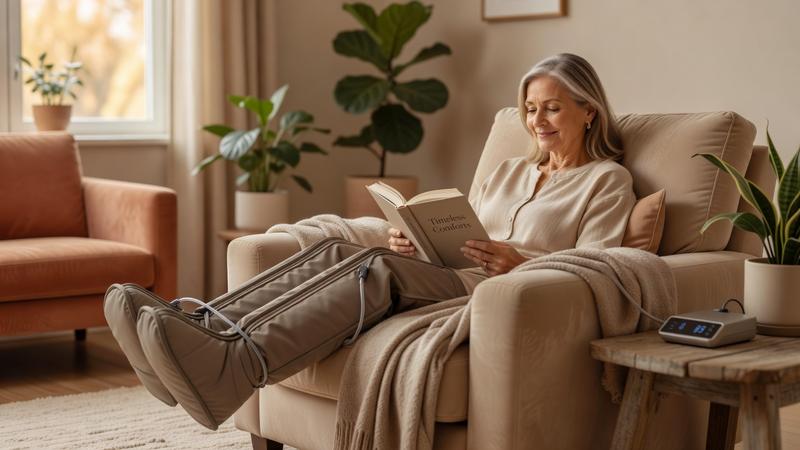
"I kept thinking, 'That's a lot of money for something that just squeezes my legs.' I wish someone had explained what I was really paying for."
It is a fair hesitation. When you see compression boots priced anywhere from $150 to $1,000, it is hard to know what is real and what is marketing.
For many older walkers who deal with heavy, tired legs after walking, the right pair becomes one of the most-used comfort tools in the house. Used while watching TV, reading, or winding down. The question is not whether gentle compression can be soothing for heavy legs. It is whether you will choose boots that actually fit your life.
In this guide, we will walk through everything you need to know before buying, from how they work to the real differences between budget and premium, plus the practical questions most first-time buyers do not think to ask.
Quick look at our picks — jump straight to the options
What Compression Boots Actually Do For Your Legs
Compression boots look simple: a pair of wraps that connect to a small pump unit. But what happens inside those wraps is more sophisticated than most people realize.
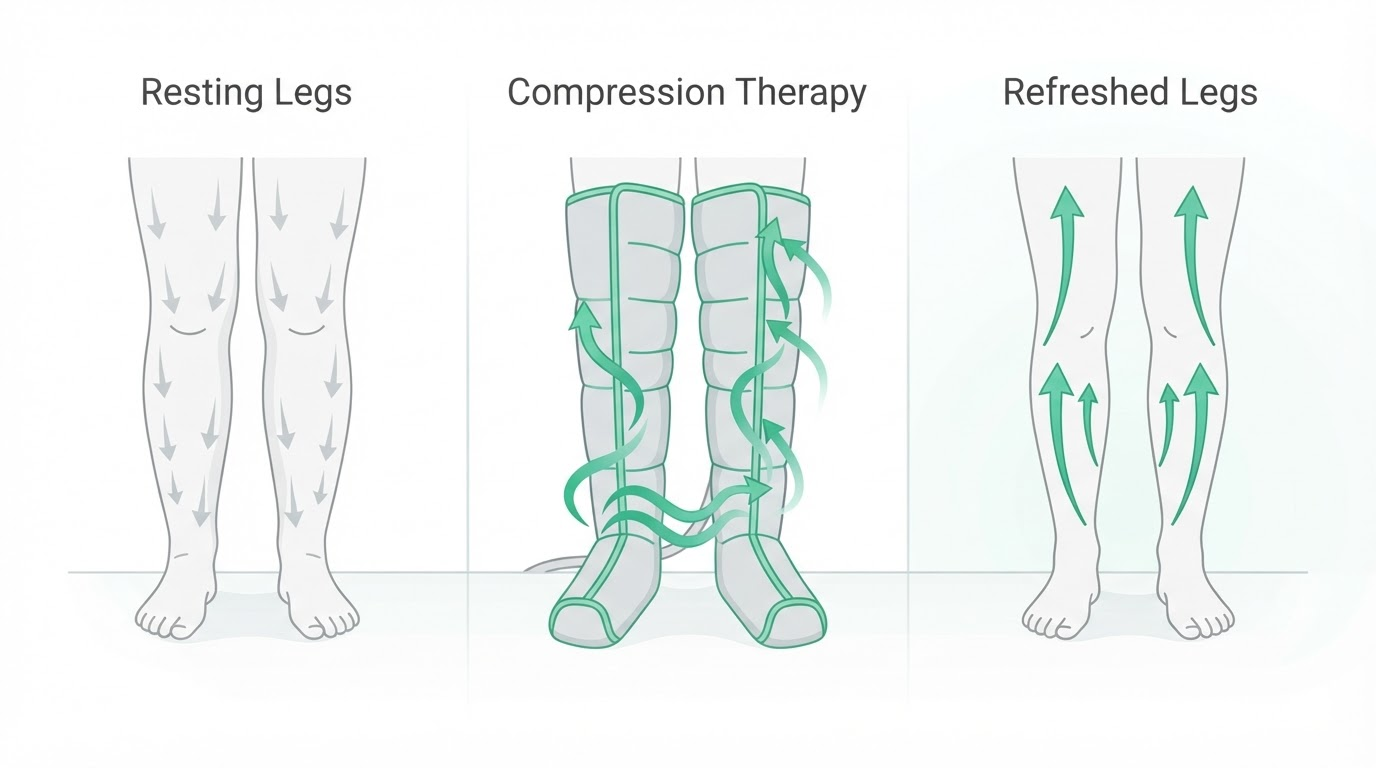
The boots use graduated pneumatic compression. When you start a session, the chambers inside the wraps inflate sequentially, starting at your feet and moving upward toward your thighs. Each chamber squeezes, then releases, creating a wave-like pumping motion that pushes deoxygenated blood and excess fluid back toward your heart.
Think of it as a gentle, rhythmic massage that works with your body's own circulatory system instead of against it. The result is what most people describe first: a noticeable lightness in their legs, as if a weight they didn't realize they were carrying has been lifted.
Boots vs Socks: The Key Difference
Unlike compression socks, which provide constant static pressure around your legs, compression boots use dynamic, sequential compression. They actively pump in waves, moving fluid that socks alone cannot displace. This is why many people feel results within their first 15-minute session, even if they've worn compression socks for years without the same sensation.
Do Compression Boots Really Work for Older Walkers?
The short answer is yes. But they're not magic, and anyone who tells you otherwise is selling something.
Here's what's realistic: many people notice a difference in how their legs feel after the very first session. That "heavy blanket" sensation in the calves and ankles eases, and standing up from the chair feels a little easier. For others, the benefits build gradually over a week or two of consistent use, and the change is more subtle: you realize at the end of the day that your legs don't ache the way they used to.
The benefits tend to be most noticeable for people who are on their feet regularly. If your day includes walking, shopping, gardening, or traveling, compression boots address the cumulative fluid buildup that makes those activities harder over time. The boots don't make you walk further or stronger. They make the walking you already do easier to recover from.
That distinction matters. Compression boots are a recovery tool, not a performance enhancer. They help your body clear what your legs accumulate during the day, so you can do it again tomorrow with less discomfort.
Compression Boots vs Simply Elevating Your Legs
This is one of the most common questions we hear: "Can't I just put my feet up on the couch?" The answer depends on what you're trying to accomplish.
Elevation helps gravity drain fluid passively from your lower legs. It works, especially for mild, occasional swelling. But it requires you to stay in a specific position, and the drainage is slow. Compression boots, on the other hand, actively pump fluid upward regardless of your body position. You can be sitting upright in your favorite chair, and the boots are still working.
For persistent heavy legs or post-walk recovery, boots do something elevation alone cannot: they speed up the process significantly and work whether you're reclined or seated.

Elevating Your Legs
- •Passive drainage using gravity
- •Slow, gradual fluid movement
- •Requires legs above heart level
- •Works best for mild, occasional swelling
- •Free, but position-dependent
Compression Boots
- Active pneumatic pumping
- Faster fluid clearance
- Works in any seated position
- Effective for persistent heaviness and recovery
- One-time investment, daily use
What Compression Boots Can — and Can't — Do
We believe in honest recommendations, which means being clear about limitations alongside benefits.
What They Can Do
What They Can't Do
They are a recovery and comfort tool, not a medical device. They make walking life easier. They don't replace it.
How Compression Boots Help Your Legs Feel Lighter After Walking
Every time you walk, your legs do something they've been doing for decades: they work hard, and fluid settles in the lower portions. This is completely normal, and it becomes more noticeable after 50 as circulation naturally slows.
Compression boots speed up your body's natural process of clearing that fluid. Here's what happens in three steps:

You Walk
Your legs work hard throughout the day. Gravity pulls fluid downward, and it settles in your calves, ankles, and feet. By evening, your legs feel heavy and tired.
The Boots Pump
Sequential compression starts at your feet and moves upward, squeezing fluid out of the tissues and pushing it back toward your heart where your body can process it naturally.
You Feel Lighter
After a 15 to 30-minute session, your legs feel noticeably lighter and fresher. The heaviness lifts, and you're ready for the next day's walk with less residual ache.
This is why many of our readers tell us they look forward to their recovery sessions. Not as a chore, but as the part of their day where they get to sit down, relax, and let the boots do the work. It becomes a ritual, like a cup of tea after dinner. The kind of small comfort that makes a real difference over weeks and months.
These Aren't Just for Athletes Anymore
If the first thing you think of when you hear "compression boots" is a professional athlete icing down after a marathon, you're not alone. That image dominated the conversation for years, and it's kept a lot of people from considering what these boots can actually do for them.
Compression boots first appeared in professional sports recovery rooms and physical therapy clinics. They were designed for bodies under extreme stress, and the marketing followed right along. Every ad showed a runner, a cyclist, or a CrossFit athlete. The message was clear: this is elite recovery for elite performers.
But the technology has changed a great deal since then. The same pneumatic compression that once required a clinic visit now fits neatly in a living room. The devices have become more affordable, simpler to use, and quieter than ever before. And the people using them have expanded well beyond the gym.
Today, a significant number of compression boot owners are in their 60s, 70s, and even 80s. They use them after a morning walk around the neighborhood, after an afternoon in the garden, or after a long car ride to visit the grandchildren. They're not training for a competition. They're living their lives, and they want their legs to keep up.
Here's the reframe that matters: the question isn't whether you're an athlete. The question is whether your legs feel heavy, achy, or swollen at the end of the day. If they do, compression boots were made for someone exactly like you.
The measure of whether you "need" recovery isn't how many miles you ran or how much weight you lifted. It's how your body feels when you sit down in the evening. If your calves throb, if your ankles look puffy, if standing back up takes a moment longer than it used to, your legs are telling you they could use some help clearing the fluid and tension that built up during the day.
You don't need to be an athlete to deserve legs that feel lighter.
If you walk regularly and your legs ache afterward, you are exactly who these were made for. Not the person in the commercial sprinting on a track. You.
Still not sure what your legs are telling you?
Waiting makes sense when you don't know what you're solving for. Our free mobility assessment helps you understand whether swelling, walking endurance, balance, pain, or confidence is the real place to start. Once you see your own walking pattern, choosing the right recovery tool gets a lot simpler.
Free, simple, and designed for older walkers.
So what does one actually look like?
Meet a Compression Boot (Yes, They're This Simple)
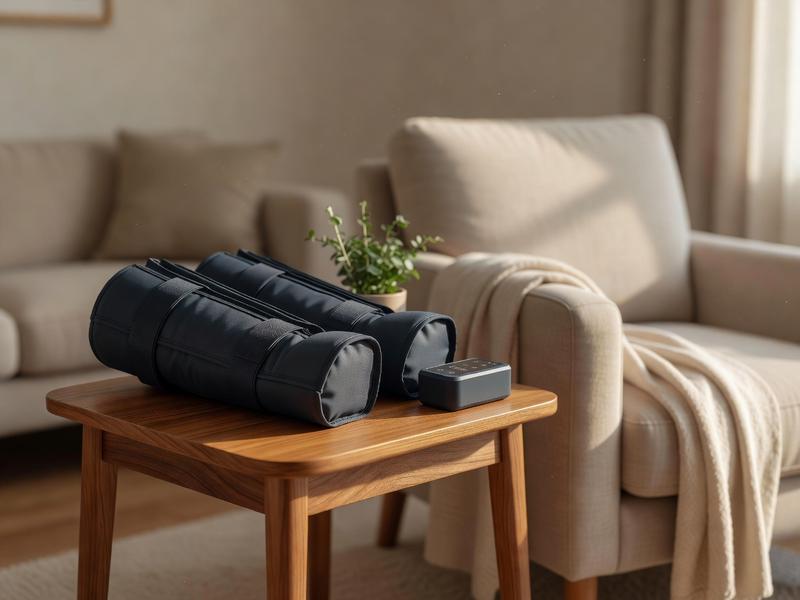
A cordless compression boot system. Two leg wraps, one small pump, zero tubes.
The Fit King Cordless is the boot we point to when someone says "show me what one actually looks like." There are no tubes connecting your legs to a machine across the floor. The pump clips right onto each leg wrap, and the whole thing runs on a rechargeable battery.
You wrap them around your calves with velcro (like a shoe), press one button, and the boot starts squeezing in a slow, rhythmic pattern from your ankle up to your knee. That is the entire process. No app to configure, no settings to figure out.
It sits in the mid-range on price, about what you would spend on a solid pair of walking shoes. Enough to know you are getting a real device, not enough to feel like a gamble if compression turns out not to be your thing.
Fully cordless
No power cord, no air tubes. Use them on the couch, in bed, or on the patio without being tethered to a wall outlet.
One button to start
No menus, no app, no setup. Press the power button and the boot runs a pre-set session. That is it.
Mid-range price, low risk
Priced for someone trying compression for the first time. A real device without the premium commitment.
Why Do Some Compression Boots Cost $900 While Others Cost $200?
The price shock is real. You search for compression boots online and see options ranging from $150 to over $1,000. It's tempting to assume the expensive ones are simply marking up a similar product. The truth is more nuanced.
Three main factors drive the cost difference, and all three affect your daily experience with the product:
Compression Quality
Cheaper boots may deliver uneven pressure across the leg or lose consistency as the pump ages. Premium boots maintain precise, clinically-tested pressure levels session after session.
Build Quality & Longevity
Premium boots use better valves, stronger motors, and higher-quality fabrics that don't crack, split, or leak after months of use. Budget boots often show wear within 12 to 18 months.
Noise Level & Comfort
Premium boots tend to be noticeably quieter during operation. You can watch TV, read, or nap without the pump competing for your attention. Budget pumps can sound like a small air compressor.
| Feature | Budget ($150–300) | Mid-Range ($300–600) | Premium ($600–1,000) |
|---|---|---|---|
| Pressure Quality | Basic, may be uneven across chambers | Consistent with 3–4 pressure zones | Precise, clinically-tested graduated pressure |
| Noise Level | Noticeable hum, like a small pump | Moderate, quieter than budget | Very quiet, TV-friendly |
| Build Durability | 12–18 months typical lifespan | 2–3 years with regular use | 3–5+ years with daily use |
| Ease of Use | Basic buttons, manual settings | Preset programs, simple controls | Intuitive interface, one-button start |
| Warranty | 30–90 days | 1 year | 2 years or more |
| Best For | Trying compression for the first time | Regular users, 2–4x per week | Daily users who want quiet comfort |
What You're Actually Paying For in a Premium Compression Boot
When you spend $700 or $900 on compression boots, you're not paying for a brand name. You're paying for five specific things that affect how often you'll use them and how long they'll last.
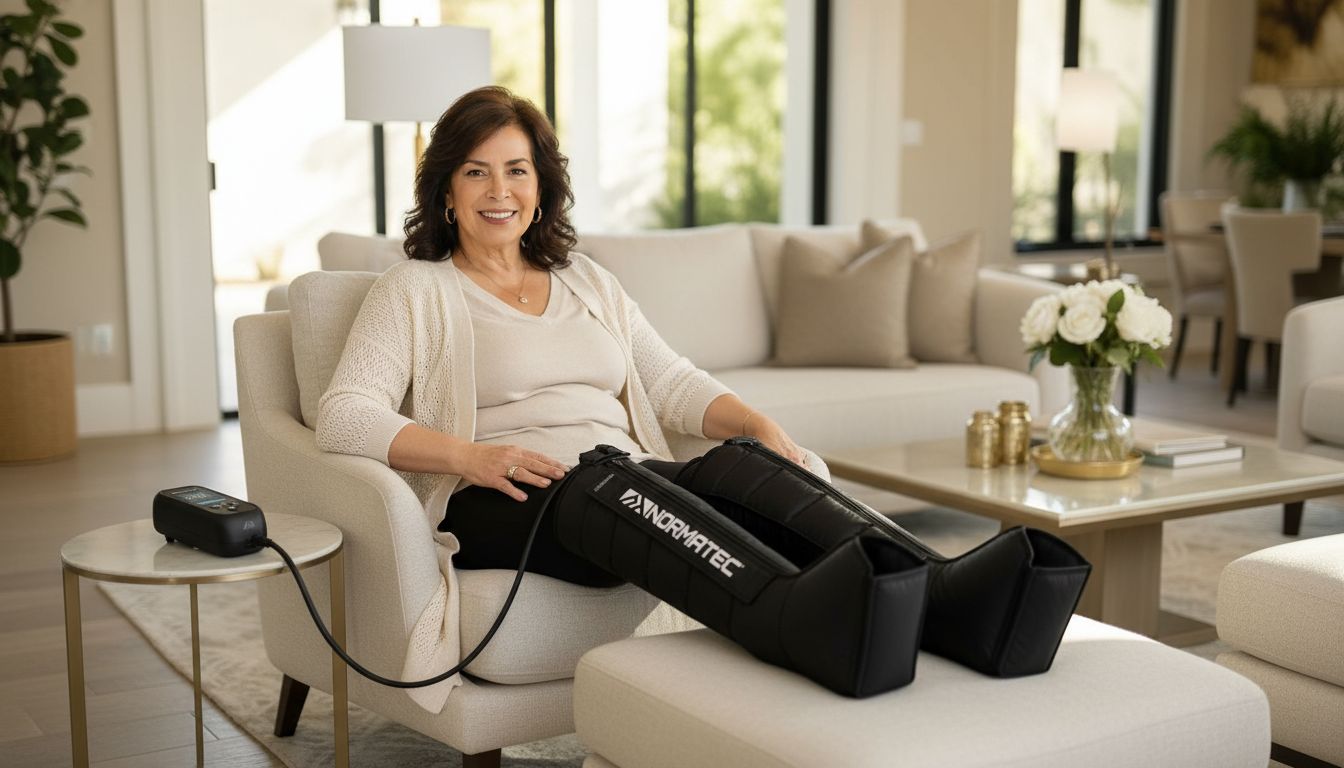
Quieter Operation
Premium pumps run at a fraction of the volume. You can watch your evening show without turning up the sound or waiting for a session to finish before starting a conversation.
More Comfortable Fit
Better leg wraps, softer interior materials, and more thoughtful sizing mean less pinching at the knee and ankle. The boots feel like they belong on your legs, not around them.
Consistent Pressure Over Time
Premium motors and valves deliver the same pressure in year three as they did on day one. Budget boots can lose pressure accuracy as the pump ages, reducing effectiveness.
Better Controls
Intuitive buttons, preset programs designed for recovery, and adjustable pressure that you can change without reading a manual. You press one button and the boot does the rest.
Longer Lifespan
Three to five years of daily use versus potentially 12 to 18 months for a budget option. When you calculate cost per session, premium often comes out ahead.
When Is a Premium Compression Boot Worth It?
The answer depends on how you'll actually use them. Here's a practical framework based on what we hear from readers:
Go Premium If...
- You'll use the boots more than 3 times per week
- You're sensitive to noise and want to watch TV during sessions
- You have hand or grip issues that make fiddly controls frustrating
- You want a single purchase that lasts 3+ years
- You've tried budget boots and they didn't hold up
Mid-Range Is Fine If...
- You'll use them 2–3 times per week
- You're trying compression boots for the first time
- Noise isn't a major concern for your household
- You're comfortable replacing them in 2–3 years
- You want good compression without the top-tier price
For many of our readers, the first boot is a budget one. Then six months later, when they realize they use it nearly every day, they upgrade. Buying premium first often saves money and avoids a drawer full of unused recovery gadgets. But there's no shame in starting small and upgrading later. The important thing is that you start.
Five Differences You'll Notice After Using Premium Compression Boots
If you're trying to picture what the upgrade actually feels like day-to-day, here are the differences our readers describe most often:
You'll forget you're wearing them
Premium boots run quieter and fit more naturally against your legs. There's no constant awareness of a machine working around you. You settle into your chair and the boots become background.
The controls make sense on day one
No confusing button sequences or tiny screens. Premium boots are designed for people who want to press one button and relax. Some even remember your last settings automatically.
Your session doesn't get interrupted
Budget boots can overheat or auto-shutoff mid-session when the pump works too hard. Premium units run the full cycle without cutting out, so you get the complete treatment every time.
They still work the same a year later
The pressure you feel on day 365 matches what you felt on day one. Premium motors and valves don't degrade the way budget components do, which means consistent results over the long term.
You actually look forward to using them
When the experience is quiet, comfortable, and effortless, compliance goes up. You reach for the boots because it feels good, not because you think you should. That's when the investment truly pays off.
Can Budget Compression Boots Deliver the Same Results?
Here's the honest answer: for the actual compression effect, yes. A well-made budget boot in the $200 to $300 range can provide similar pressure to a premium model. The pneumatic principle is the same. Your legs don't know what brand is squeezing them.
The difference is in everything surrounding the compression. Noise level, comfort of the wraps, how intuitive the controls are, whether the pump lasts two years or ten. These are the factors that determine whether you'll keep using the boots six months from now.
If budget is the top priority, there are decent boots available. The key is reading reviews specifically about noise and durability, not just compression quality. Look for comments from people who've owned the boots for more than three months. That's when the differences start to show.
"A budget boot that you use consistently is better than a premium boot that sits in the closet. But a premium boot you look forward to using every evening? That's when the investment truly pays off."
The best compression boot is the one you'll actually use. For some people, that's a $250 mid-range model. For others, it's the $800 premium system. The right choice depends on your daily routine, your sensitivity to noise, and how seriously you take your walking recovery.
Are Compression Boots Right for You?
Compression boots aren't for everyone. Here's an honest look at who benefits most and who might want to skip them.
You'll Likely Love Compression Boots If...
- You walk regularly and your legs feel heavy or tired afterward
- You've tried elevating your legs but want faster, more noticeable relief
- You have 15 to 30 minutes most days to sit and relax (watching TV, reading)
- You want a non-medication way to help your legs recover
- You travel and want to reduce leg fatigue on long days
Compression Boots May Not Be For You If...
- You rarely experience leg fatigue or swelling after walking
- You cannot sit still for 15+ minutes (the boots work while you're seated)
- You're looking for a quick fix without consistent use
- You have certain medical conditions (see the Safety section below)
What Kind of Walker Gets the Most Value from Compression Boots?
The return on your investment depends a lot on how often you walk. Here are three common walker profiles.

The Daily Walker
Walks 3 to 7 days a week, rain or shine. Legs accumulate fatigue throughout the week.
The Weekend Warrior
Longer walks on weekends, maybe a short stroll midweek. Notices heaviness after extended outings.
The Traveler
Walks extensively on trips, exploring new cities or visiting family. Legs take a beating on travel days.
Questions to Ask Before Buying Compression Boots
Before you click "add to cart," take a few minutes with these five questions. They'll save you from buyer's remorse.
How often will I realistically use these?
Be honest with yourself. If you walk daily, a premium pair makes financial sense. If you walk twice a week, a mid-range option may be the smarter choice. The boots only work if you use them.
Where will I use them?
Think about your favorite chair, your living room setup, your bedroom. If you share a quiet living space with a partner, noise level matters more than you might think.
Do I have any hand or mobility limitations?
Some boots wrap around your legs with simple velcro closures. Others require more dexterity to connect tubes and align zippers. If arthritis is a concern, look for models designed for easy solo use.
What's my noise tolerance?
Budget boots can sound like a small air pump running in the corner of the room. Premium boots are quiet enough to watch TV at normal volume. If you plan to use them during your evening show, this matters.
Am I buying for a specific issue or general recovery?
If you have a targeted concern like persistent ankle swelling, look for boots with focused lower-leg programs. If it's general post-walk recovery, most models will serve you well.
How Often Should You Walk Before Buying Compression Boots Makes Sense?
Here's some honest advice: if you walk less than once a week, compression boots are likely overkill. You'd probably get more benefit from a good pair of compression socks for the occasional long day on your feet.
If you walk two or more times per week and notice leg fatigue afterward, compression boots become worth considering. At that frequency, the cumulative effect of daily or near-daily sessions starts to add up. You'll notice that Tuesday's walk feels easier because Monday's recovery session did its job.
If you walk daily, compression boots are one of the best recovery investments you can make. The boots become part of your routine, like brushing your teeth. Your legs recover faster, you sleep better, and the next morning's walk starts from a better baseline.
The question isn't really "do I walk enough to justify these?" It's "would my walking life be better if my legs recovered faster?" If the answer is yes, you already know what to do.
Our Picks
Where to Start: Two Boots We Recommend
After walking through everything above, you probably have a good sense of what matters most to you. Here are two options we'd point an older walker toward, and why.
Fit King Cordless
$350 to $400 range
This is the pair we'd hand to a first-time buyer who wants real quality without the premium price. The cordless design means no tubes running across the floor to trip on, and the single-button operation means you don't need to learn a complicated system.
- Cordless and portable. No power cord tethering you to an outlet, no tubes snaking across the living room floor.
- One-button start. Press it, sit back, and the boots handle the rest. No menu diving or setting adjustments.
- Solid mid-range build. Designed for regular use several times a week, with a warranty that covers you for a full year.
- Quiet enough for TV. The pump runs at a low hum that doesn't compete with your evening show.
Normatec Elite
$799 to $999 range
This is the pair for someone who plans to use compression boots every day and wants the experience to feel effortless. It's the quietest system available, and the medical-grade pressure is built to hold up over years of daily use.
- The quietest operation on the market. You can read, nap, or have a conversation without noticing the pump is running.
- Medical-grade graduated compression. Precise pressure from ankle to thigh, designed with the same technology used in clinical settings.
- Built for years of daily use. Premium motor and valves that deliver the same pressure on day 1,000 as on day one.
- Intuitive controls with preset programs. Pick a mode, adjust intensity if you want, and the boots do the rest.
Both options come with detailed walkthroughs on their own pages, including setup tips, what to expect in the first week, and how to get the most out of every session.
Medical Disclaimer
This article is for educational purposes only. Compression boots are recovery and comfort tools. They are not medical devices. Always consult your doctor before starting any new recovery routine, especially if you have circulation issues, blood clotting conditions, diabetes, or any other medical concerns.
Are Compression Boots Safe for Older Adults?
Yes, generally very safe when used as directed. Compression boots apply gentle, controlled pressure to your legs. For most healthy older adults, there is minimal risk. The pressure levels are designed to support circulation, not restrict it.
The key is using them correctly. Start at a low pressure setting, especially your first few times. Don't exceed the recommended session times, which are typically 15 to 30 minutes. And pay attention to how your legs feel during and after each session. If something feels wrong, stop and check in with your doctor.
Most premium boots have safety features like automatic shut-off timers and pressure relief valves. These exist precisely because the manufacturers understand their audience. Use those features. They're there for a reason.
When Should You Talk to Your Doctor First?
A quick conversation with your doctor can give you peace of mind. Here are the situations where that conversation matters most:
History of Blood Clots or DVT
If you've ever had a deep vein thrombosis or are at elevated risk, compression of any kind needs medical approval first.
Peripheral Artery Disease (PAD)
PAD affects blood flow to your legs. External compression can interfere with already-reduced circulation.
Severe Varicose Veins or Skin Infections
Active skin conditions, open wounds, or severely inflamed veins on your legs should be evaluated before using boots.
Neuropathy or Reduced Sensation
If you can't feel pressure changes clearly in your legs or feet, you may not notice if something feels off during a session.
Recent Leg Surgery or Injury
Healing tissues need time. Ask your surgeon or physical therapist before introducing compression.
Congestive Heart Failure or Severe Edema
Moving large volumes of fluid back toward the heart can strain a weakened heart. Medical guidance is essential here.
If none of these apply to you, compression boots are very likely safe for you to try. Start gently, follow the instructions, and enjoy the relief.
Common Medical Questions About Compression Boots
Can Compression Boots Help With Swollen Feet?
Yes. The upward pumping action helps move the fluid that causes swelling from your lower legs and feet back toward your core. Many users notice reduced swelling within one to two sessions, especially when they use the boots consistently each evening.
Can Compression Boots Help Poor Circulation?
They support circulation in the lower legs during and shortly after use by encouraging blood flow back toward the heart. However, they don't cure underlying circulatory conditions. Think of them as a helpful tool, not a treatment.
Compression Boots and Varicose Veins
Compression can help with the discomfort that comes from varicose veins. The gentle pressure supports the veins and may reduce that heavy, achy feeling. Check with your doctor first, especially if your veins are painful, inflamed, or changing in appearance.
Can You Use Compression Boots Every Day?
Yes, for most people. Daily use is actually where the most consistent benefits appear. A 20-minute session each evening is a common routine among long-term users. Just be sure to start at a comfortable pressure and give your legs a rest day if they feel sensitive.
What Using Compression Boots Is Actually Like
Picture this: it's seven o'clock in the evening. You've had a good walk today, maybe to the park and back, or around the neighborhood. Your legs have that familiar heaviness that comes after being on your feet.
You sit down in your favorite chair. You wrap the boots around your legs. They close easily with velcro, snug but not tight. You press one button on the small pump unit sitting on the side table. The boots begin to inflate, starting at your ankles and working their way up. It feels like a gentle, rhythmic squeeze, then release, squeeze, then release.
You pick up your book or turn on the evening news. For the next 20 minutes, the boots do their work while you relax. There's nothing else to do. No positions to hold, no exercises to perform. Just sit and let the compression move through your legs.
When the session ends, the boots deflate quietly. You unwrap them, set them aside, and stand up. Your legs feel lighter. Not dramatically different, but noticeably better. That "weighted blanket" feeling in your calves has eased. You head to the kitchen or to bed feeling more comfortable than you would have otherwise.
It's not a medical procedure. It's a relaxation ritual. And for many older walkers, it becomes the part of the evening they look forward to most.

Practical Questions About Living With Compression Boots
These are the everyday questions first-time buyers ask but rarely find answered in product descriptions.
How long does a session take?
15 to 30 minutes is typical. Most boots come with preset programs that handle the timing for you. You press start, the boots do their thing, and they stop automatically when the cycle is complete.
How easy are they to put on?
Most wraps secure around your legs with velcro closures. It takes about 30 seconds once you're used to it. Some models are easier than others if you have arthritis or limited hand strength. Look for wide velcro tabs and simple tube connections.
How loud are compression boots?
Premium boots are about as loud as a quiet conversation or a small fan on low. Budget boots can be noticeably louder, similar to a small aquarium air pump. If you plan to use them while watching TV or sharing a living space, noise level is worth considering.
Can you watch TV or read while using them?
Yes, that's actually the ideal way to use them. Most people build compression sessions into their evening wind-down routine. You sit, you relax, the boots work. Many users say it's their favorite part of the day.
Do they need regular maintenance?
Minimal. Wipe down the fabric wraps after use, keep the tubes and connections clean and dry, and store them in a cool place. No special tools, no servicing, no replacement parts to order. The pump unit is sealed and maintenance-free.
How long should a premium pair last?
Three to five years with regular daily use is typical for premium boots. Budget pairs may last one to three years before the pump loses pressure accuracy or the wraps show wear. The pump unit is usually the longest-lasting part.
A Realistic First-Week Experience
If you're wondering what the first week actually feels like, here's what most new users describe:
Getting Acquainted
You're figuring out the right pressure setting (start low), learning how to position the wraps comfortably, and getting used to the sensation. It might feel strange at first, like someone is gently squeezing and releasing your legs. That's normal. Give yourself a couple of sessions to adjust.
Finding Your Rhythm
You've found a pressure that feels good. You know where to sit, how to arrange the tubes, and when to start your session. More importantly, you start noticing that your legs feel lighter after each session. Standing up from the chair feels a little easier. The evening heaviness you'd grown used to is starting to lift.
It Becomes Routine
By the end of the first week, the boots are part of your evening. You look forward to it. You might notice that your morning walks start from a better baseline, that your legs don't feel as heavy by midday. The routine has taken hold.
If the first session feels a little strange, that's completely normal. Give it a few days. Most people who stick with it for a week don't go back.
Frequently Asked Questions
Still wondering if compression boots are right for you? Here are the questions we hear most often from walkers just like you.
Most people who try compression boots for a week don't go back. If you're still unsure, start with a model that has a good trial period so your only risk is a return label.
A Few Final Thoughts for the Active Walker
Compression boots are a simple, effective tool that many older walkers use to help legs feel lighter and more comfortable after walking.
You do not need to spend $900. But spending wisely on something you will actually use makes all the difference.
Whether you choose a $200 starter pair or invest in premium, the most important thing is finding boots that fit your actual life. Your routine, your living space, your comfort preferences. The best compression boots are the ones you look forward to using.
If your legs feel heavy after walking, you have earned the right to feel better. You still have choices, and a comfortable recovery is one of them.
Continue Your Mobility Journey
Heads up:
Some links on this page are affiliate links. If you click through and make a purchase, we may earn a small commission — at no extra cost to you. This helps us keep our guides free. We only recommend tools we believe are genuinely helpful for walkers. Read our full Affiliate Disclosure