
How to Walk Longer Without Getting Tired
A simple guide to walking farther with less fatigue
Many people notice this slowly over time.
"My legs just feel heavy after ten minutes..."
"I find myself constantly looking for a place to sit down..."
"Maybe I'm just getting older and can't do this anymore."
If you feel like you get tired too quickly when walking, it's easy to blame your fitness. But for most adults over 50, the reason for fatigue isn't just about "stamina." It's often about how efficiently you move. When your walking pattern is inefficient, your body has to work twice as hard for every step.
If you want to walk longer without getting tired, focus on these five things:
Most people get tired while walking because they are:
- •Over-striding (steps too long)
- •Leaning too far forward
- •Not using their arms for momentum
- •Stiff in the ankles and hips
- •Trying to walk too fast
Distance is about efficiency, not just effort.
Walking longer starts with understanding how your body moves — not just building fitness. The Walking Mobility Framework is the place to begin.
Main Causes of Getting Tired While Walking
Most of them are mechanical, not fitness related.
Steps Are Too Long (Over-striding)
This is the #1 mistake walkers make. Taking big steps feels like you're going faster, but it's actually like hitting the brakes with every step.
Think short, smooth steps. Increase your cadence (steps per minute) instead of step length.
Poor Walking Posture
If you lean forward or look at the ground, your body has to work much harder to keep you upright. This 'forward lean' makes you heavy on your feet.
Eyes on the horizon, chin up, and imagine a string pulling the top of your head toward the sky.
Stiff Ankles
Your ankles are your body's hinges. If they are stiff, you can't roll through your foot properly. This forces you to 'lift' your whole leg instead of 'rolling' forward.
Focus on landing softly on your heel and rolling through to your toes.
Weak or Stiff Hips
Your hips are the 'engine' of your walk. If they don't move well, your knees and ankles have to do the engine's work.
Consistent, gentle hip mobility exercises can change how walking feels in days.
Walking Too Fast
Endurance is built at a steady pace. If you start too fast, you build up fatigue early that you can't recover from mid-walk.
The 'Talk Test': You should be able to speak in full sentences without gasping for air.
A Better Strategy
Instead of trying to walk "harder" or "faster," focus on walking "easier." When you move efficiently, you naturally go farther with less effort.
The Mobility Chain
Walking is a chain of joints working together. When one part is stiff or weak, the whole chain feels it.
- A stiff ankle makes your knee and hip work much harder to swing forward.
- Weak hips force your feet to 'pull' you along instead of 'pushing' you forward.
- A stiff spine makes your steps choppy and wastes energy with every movement.
Fatigue often shows up far from the actual cause of the problem.
When the whole chain moves well, walking becomes:
Signs to Watch For
Is your walking pattern making you tired? Watch for these common signs:
These are usually mobility and walking pattern issues, not just fitness.
Walking endurance is shaped by six key pillars — and most people only focus on one. See how they all connect.
What Usually Helps
Shorten Your Step Length
Focus on landing your heel closer to your body. This reduces the 'braking force' and makes each step easier on your joints.
Stand Taller When Walking
Imagine a string pulling you up. Keeping your spine neutral allows your hips and legs to swing with less resistance.
Let Your Arms Swing
Your arms are like pendulums. Letting them swing naturally helps propel you forward and reduces the work your legs have to do.
Improve Ankle Movement
Spend a few minutes each day moving your ankles in circles or stretching your calves. Better ankle movement means a smoother roll through each step.
Improve Hip Movement
Gently stretching your hip flexors can unlock your stride and take the pressure off your knees and lower back.
Walk Slightly Slower
It sounds counterintuitive, but slowing down just 5-10% can help you walk 50% farther by keeping your heart rate in a comfortable zone.
Walking Pattern Matters More Than Fitness
Old Thinking
"I'm just out of shape. I need to push through the pain and walk harder to build stamina."
The Real Issue
"My walking pattern is inefficient. I'm wasting energy with every step. I need to move smoother."
Gets Tired Quickly
- Over-striding
- Leaning forward
- Heavy heel strike
- No arm swing
- Looking down
- Stiff ankles
Can Walk For Hours
- Short steps
- Tall posture
- Smooth roll-through
- Active arm swing
- Eyes on horizon
- Mobile ankles
"Don't try to walk harder. Try to walk smoother."
Tools That Help You Walk Further
Supportive Walking Shoes
The right shoe makes each step more efficient — less energy wasted, more distance covered.
An inefficient shoe forces your feet and calves to work harder with every step — draining your energy faster than you realize. A shoe with a rocker sole and good cushioning rolls your foot forward naturally, reducing the effort per step so your legs go the distance without burning out.
- ✓Rocker sole reduces step effort
- ✓Cushions impact over long distances
- ✓Supports efficient stride
Walking Poles
Engage your upper body so your legs carry less of the total load on longer walks.
Poles let your arms share the work your legs are doing — studies show they reduce lower-body effort by up to 20-30% per step. That doesn't sound dramatic, but over a 45-minute walk it means your legs feel significantly fresher at the end, letting you walk further before fatigue stops you.
- ✓Reduces leg effort by up to 30%
- ✓Improves upright posture
- ✓Extra stability on hills
Compression Socks
Keep circulation moving in your lower legs so fatigue builds more slowly on longer walks.
During a long walk, blood and fluid can pool in your lower legs — creating that heavy, tired sensation that makes you stop sooner than you'd like. Compression socks counter this by supporting your veins, so your legs stay fresher longer and you can comfortably extend your distance.
- ✓Slows fatigue build-up
- ✓Supports vein return
- ✓Reduces post-walk heaviness
Recovery Tools
Recover faster after walks so you can go again sooner — and build distance over time.
Walking further is a gradual process — and recovery between walks is where the progress happens. A foam roller or massage gun used for 5 minutes after your walk keeps your calves and hips loose, so the next walk starts from a fresher baseline rather than the previous day's fatigue.
- ✓Faster next-day recovery
- ✓Keeps muscles loose for more walks
- ✓Builds cumulative distance over time
The Walking Comfort Guide
7 simple ways to walk farther, feel better, and stay active after 50 — delivered free to your inbox.
Get My Free Guide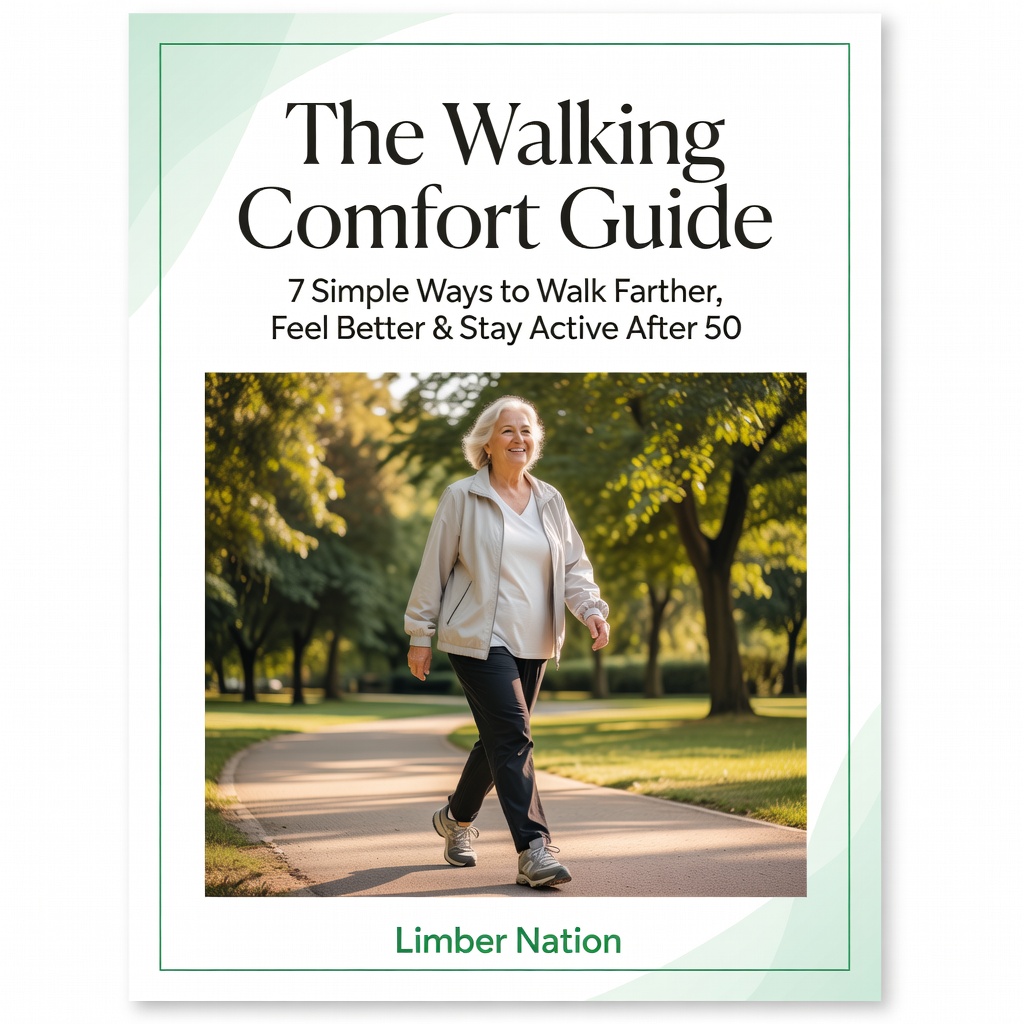
Find Your Walking Pattern
If walking makes you tired quickly, the issue may not be your fitness. It's often a simple fix in your mobility or walking mechanics.
The easiest way to understand this is to identify your mobility walking pattern.
Take the Free Mobility AssessmentFree · No login required · Only takes a few minutes
Frequently Asked Questions
"Walking longer is rarely about pushing harder."
It's about moving smoother.
It's about moving smarter.
It's about moving efficiently.
When walking becomes more efficient, distance becomes easier. And that's when walking becomes enjoyable again.
Find Your Walking Pattern TodayThe Walking Mobility Framework helps you understand exactly what limits your walks — and what to work on first.