Heads up:
Some links on this page are affiliate links. If you click through and make a purchase, we may earn a small commission — at no extra cost to you. This helps us keep our guides free. We only recommend tools we believe are genuinely helpful for walkers. Read our full Affiliate Disclosure
Best Walking Shoes for Knee Support (2026 Guide)
If you've ever finished a walk feeling more discomfort in your knees than when you started… you've probably wondered: "Is it my shoes?"
You're not alone. Thousands of people search for better walking shoes every day—hoping the right pair will finally take pressure off their knees.
And sometimes… they help.
The right shoes can reduce stress on your knees…
But they don't fix why that stress is happening in the first place. Let's walk through both—so you make the right decision.
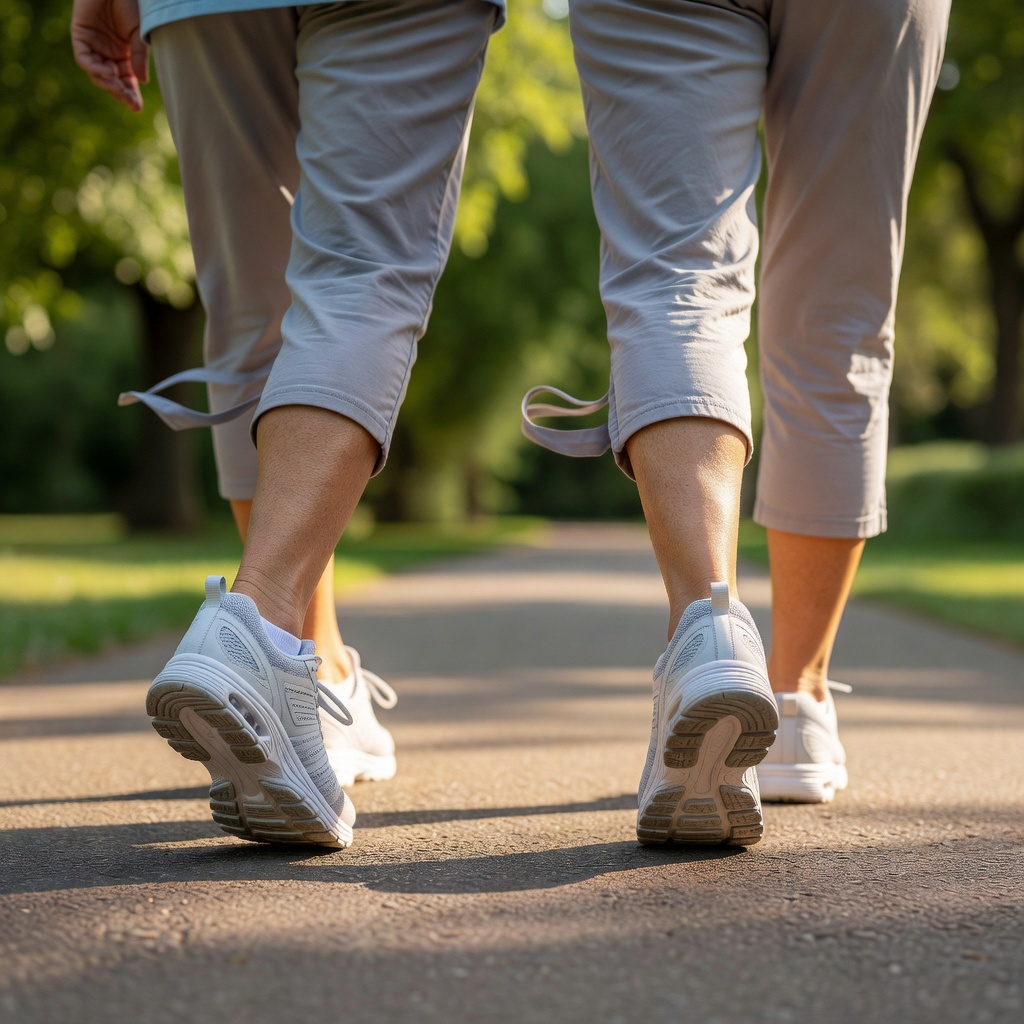
The right walking shoes can make a meaningful difference—when matched to your body's actual patterns.
The Real Goal: Reduce Knee Stress While Walking
Your knees absorb impact with every step.
If something in your walking pattern is slightly off—your knees often become the 'shock absorber' for that imbalance.
That stress can come from:
- Foot alignment issues
- Limited ankle mobility
- Hip instability
- Walking stride changes over time
Shoes can help absorb force… but they can't fully correct these patterns. That's why some people buy multiple pairs—and still feel the same discomfort.
What Actually Makes a Walking Shoe "Good for Knees"?
When people say "good for knees," they usually mean: Less impact · Better alignment · More stability
Here are the features that matter most:
🟢 Cushioning (Shock Absorption)
Cushioning helps reduce the force traveling from your foot → into your knees.
- EVA or gel midsoles
- Max cushion designs
- Balanced—not overly soft (too soft = unstable)
🟢 Arch Support (Alignment Control)
Your arch plays a huge role in how your knee tracks during movement.
- Flat feet → inward knee stress
- High arches → poor shock absorption
🟢 Stability (Control Over Movement)
A stable shoe prevents excess rolling (pronation/supination).
- Firm heel counter
- Wide base
- Structured midsole
🟢 Heel-to-Toe Drop (Impact Distribution)
This is the height difference between heel and toe.
- Higher drop → shifts load away from knees
- Lower drop → increases natural movement (but more knee load)
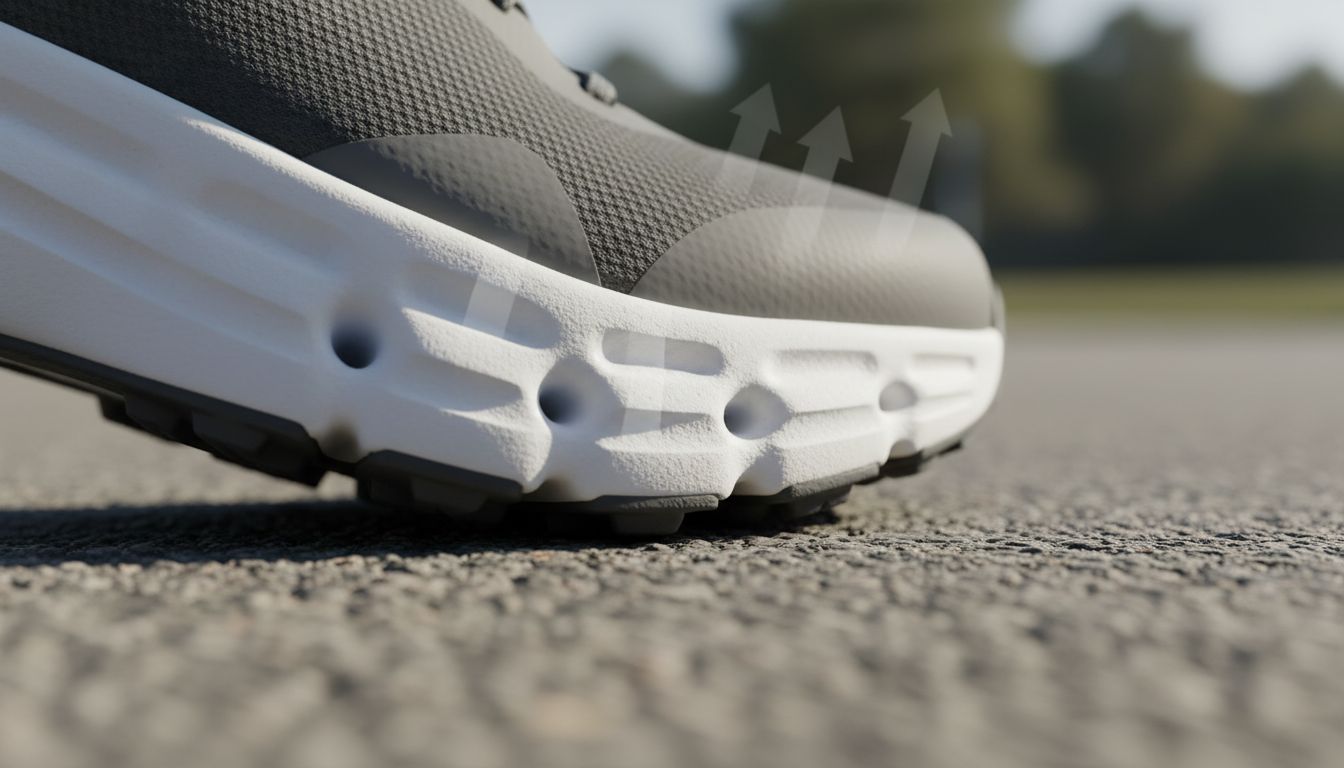
A well-cushioned midsole absorbs impact forces before they reach your knees — key for longer walks on hard surfaces.
Top Walking Shoe Types for Knee Support (2026)
Instead of chasing one "perfect shoe," focus on categories:
Max Cushion Shoes
Best for impact reduction. Great for longer walks.
Stability Walking Shoes
Best for alignment issues. Helps control foot motion.
Orthopedic / Support Shoes
Designed for structural support. Often helpful for chronic knee discomfort.
Walking-Specific vs Running Shoes
Walking shoes = more consistent heel strike support. Running shoes = more forward propulsion.
Still unsure which shoes are right for your knees?
Before choosing your next pair…
👉 Find out what your body may actually need first
Find Your Walking Pattern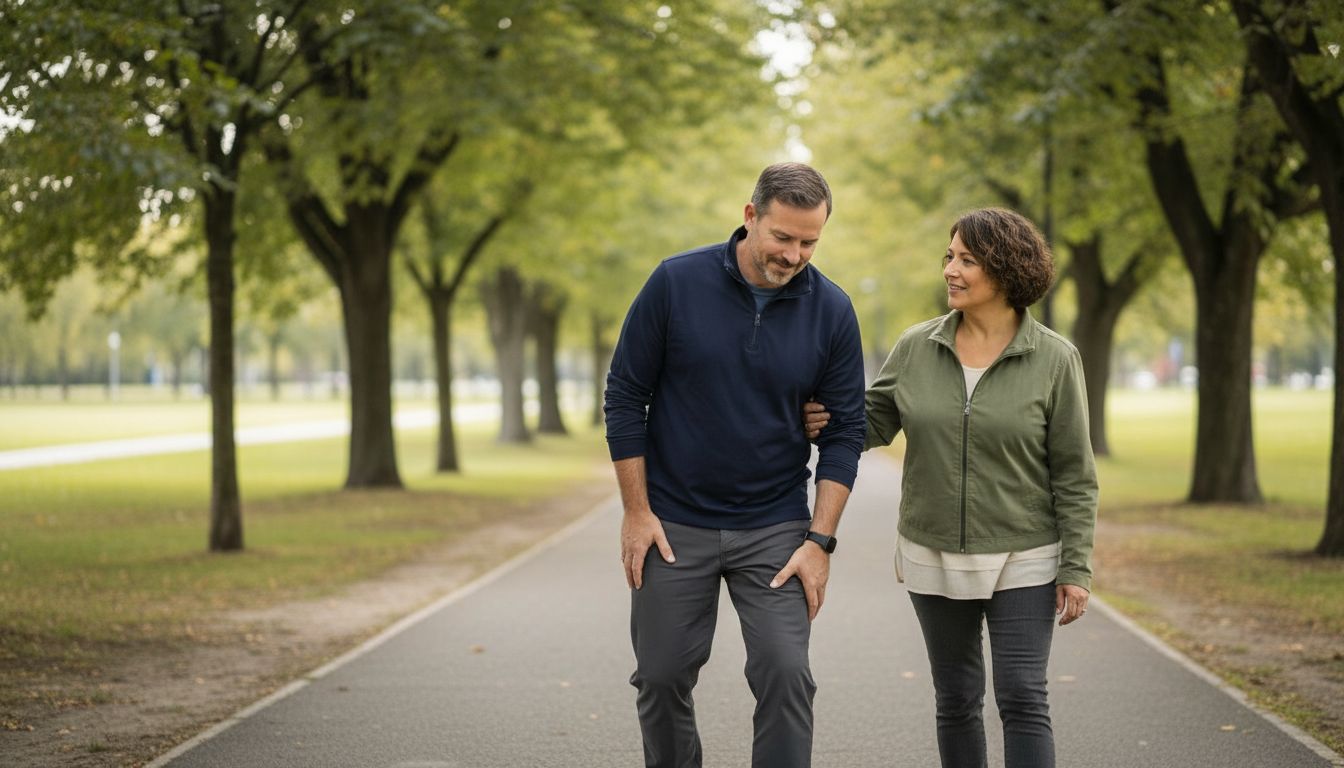
Knee discomfort mid-walk is one of the most common signs that something deeper may be influencing your movement.
The Aha Moment Most People Miss
Here's where things click for a lot of people:
"You might not have a shoe problem… You might have a walking pattern problem that shoes are trying to compensate for"
That's why:
- One pair feels great… then stops helping
- Different brands give mixed results
- Pain moves (knee → hip → foot)
Your body adapts over time—and your knees often take the hit.
Limber Nation Framework
The Walking Mobility Framework
Understand the six pillars of sustainable walking after 50 — load, joint support, balance, recovery, tools, and circulation.
Before You Buy Another Pair…
Ask yourself:
Does the discomfort start after a certain distance?
Is one knee worse than the other?
Does changing shoes only partially help?
These are signs that something deeper may be influencing your movement.
Step 1 Before Step 2 (This Changes Everything)
Before investing in another pair of shoes… it helps to understand what your body is adapting to.
That's exactly why we created a simple starting point:

Sometimes the most helpful step is pausing to check in — before you walk further.
Discover What's Really Affecting Your Knees
A quick 2-minute check can help you understand:
- How your walking pattern may be affecting your knees
- Where your body may be compensating
- What type of support (shoes or otherwise) may actually help
Designed for adults 50+ who want to walk more comfortably
Final Takeaway
The best walking shoes for knee support can absolutely help.
But they work best when they're matched to:
- Your walking pattern
- Your alignment
- Your body's current adaptations
When those line up… that's when walking starts to feel better again.