
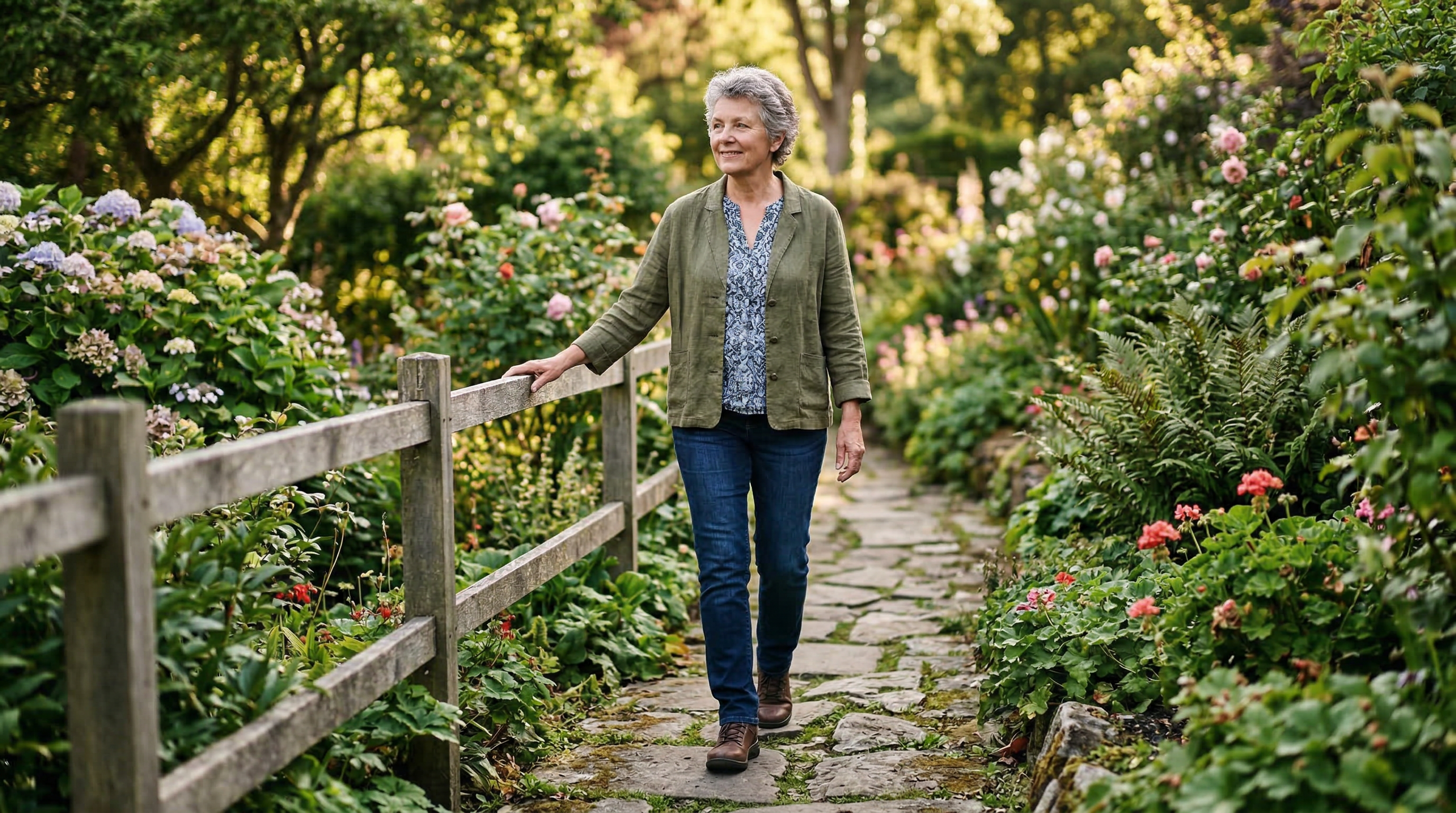
Balance Getting Worse When Walking?
A compassionate guide to staying confident, capable, and independent.
You might not have noticed it all at once.
A slight hesitation before stepping off a curb you've crossed a thousand times.
Reaching for the railing on stairs you never used to touch.
Watching the ground beneath your feet more than the horizon ahead.
For most women over 65, balance changes happen gradually. It starts as a quiet loss of confidence—that feeling that you don't trust your footing like you once did.
The most important thing to know is that this isn't just "getting old," and it isn't inevitable. Very often, these changes are tied to things we can improve—like strength, mobility, and how you move.
You still have choices. Walking can feel steady and joyful again.
Susan used to love visiting garden centres. Then one spring she noticed she'd started avoiding the gravel paths, not because anything dramatic had happened, but because her footing didn't feel certain anymore. She simply stopped going.
Why balance quietly chips away at confidence:
Balance isn't just in your ears or your brain. For active adults, balance is mostly about how your body moves as a whole.
Confidence returns when you have:
What's Bothering You Most Right Now?
Balance changes show up differently for everyone. Tap the description that sounds most like you — and we'll point you toward the right kind of help.
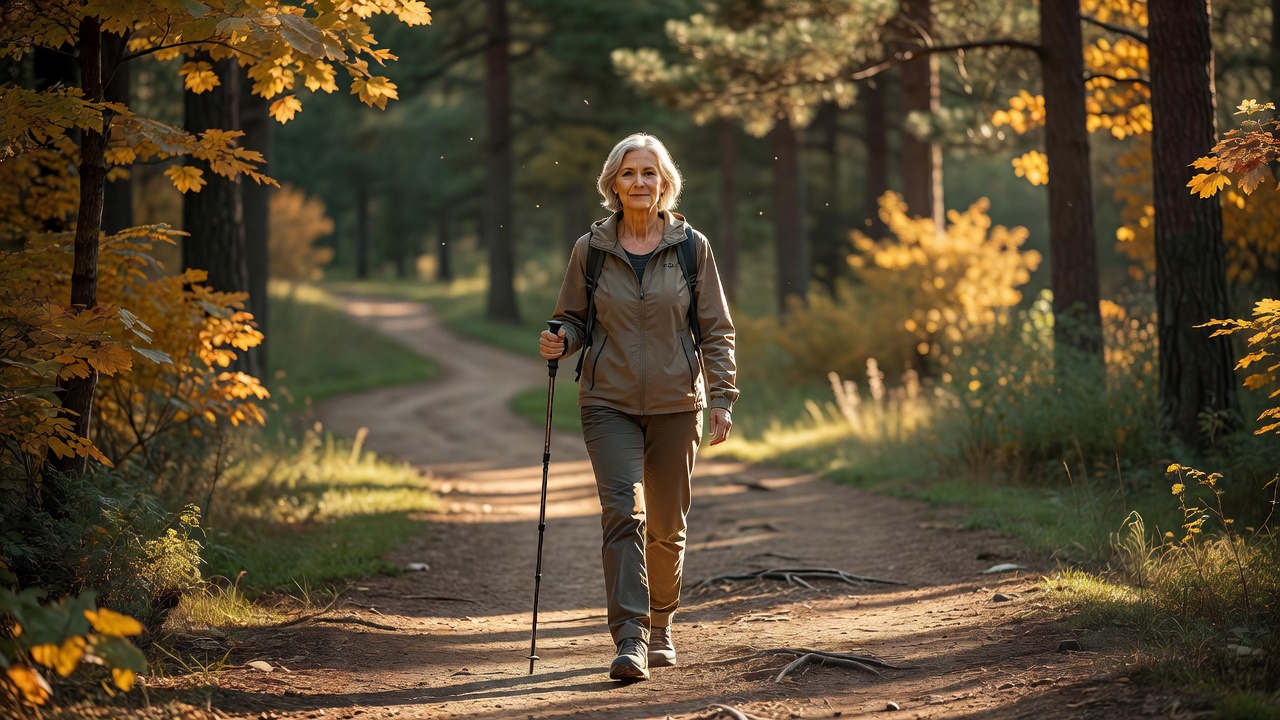
I Feel Less Steady on My Feet
You're still walking regularly, but you notice subtle wobbles on uneven ground, reach for railings more often, or feel less confident on grass, gravel, or unfamiliar surfaces.
What helps:
- Walking poles for extra ground contact
- Supportive, stable walking shoes
- Simple hip and ankle exercises
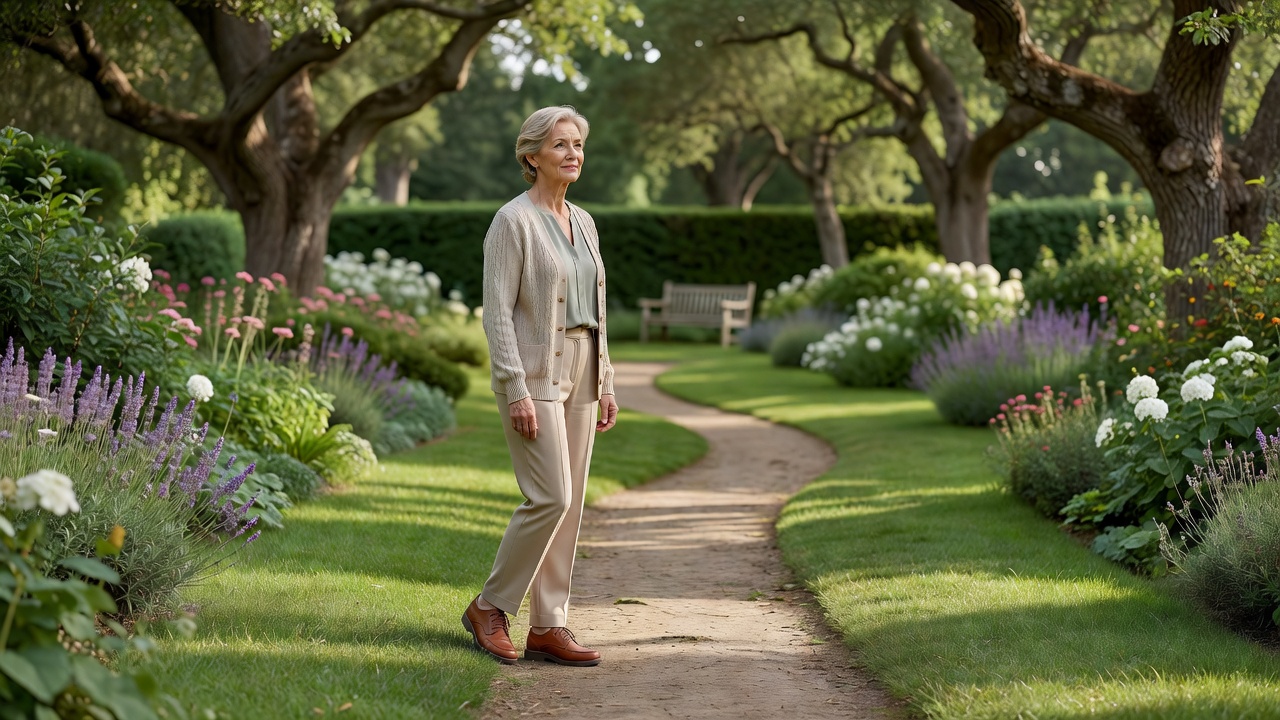
I'm Avoiding Certain Surfaces or Situations
Grass, slopes, stairs, or crowded spaces make you nervous. You've started avoiding routes or activities you used to enjoy because your balance doesn't feel reliable.
What helps:
- Balance and stability aids
- Walking pattern improvements
- A quick mobility assessment to pinpoint the issue

I'm Worried About Falling or Really Limiting Myself
Balance changes are starting to affect daily life. You've skipped outings, feel anxious on your feet, or wonder if you should be using a walker. You want practical answers.
What helps:
- Mobility support options
- When to talk to your doctor
- Tools that keep you out in the world
Signs Your Balance May Be Changing
Balance changes rarely happen all at once. Usually, they show up as small, quiet moments where confidence slips away.
Margaret noticed she'd started reaching for her husband's arm on uneven sidewalks. Not because she'd fallen, just because the ground didn't feel as reliable as it used to. She'd never thought of herself as someone with "balance problems." But she'd quietly stopped suggesting evening walks after dinner.
If these moments feel familiar, you aren't alone—and more importantly, you aren't facing a decline you can't influence.
The Mobility Chain and Balance
Steadiness isn't controlled by just one body part. It is a team effort. When one link in your "mobility chain" becomes stiff or weak, your balance system has to work twice as hard.
- Your foot cannot adjust to small bumps or uneven cracks in the ground.
- You lose the "shock absorbers" that catch your balance during a trip.
- Walking feels more like "lifting" heavy feet than rolling through a step.
- Your body sways side-to-side (a "waddle") just to clear your feet from the floor.
- Standing on one leg—which we do during every step—feels shaky and uncertain.
- Your back and knees start to ache from taking over the work your hips should do.
Balance problems are usually movement chain problems. This is why "balance exercises" alone often don't help—we have to fix the links that are making the system work too hard.
Why Balance Changes
Most changes are mechanical and movement-related. Understanding the "why" is the first step to feeling steady again.
Five Walking Habits That Quietly Reduce Balance
These are the most common mechanical causes. Each one is addressable.
Weak Hips
Your hips are the primary stabilizers of your entire walk. They keep your body steady while you're standing on one leg during each step. When they weaken, your body starts swaying side to side, stairs feel uncertain, and your feet begin to 'hunt' for stability on every surface. This is why stairs are often the first thing that feels different.
Stiff Ankles
Your ankles are your body's steering wheel and shock absorbers. When they're stiff, you lose the smooth weight transfer from heel to toe and the reactive 'spring' that catches you if you trip. The result is shorter, choppier steps, instability on slopes or grass, and footsteps that feel heavy or loud.
Walking Too Slowly
This surprises almost everyone. Walking too slowly removes the forward momentum that keeps you upright and forces you to spend more time balanced on one leg, which actually increases sway. Like a bicycle, it's harder to balance when you're barely moving. Finding a comfortable, steady rhythm usually improves things more than slowing down.
Looking Down While Walking
Your balance system relies on your vision and inner ear working together. Looking at your feet collapses your posture, shortens your stride, and confuses the very sensors you need for stability. Watching the ground makes the horizon feel unstable, which only increases anxiety. Try looking 10 to 15 feet ahead. Your feet will know where to go.
Short Shuffling Steps
When you feel unstable, the natural reaction is to take smaller steps. But shuffling keeps your feet too close to the ground, reduces the push-off force you need for stability, and makes it harder to recover if you catch your toe. Small steps feel safe, but they actually make you more vulnerable. A comfortable, natural stride length is more stable.
For Robert, it was weak hips. He'd been a lifelong walker and never thought much about balance. But when his daughter pointed out he was swaying side to side on their weekly walks, he realized the feeling had been creeping in for months. A few weeks of simple hip exercises, and the swaying noticeably improved. He just hadn't known what to look for.
Other Contributing Factors
Subtle changes in your body's sensory systems that can also play a role.
Vision Changes
Depth perception shifts affect how your brain judges steps and surfaces.
Inner Ear Changes
The balance system in your inner ear can become less sensitive with age.
Foot Changes
Thinner padding, stiffer joints, and reduced sensation change your ground-feel.
Medication Side Effects
Some common medications for blood pressure or sleep can affect steadiness.
Nerve Changes
Mild numbness or tingling (neuropathy) reduces the feedback from your feet.
Joint Changes
Arthritis in knees or hips can alter your natural walking mechanics.
When to speak with a healthcare professional
Most balance changes are gradual and movement-related. But a quick check with your doctor is a smart, proactive step that rules out anything needing attention, giving you the peace of mind to focus on what you can improve.
Reach out to your doctor if you notice:
"Taking control of your balance starts with the right information. Your doctor can provide that clinical foundation, and we can help you build the mobility you need to keep walking."
What You Can Start Doing Today
You don't need to wait. Small changes in how you move, stand, and walk can start making a difference almost immediately.
Pat had stopped walking her favourite park loop, not because her legs hurt, but because the uneven sections made her anxious. A new pair of stable walking shoes with a wider base changed how the ground felt under her feet. She's back on the loop now, and she goes further than before.
Hip Strength
You don't need a gym. Simple movements at home can wake up your primary stabilizers.
- Side-lying leg raises while in bed
- Sit-to-stands from your favorite chair
- Standing on one leg (with counter support)
- Lateral (side) steps while holding a railing
Ankle Mobility
Restore the 'steering wheel' of your balance system.
- Heel and toe raises while seated
- Slow, deliberate ankle circles
- Calf stretches using a wall for support
- Tapping your toes to your favorite music
Footwear & Feet
Your foundation for every step.
- Choose shoes with a wide, stable base
- Ensure a firm heel cup for support
- Avoid walking in socks on smooth floors
- Wiggle your toes to improve sensory feel
Home Confidence
Smart, proactive changes to your environment.
- Ensure pathways are clear and well-lit
- Add grab bars where they provide peace of mind
- Remove or secure loose area rugs
- Keep frequently used items at waist height
Free Walking Confidence Checklist
A printable guide you can keep on your fridge or beside your walking shoes.
- Daily balance habits (2 minutes)
- Simple hip and ankle exercises
- Shoe checklist: what to look for
- Home safety reminders
- When to seek medical advice
Walking With More Confidence
Confidence isn't something you just hope for—it's something you rebuild, one walk at a time.
Walk with a companion
A friend provides more than just physical support; they reduce the anxiety of being alone if you feel unsteady.
Choose familiar, flat routes
Rebuild your confidence on ground you know. There's no shame in sticking to flat, predictable paths while you're training.
Take breaks without guilt
Balance fatigue is real. If your legs feel heavy or tired, find a bench. It's smarter to rest than to push through unsteadiness.
Notice what feels steady
Our brains are wired to notice fear. Intentionally notice the moments where you feel strong and upright. Build on those successes.
After six weeks of walking with poles, Susan went back to the garden centre. The gravel path was still there. But this time, with four points of contact on the ground, she walked it without thinking. "I didn't realize how much I'd missed it," she said.
"The goal isn't to walk like you did at 40. The goal is to walk with the confidence and freedom you deserve right now."
Imagine Six Months From Now
Close your eyes for a moment. Imagine stepping out your front door and walking without that constant internal monitor, the one that scans every crack in the sidewalk, calculates every curb, and wonders if today is the day you might stumble.
That's what we're building toward. Not just steadier walking. A fuller life.
Sometimes Small Changes Aren't Enough
When the Right Equipment Removes Just Enough Uncertainty
Most people improve noticeably by strengthening muscles, improving mobility, and changing walking habits. But sometimes the right piece of equipment removes just enough uncertainty that walking becomes enjoyable again, and that's the whole point.
Tools That Put Confidence Back in Your Step
Walking Poles
Many women discover they walk farther, relax their shoulders, and stop worrying about every uneven sidewalk once they begin using walking poles.
Balance gets harder when you have only two points of contact. Walking poles give you four — instantly expanding your base of support so your nervous system can stop its constant 'don't fall' effort and let you focus on the walk itself.
- ✓Walk further without fatigue
- ✓Stand taller without thinking about it
- ✓Feel steady on grass, gravel, and slopes
Supportive Walking Shoes
A stable, well-fitted shoe changes how the ground feels under your feet. Many women tell us they didn't realize how much their old shoes were undermining their balance until they switched.
Your balance system starts at your feet. When your shoe lets your foot feel the ground clearly — with a wide base and firm heel — your brain gets the feedback it needs to keep you steady. Every step feels more secure.
- ✓Feel grounded on every surface
- ✓Stop second-guessing uneven sidewalks
- ✓Walk with a natural, relaxed stride
Balance & Mobility Aids
These aren't just for people who've fallen. They're for anyone who wants to walk further, feel steadier, and stop scanning the ground ahead for trouble.
Using the right aid proactively is a smart strategy, not a sign of limitation. The women we hear from often say they wish they'd started sooner — not because they needed it desperately, but because the peace of mind was immediate.
- ✓Walk further than you thought you could
- ✓Stop worrying about uneven ground
- ✓Rediscover routes you'd been avoiding
Mobility Scooters
Sometimes the goal isn't to replace walking — it's to make sure walking isn't the reason you stop going places. A scooter keeps you in the restaurants, markets, parks, and family outings you love.
When walking distance limits your days, a mobility scooter isn't giving up. It's giving yourself back the freedom to browse a farmers market, explore a garden, or join a family outing without counting steps or scanning for the nearest seat.
- ✓Stay out all afternoon without exhaustion
- ✓Join family outings without anxiety
- ✓Keep doing the things that make you you
Compression Socks
When your feet and legs feel heavy or distant, compression socks wake up the sensory connection between your feet and your brain — the foundation of steady, confident walking.
Compression socks increase the sensory feedback your legs send to your brain. That 'feel' of where your foot is on the ground is a key part of balance, and many women notice an immediate improvement in how grounded and secure they feel.
- ✓Feel more connected to the ground
- ✓Reduce that heavy, tired leg feeling
- ✓Walk longer without leg fatigue
Every tool on this page is here for one reason: to give you back the confidence to walk where you want, when you want, without that constant background worry about your balance.
Understand Your Own Walking Pattern
If you'd like to understand your own mobility chain better—which parts might need a little extra attention—our quick assessment can point you in the right direction.
Free · Takes about 2 minutes · Confidential
Common Questions
"You still have choices. Walking can still be yours."
The real loss isn't balance itself. It's the walks you stop taking and the confidence that quietly slips away. Most balance changes can be understood, and most can be improved.
Balance changes are quiet. They don't announce themselves. One day you reach for the railing, and you realize you've been doing that for months. But here's what's worth remembering: most of the women we hear from who took one small step, a pair of poles, a different shoe, a few hip exercises, tell us they wish they'd started sooner. Not because it was hard. Because the confidence came back faster than they expected.