
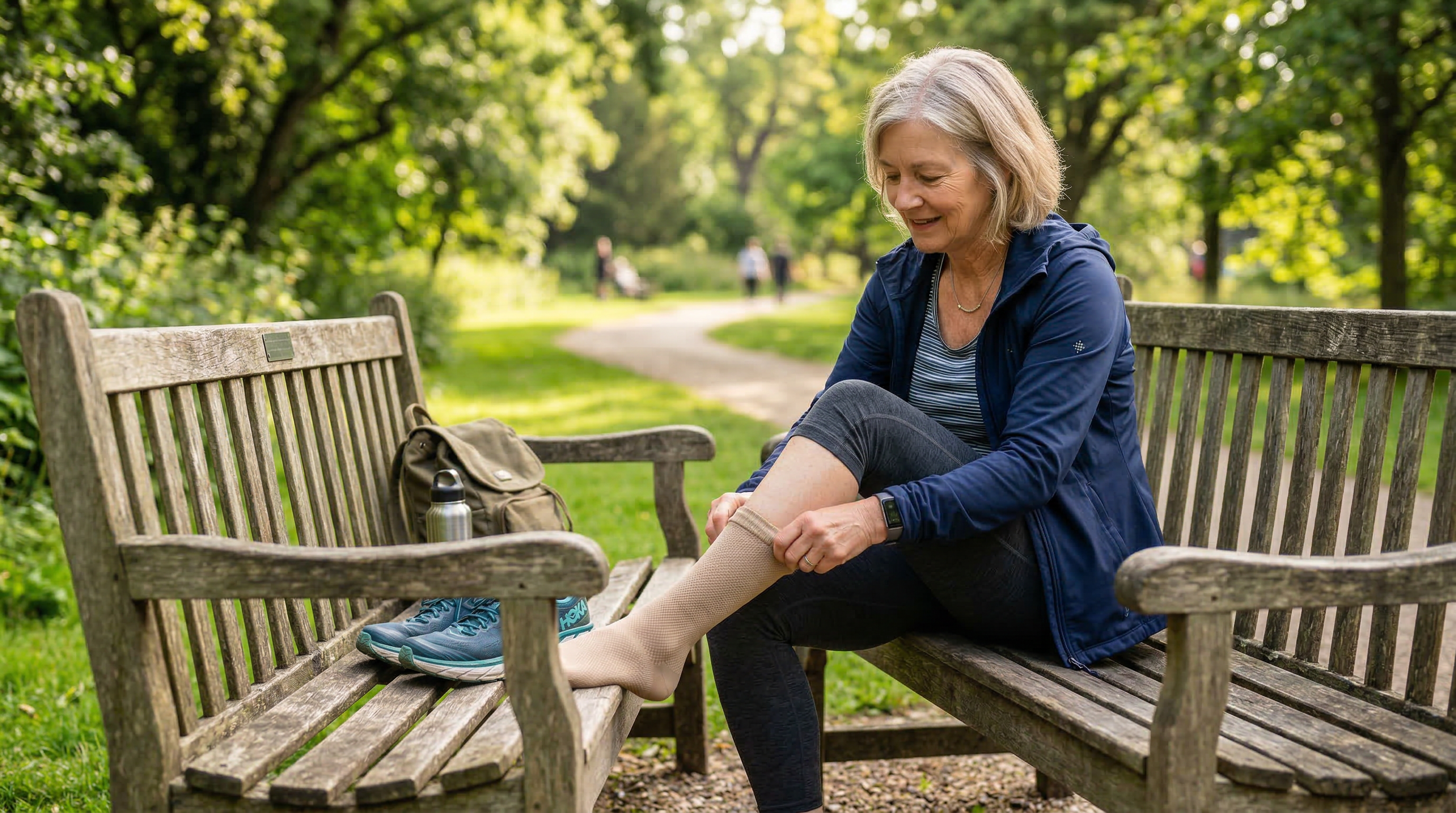
Compression Socks for Walking
Do They Help, When to Use Them, and How They Improve Walking Comfort
Many people notice their legs feel tired, heavy, or swollen after walking.
Noticeable marks from your socks after a short walk...
Slight swelling around your ankles by the end of the day...
Calves that feel tight or achy after just 15 minutes...
Your feet and legs tiring out faster than they used to.
This is very common, especially after age 50. Most people think of compression socks as something only for long airplane flights or medical recovery.
But for many walkers, they are a simple, effective tool for comfort, circulation, and better recovery.
Yes, compression socks can help walking, especially if your legs feel tired, swollen, or heavy.
Compression socks work by gently squeezing the lower leg. This gentle pressure helps the "calf pump" move blood and fluid back up toward the heart more efficiently.
This can help:
Many walkers find they can:
However, compression socks are not a fix for everything. If your hips are stiff, stride is short, or posture is poor, your legs will still tire out quickly regardless of the socks.
Compression socks help with circulation — but walking pattern matters just as much. The Walking Mobility Framework shows the full picture.
Main Causes of Leg Fatigue and Swelling When Walking
When people think their legs are the problem, they are often only partly right.
Circulation Slows Down
As we age, the veins and valves in our legs can become less efficient. This causes blood and fluid to collect in the lower legs rather than moving back up.
Compression socks help this problem directly by supporting the veins.
The Calves Are Doing Too Much Work
Your calf muscles act as a 'second heart' for your body. When you walk, they pump blood back up. If your walking stride is short or stiff, this pump is less effective.
Common in those with short strides or stiff ankles.
The Mobility Chain Is Not Moving Well
Walking is a chain reaction. If one part is stiff, another part has to work twice as hard to keep you moving.
Leg fatigue is often a walking pattern problem, not just a leg problem.
"Sometimes leg fatigue is not really a leg problem. It is a walking pattern problem."
The Walking Mobility Chain
Think of walking like a chain of moving parts. When one part doesn't move well, the rest of the chain has to work harder.
Compression socks help circulation, but mobility improves efficiency. When both improve, walking feels much easier.
Signs You May Benefit From Compression Socks
Is your leg comfort changing? These signs suggest your circulation could use a gentle boost:
Compression socks are especially helpful for:
They are a comfort and circulation tool, not a cure — but they help many walkers feel significantly better.
Learn how circulation, leg fatigue, and walking pattern all connect in the six-pillar framework.
What Usually Helps Leg Fatigue and Swelling
Compression socks help, but they work best when combined with a few simple habits to improve how your body moves.
Compression Socks
Wear them during activity and recovery.
- Daily walks
- Travel & transit
- Standing for long periods
- Long busy days
- Post-walk recovery
Increase Stride Slightly
Short steps increase calf workload.
- Short steps = more calf work
- Slightly longer stride reduces fatigue
- Engages the glutes more
- Uses the whole mobility chain
Improve Ankle Movement
Stiff ankles hinder the circulation pump.
- Stiff ankle = harder calf work
- Reduces circulation efficiency
- Ankle circles and stretches help
- Improves 'push-off' force
Walk Taller
Leaning forward fatigues the legs.
- Walk tall, not forward
- Engages core and stabilizers
- Reduces pressure on lower legs
- Improves breathing and efficiency
Take Short Breaks
Intervals are easier than one long walk.
- Rest when legs feel heavy
- Avoid pushing through deep fatigue
- Allows circulation to catch up
- Improves overall endurance
Elevate Legs After Walking
Help gravity assist your circulation.
- Even 10 minutes helps
- Reduces pooling of fluid
- Speeds up recovery time
- Feels refreshing after a walk
Calf Stretch
Tight calves reduce pump efficiency.
- Gentle wall stretches
- Improve range of motion
- Reduce evening tightness
- Maintain healthy muscle length
Recommended Compression and Circulation Tools
Compression Socks
Graduated compression from ankle to knee — the most effective everyday tool for reducing leg fatigue and swelling.
Not all compression socks are equal. Graduated compression (tighter at the ankle, looser toward the knee) actively helps your veins push blood upward with every step — reducing the pooling that causes swelling, heaviness, and that drained feeling by end of day.
- ✓Graduated compression (15–20 mmHg)
- ✓Knee-high for best pump
- ✓Reduces swelling and fatigue
Compression Recovery Boots
Sequential compression that mimics the calf pump while you rest — for very tired or frequently swollen legs.
If your legs feel heavy and swollen even after rest, boots give you something socks can't: active, rhythmic compression across your whole leg. They simulate the pumping motion your calf does when walking — clearing fluid and metabolic waste while you sit.
- ✓Full leg sequential compression
- ✓Clears fluid buildup
- ✓Works while you rest
Supportive Walking Shoes
Shoes that support proper calf push-off — the engine that drives your natural circulation pump.
A flat, unsupportive shoe stiffens your ankle movement and weakens your push-off. A rocker-sole shoe helps your foot roll through each step naturally — activating the calf pump that keeps blood moving up your legs and away from your feet.
- ✓Rocker sole activates calf pump
- ✓Supports natural stride
- ✓Reduces leg fatigue
Recovery Tools
Foam rollers, massage guns, and massage balls that help legs recover faster after walking.
Tight calves slow your circulation and increase fatigue. A few minutes of rolling or massage after your walk keeps the muscles loose, maintains your ankle range of motion, and helps your legs bounce back faster — so tomorrow's walk feels easier than today's.
- ✓Releases calf and shin tension
- ✓Improves ankle mobility
- ✓Speeds next-day recovery
Walking Pattern Matters More Than You Think
Many people think:
"My legs are getting old."
But often the real issue is:
"Walking pattern changes over time."
Common walking changes:
- Shorter steps
- Less ankle movement
- Less hip movement
- More forward lean
- Heavier, louder steps
- Less natural arm swing
Less efficient walking means:
- Legs tire much faster
- Calves work much harder
- Worse circulation return
- More swelling and heaviness
- Compression feels more necessary
"Compression socks help circulation,"
"but improving walking pattern reduces the problem at the source."
The goal is not just: Walk more
The goal is: Walk better
When walking pattern improves, many people notice:
The Walking Comfort Guide
7 simple ways to walk farther, feel better, and stay active after 50 — delivered free to your inbox.
Get My Free Guide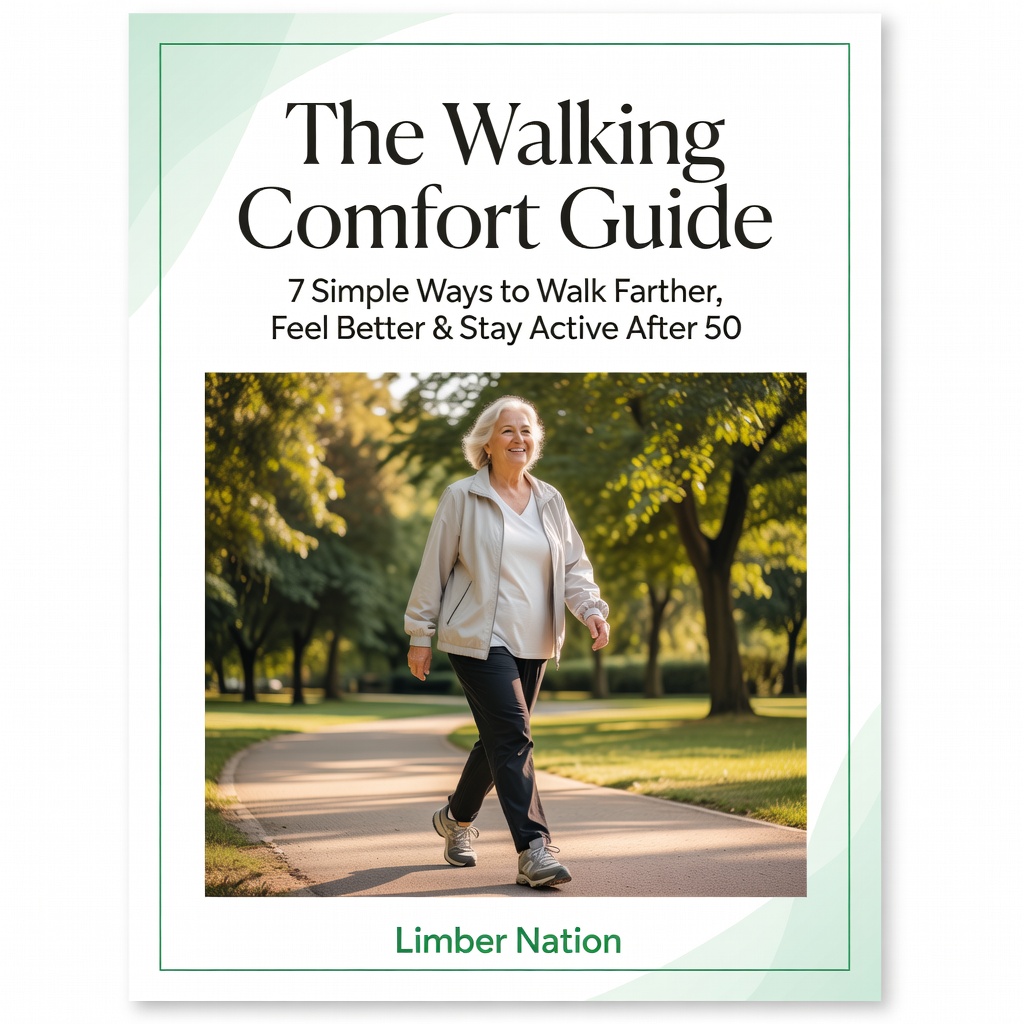
Understand What's Really Making Your Legs Tired
If your legs feel tired, heavy, or swollen when walking, the issue may not just be circulation. It may be:
Understanding how you walk is often more important than how far you walk.
Take the Free Walking Mobility AssessmentFree · Takes about 2 minutes · No login required
Frequently Asked Questions
Compression socks are a helpful tool for many walkers.
They improve circulation, reduce swelling, and reduce leg fatigue.
"The biggest improvement usually comes from: Better walking mechanics + better mobility + circulation support."
When those three work together, walking becomes easier, longer, and more comfortable.
Tools like compression socks work best when your walking pattern is also working well. Find out why.