Best Supportive Walking Shoes for Comfortable Walking
If you enjoy long walks but sometimes notice foot fatigue, knee strain, or reduced cushioning near the end of your walk, the shoes you use can make a significant difference.
Supportive walking shoes help absorb impact, stabilize your stride, and reduce the load placed on joints during longer walks.
In this guide, we review several types of walking shoes that walkers often find helpful for improving comfort and stability.
Heads up:
Some links on this page are affiliate links. If you click through and make a purchase, we may earn a small commission — at no extra cost to you. This helps us keep our guides free. We only recommend tools we believe are genuinely helpful for walkers. Read our full Affiliate Disclosure

Comfortable, supportive footwear helps make every walk more enjoyable.
Why This Helps Walkers
Supportive walking shoes aren't just for people with injuries — they're for anyone who wants their walks to feel better for longer.
- Walkers who notice foot fatigue or soreness toward the end of a walk
- Anyone who has recently changed their walking distance or surface
- People looking to reduce joint strain without changing their routine
At a Glance
Compare the Top Picks
| Shoe | Best For | Cushion Level | Link |
|---|---|---|---|
| Brooks Ghost | Balanced everyday comfort | Medium | |
| Hoka Clifton | Long-distance walking | High | View Options |
| ASICS Gel-Kayano | Stability & joint support | Medium | View Options |
The shoes listed below are commonly recommended for walkers seeking comfort, stability, and cushioning during longer walks.
Quick Recommendations
Brooks Ghost Series
Excellent cushioning and smooth stride transition.
View Current OptionsASICS Gel-Kayano
Designed to provide additional support for walkers who need extra stability.
View Current OptionsHoka Clifton
Lightweight design with excellent cushioning for longer walks.
View Current OptionsWhy Supportive Walking Shoes Matter
Walking places repetitive load on the body. A typical walk may involve thousands of steps, and each step transfers impact forces through the feet, ankles, knees, and hips.
- Reduce foot fatigue
- Improve walking comfort
- Provide better stability on longer walks
- Support natural stride mechanics
Many walkers notice improvements in comfort simply by switching to a shoe designed for walking distance rather than casual use.
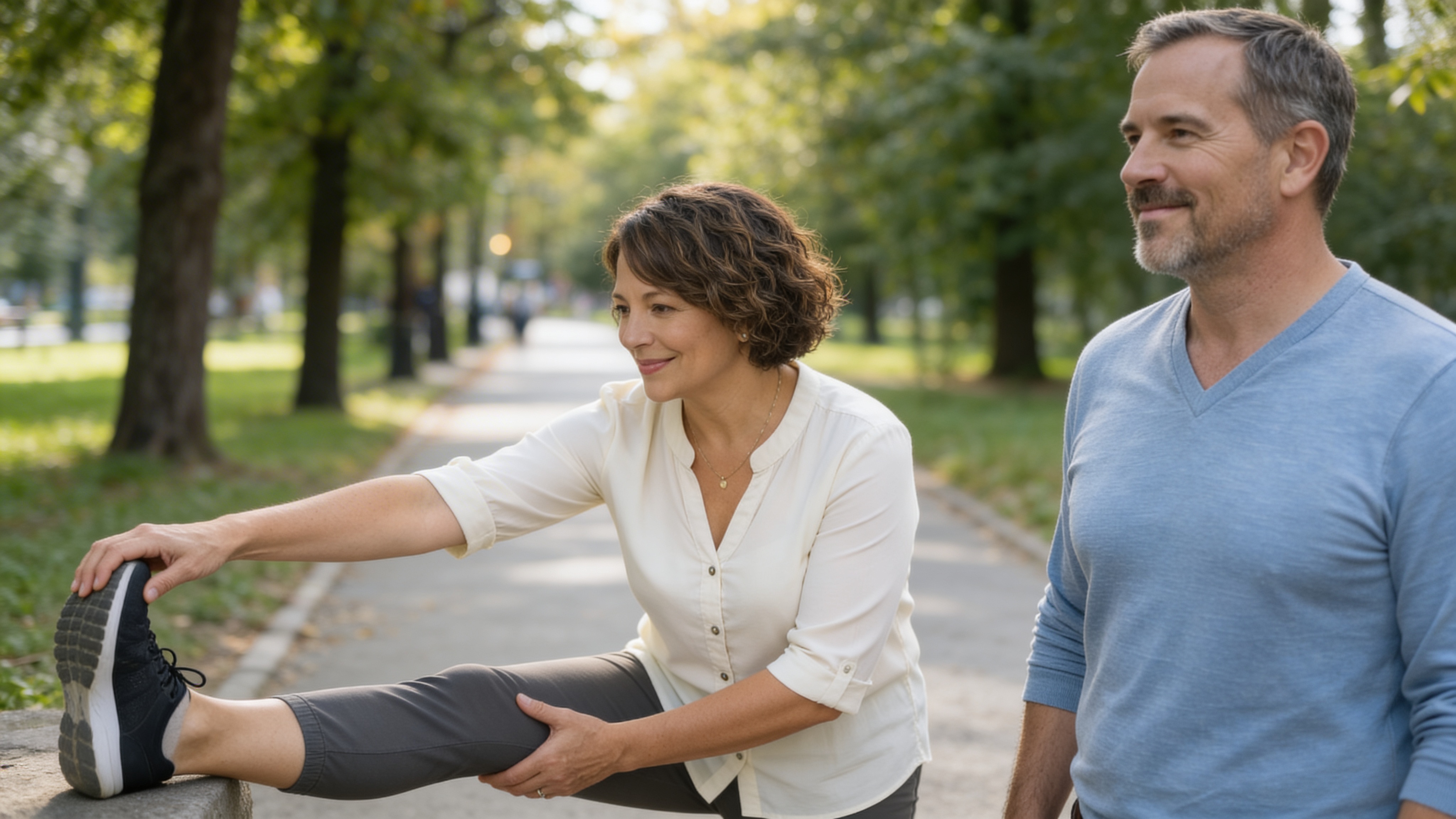
Taking a moment to stretch before a walk — and wearing the right shoes — can make a real difference in how you feel afterward.
Signs Your Walking Shoes May Not Be Supporting You
You may benefit from more supportive shoes if you notice:
Supportive shoes help distribute load more evenly throughout the stride.
What to Look for in a Supportive Walking Shoe
Cushioning
Good cushioning absorbs impact forces during walking. This can reduce strain placed on joints during longer distances.
Stability
A stable heel and midsole can help guide your stride and reduce excess movement that may lead to discomfort.
Proper Fit
Walking shoes should provide enough room for toes while keeping the heel secure. This helps prevent friction and pressure points.
Breathability
Shoes that allow airflow help maintain comfort during longer walks.
Recommended Supportive Walking Shoes
Each recommendation below is selected based on features walkers commonly find helpful. Each recommendation links to current listings.
Brooks Ghost
Balanced Cushioning
The Brooks Ghost is a perennial favorite for its reliable cushioning and neutral support. It offers a smooth ride that works well for various walking patterns.
Why walkers like it:
- Neutral support for most walking styles
- Durable DNA LOFT cushioning
- Segmented crash pad for smooth transitions
- Available in multiple widths
Best for:
Walkers looking for a versatile, all-around supportive shoe for daily exercise.
Hoka Clifton
Maximum Cushioning
Known for its oversized midsole, Hoka provides exceptional impact protection while remaining surprisingly lightweight.
Why walkers like it:
- Meta-Rocker geometry guides the foot forward
- Generous cushioning reduces joint impact
- Broad base for inherent stability
- Great for concrete and paved trails
Best for:
Walkers who prioritize maximum shock absorption for longer distances or hard surfaces.
ASICS Gel-Kayano
Stability Support
Specifically designed for those who need extra stability, the Kayano features structural support to help maintain proper alignment.
Why walkers like it:
- Rearfoot and Forefoot GEL technology
- DUOMAX support system for stability
- External heel clutch for a secure fit
- Responsive cushioning that lasts
Best for:
Walkers who notice their feet roll inward or who prefer a more structured, stable feel.

The right footwear helps you walk longer, feel steadier, and enjoy every step.
When to Replace Your Walking Shoes
Even the best walking shoes wear out over time. Consider replacing yours when you notice:
Choosing Based on Your Walking Pattern
Your unique walking pattern influences which shoe type will be most effective. A person who rolls their feet inward may benefit from a stability shoe, while someone with a neutral gait may do better with a cushioned neutral shoe.
We recommend combining appropriate footwear with knee or joint support tools for the best results.
Which Walkers Benefit Most From These Tools
These tools are commonly used by:
- Walkers experiencing foot fatigue or knee soreness on longer routes
- Walkers returning to activity after a break from regular movement
- Walkers who spend extended time on hard or uneven surfaces
Not sure which of the 4 walking patterns fits you?
Related Guides
Understand Your Walking Pattern
The right shoe works best when matched to how you actually walk. Find out which of the 4 walking patterns fits you.
Find Your Walking PatternSome links on this page are affiliate links. Limber Nation may earn a small commission at no extra cost to you. Recommendations are based on features walkers commonly find helpful.