

Feet Hurt After Walking Long Distance? Here's What's Really Going On
Foot pain after a long walk is common — but it often doesn't start in your feet. Here's why it happens and what actually helps.
You planned a nice long walk. The weather was good. You felt great when you started. But somewhere along the way, your feet began to hurt.
Maybe the bottoms of your feet started to burn.
Maybe your toes felt sore.
Maybe your arches felt tired or tight.
If this sounds familiar, you're not alone. Foot pain after walking long distances is very common, especially as we get older. But most people assume the problem is just their feet or their shoes. In many cases, the real reason your feet hurt actually starts higher up the body — in your ankles, hips, and walking pattern.
Quick Answer: Why Do Feet Hurt After Long Walks?
Your feet are the first part of your body that hits the ground. They absorb shock every step you take. If the rest of your body is not helping absorb that load, your feet end up doing too much work.
Very often, when feet hurt after walking, the feet are not the real problem — they are just the part that feels it first.
Foot pain after walking is often a sign that something higher up in the chain isn't moving well. The Walking Mobility Framework explains how it connects.
Main Causes of Foot Pain After Long Walks
Your feet are complex machines with 26 bones and dozens of muscles. Here's what often goes wrong.
Doing Too Much Too Soon
Muscles that aren't used to long walks get tired quickly. When they fatigue, your walking pattern shifts and your feet take the brunt of the impact.
When this happens:
- Sudden increase in distance
- Long vacation walks
- New hill routes
- Recent shoe change
"Consistency is key. Your feet need time to adapt to new loads."
Tight Calves: The Hidden Cause
Your calves are connected to your feet. If they're tight, they pull on your heel, preventing your ankle from moving properly. This force gets pushed right into your arch and toes.
When this happens:
- Heel lifts too early
- Forefoot pressure
- Arch pain
- Toe soreness
"Tight calves are like a 'brake' on your walking motion."
Limited Ankle Mobility
Your ankle needs to bend forward for a smooth step. If it can't, your body compensates by turning the foot out or taking shorter, choppier steps that stress the foot bones.
When this happens:
- Foot turns out like a duck
- Choppy steps
- Pushing off hard from toes
- Flat-footed feeling
"A stiff ankle forces the foot to do work it wasn't designed for."
Shoes That Don't Match Your Style
Very soft shoes can actually make your arches work harder for stability. Very hard shoes increase heel impact. Finding a balance with moderate cushion is essential for long distances.
When this happens:
- Heel impact pain
- Mid-foot fatigue
- Unstable feeling
- Numbness in toes
"The 'best' shoe is the one that supports your natural movement."
Your Walking Pattern
A long stride with a heavy heel strike sends a shockwave through your foot every time. A smoother, slightly shorter step reduces the load on your heels, arches, and even your knees.
When this happens:
- Loud footsteps
- Heel pressure
- Arch strain
- Lower back fatigue
"How you walk is often more important than what you walk in."
Find Out What's Slowing Your Walking
Answer a few quick questions and get your free personal Walking Score — no login required.
The Mobility Chain: Why Feet Feel the Stress
To understand foot pain, you have to understand the mobility chain. Your body works as a single unit when you walk. Force travels from the ground, through your foot, and up into your leg.
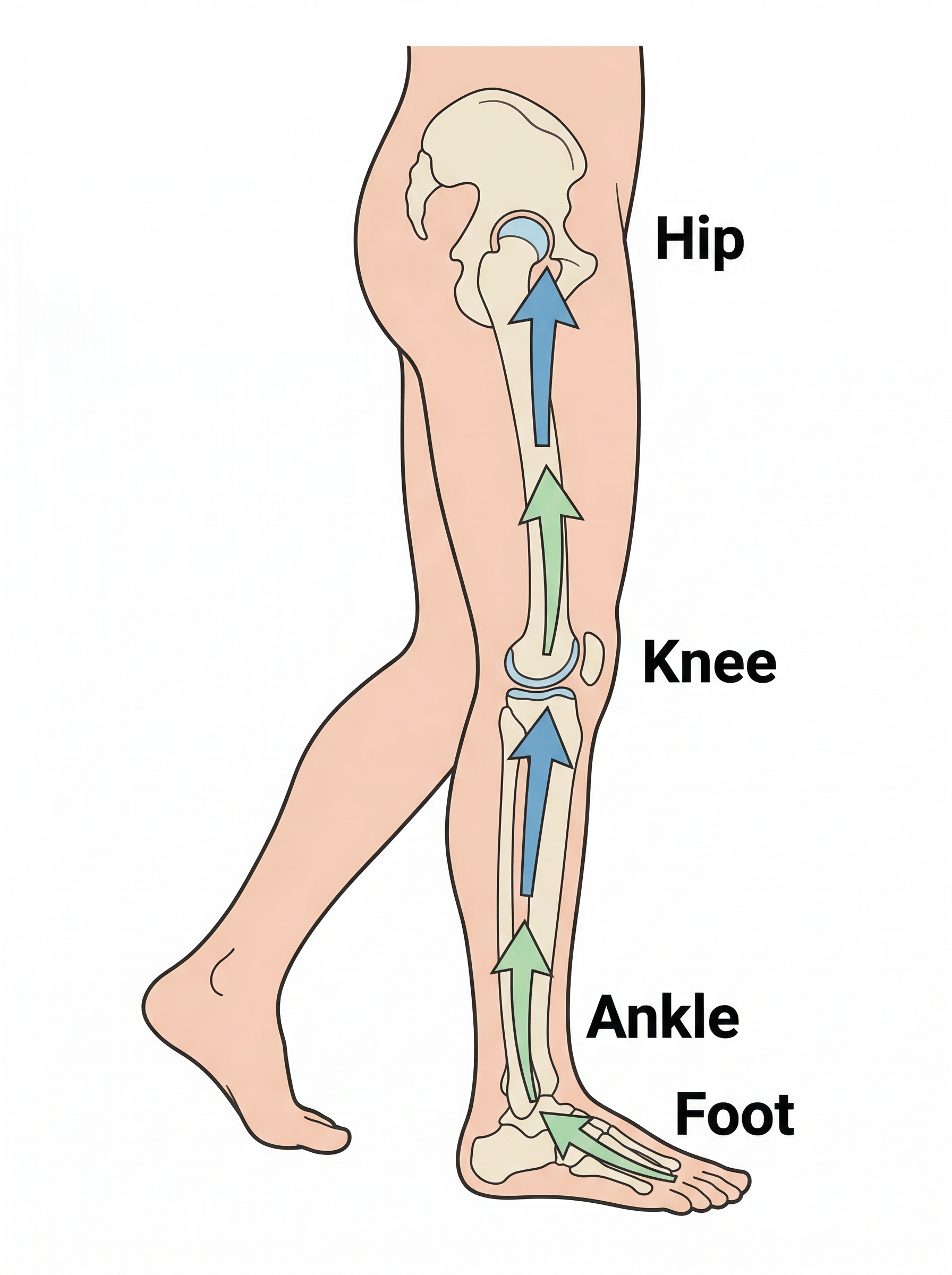
Force travels up the chain with every step — when one link is stiff or weak, the foot absorbs the extra load.
When Hip & Ankle Work Well
- • Steps feel smoother and lighter
- • Feet don't have to push as hard
- • Less pressure on the foot bones
- • Natural shock absorption
When Ankle is Stiff & Hip is Weak
- • Foot has to push much harder
- • Toes grip the ground for stability
- • Arch works overtime every step
- • Foot tires and hurts quickly
Sometimes the solution to foot pain is not better shoes or insoles — sometimes it's better ankle movement, stronger hips, and smoother walking.
Signs to Watch For
Your feet may be overworking if you notice any of these signs:
- •Burning sensation in the soles
- •Soreness in the balls of the feet
- •Heel pain after resting
- •Toes feel stiff or cramped
- •Arches feel tired or achy
- •Pain that starts after 1-2 miles
- •Loud, heavy footsteps
- •Shoes wearing down unevenly
- •Calves feel extremely tight
- •Numbness or tingling while walking
- •Foot pain that lingers the next day
These are often walking pattern and mobility issues, not just foot problems.
Tight calves, stiff ankles, weak hips — they all affect how your feet feel after walking. See how it all connects.
The Walking Pattern Most People Don't Notice
❌ The "Foot-Heavy" Pattern
- •Reaching forward with a long step
- •Heel hits the ground hard (loud steps)
- •Body leans back slightly
- •Pushing off hard from the toes
- •Feet do most of the work
✅ The "Glide" Pattern
- •Slight forward lean from the ankles
- •Shorter, more frequent steps
- •Quiet, soft footsteps
- •Pushing from the hips and glutes
- •Arms swing naturally for balance
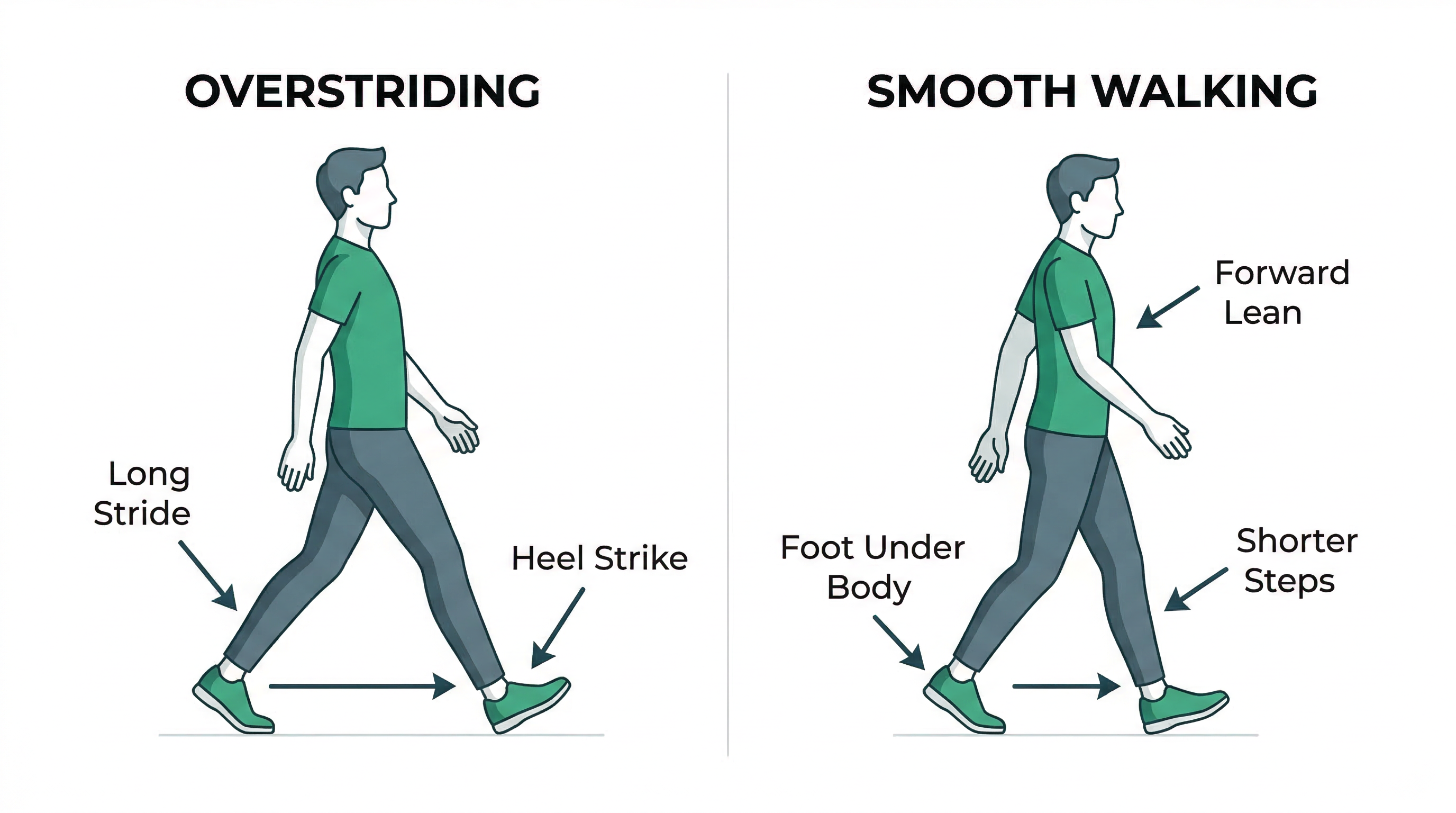
Key Tip: Don't reach forward with your foot. Let your body move forward and your foot land under you.
What Usually Helps
Shorten Your Step Length
Shorter steps lead to more steps and smoother walking. It reduces the impact on your heels and stops your arches from overstretching.
Stretch Your Calves
Perform a simple wall calf stretch for 30 seconds, 2–3 times each side after your walk. It releases the pull on your feet.
Walk Slightly Slower
Focus on 'quiet' and smooth walking rather than speed. Speed often leads to harder heel strikes and more foot fatigue.
Strengthen Your Feet
Try picking up a towel with your toes or standing on one leg. Foot strength provides the stability your arch needs.
Change Your Surface
Try walking on paths, tracks, or trails instead of hard concrete sidewalks. Softer surfaces are much kinder to your feet.

A simple calf stretch after your walk can make a big difference in how your feet feel the next day.
Tools That Support Comfortable Feet
Supportive Walking Shoes
The right shoe changes how your foot lands, rolls, and pushes off — directly reducing foot pain.
Most foot pain after walking comes from repeated impact on a hard surface with a shoe that doesn't absorb or redirect it well. A cushioned, properly fitted walking shoe with a rocker sole changes the load on your feet with literally every step — often reducing pain within the first few walks.
- ✓Absorbs impact per step
- ✓Rocker sole reduces heel stress
- ✓Proper fit reduces friction
Arch Support Insoles
Support your foot's natural arch so it doesn't flatten under load — reducing strain on every step.
When your arch collapses under your body weight, your plantar fascia stretches, your calf tightens, and your toes work overtime. A quality insole holds the arch in its natural position — distributing the load more evenly and giving your tired foot muscles a break.
- ✓Supports arch during full stride
- ✓Reduces plantar tension
- ✓Fits most walking shoes
Compression Socks
Reduce post-walk foot soreness and improve circulation during and after longer walks.
After a long walk, your feet swell slightly with fluid. Compression socks help move that fluid back upward — reducing the puffiness and soreness that tends to peak a few hours after walking. Many walkers notice their feet feel noticeably less sore the next morning.
- ✓Reduces post-walk foot swelling
- ✓Supports veins
- ✓Aids overnight recovery
Foot Recovery Tools
Massage balls, foam rollers, and recovery tools that target tight calves and sore foot muscles directly.
Tight calves pull on your Achilles and arch with every step. Rolling out your calves and the bottom of your feet after walking releases that tension — and many people find that consistent 5-minute post-walk recovery dramatically reduces how sore their feet feel the next day.
- ✓Releases tight calves and arches
- ✓Improves recovery between walks
- ✓Reduces next-day soreness
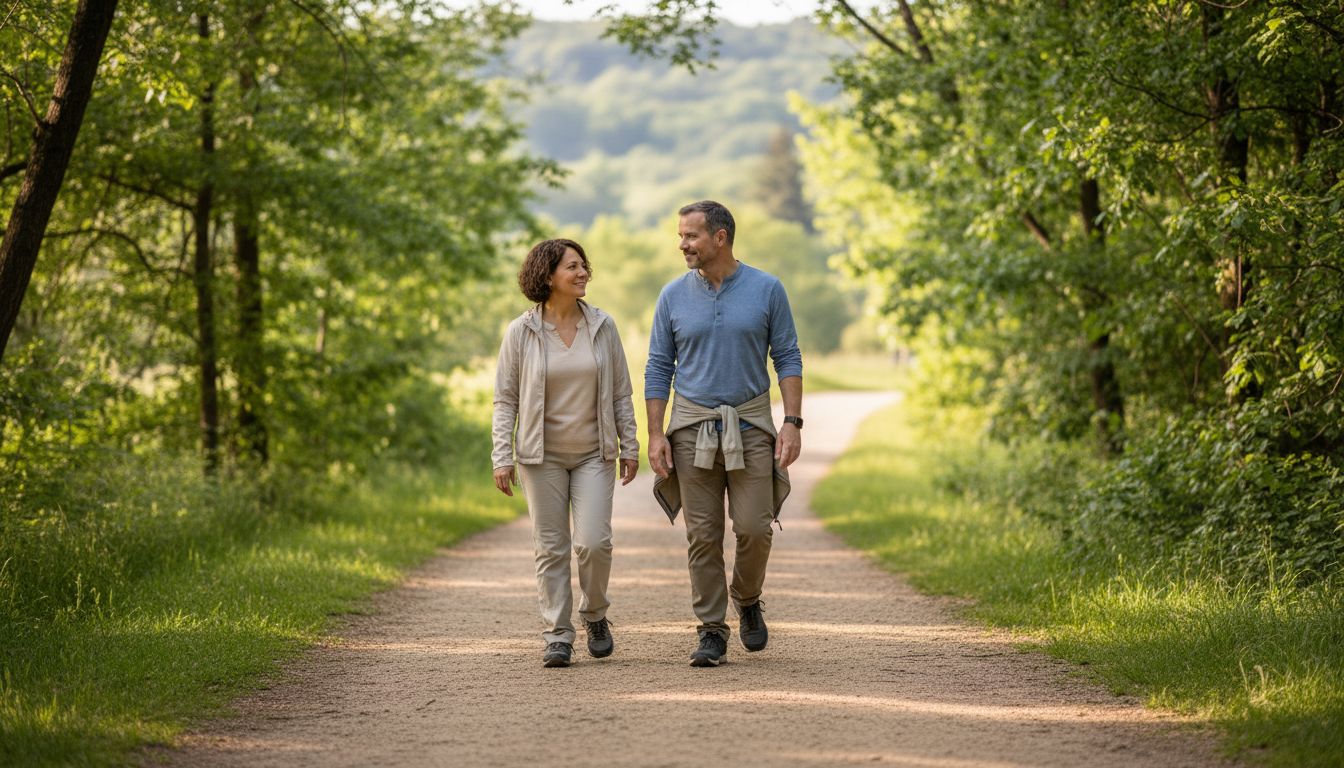
Walking on softer surfaces like trails and paths is much kinder to your feet than hard concrete.
The Walking Comfort Guide
7 simple ways to walk farther, feel better, and stay active after 50 — delivered free to your inbox.
Get My Free Guide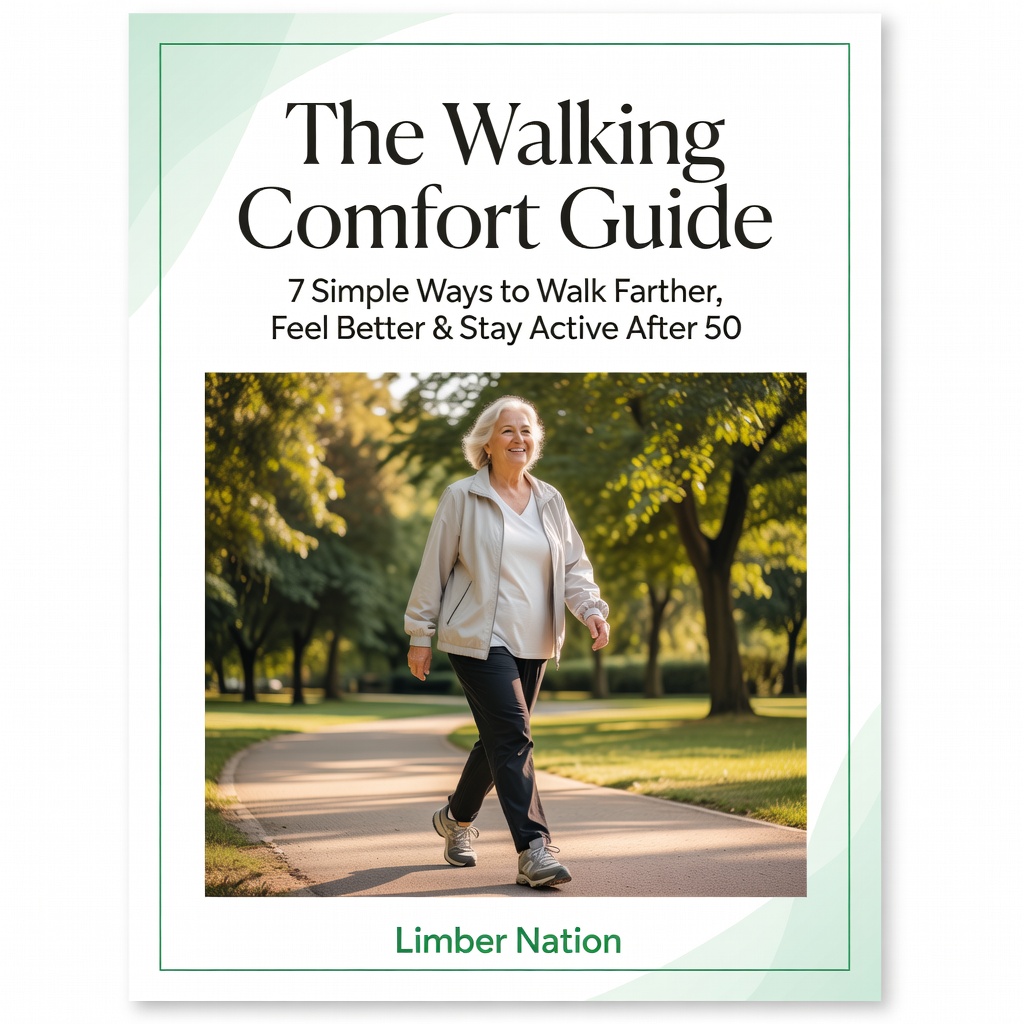
Want to Know What's Really Slowing You Down?
Foot pain often starts with ankle mobility, hip strength, or your walking pattern. Our free Mobility Assessment helps identify what's happening in just 2 minutes.

No login required · Free · About 2 minutes
Frequently Asked Questions
When the whole walking chain moves better, feet usually hurt less. The Walking Mobility Framework shows where to start.