
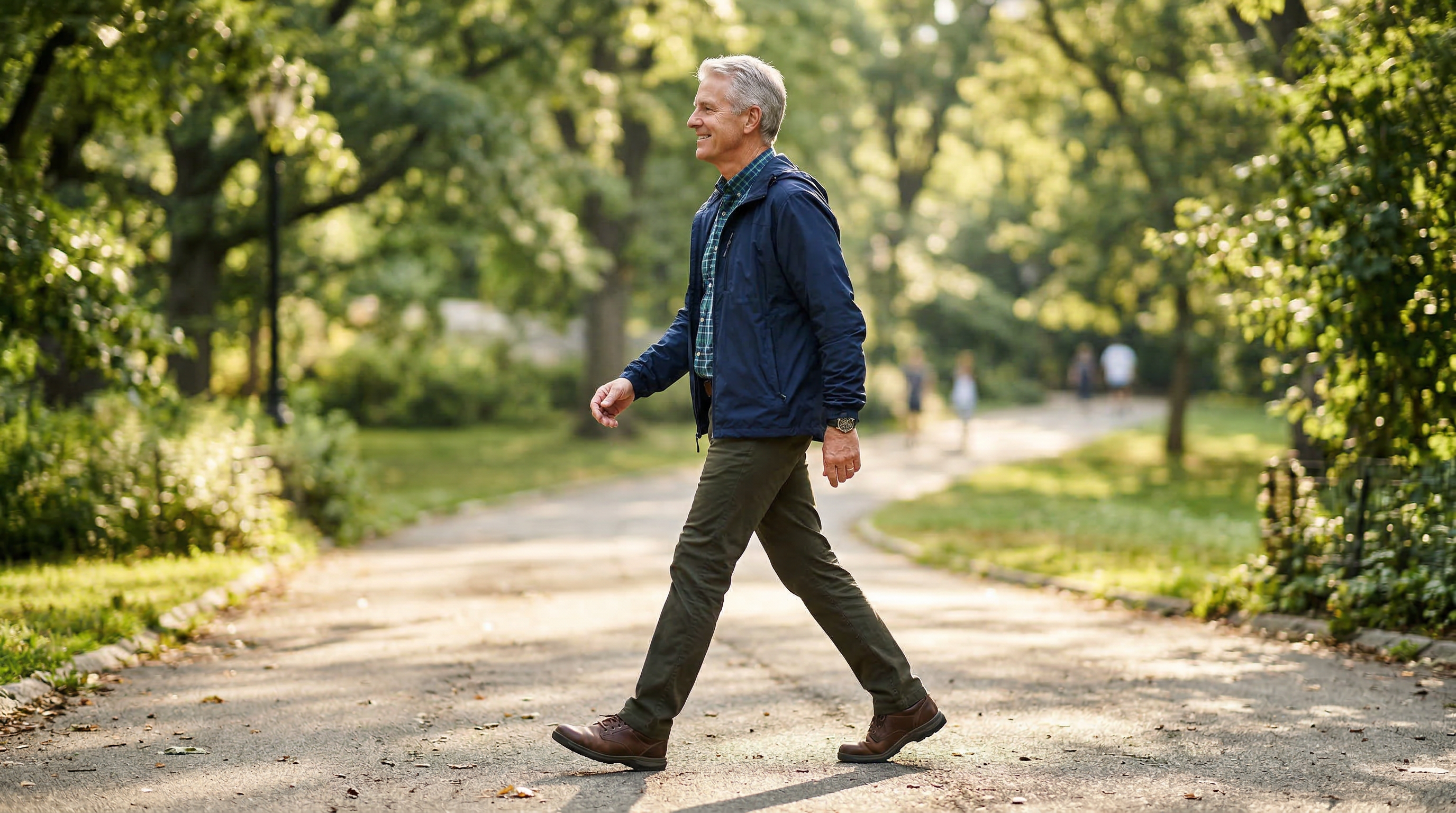
Walking Posture Problems
Why posture changes over time and how to walk better
Many people don't realize their walking posture has slowly changed over time. It's often so gradual that you don't notice until walking starts to feel "different" or more tiring.
You might notice you're walking slower than you used to...
Your shoulders feel tight or your neck gets sore after a walk...
Your feet seem to "slap" the ground more loudly...
You find yourself looking down at the ground more often.
Most people think this is just a natural part of aging. But very often, it's not age—it's posture and movement patterns that have shifted over thousands of steps.
The good news is that even small changes to your walking posture can make a massive difference in how far and how comfortably you can walk.
Walking posture problems usually happen when the body starts leaning forward, steps get shorter, and joints stop moving as much.
The most common walking posture problems:
When posture is off:
"Walking posture is not just about standing up straight. It's about how your feet, knees, hips, and upper body move together in a chain."
This is where the mobility chain becomes important.
Posture problems are usually a movement problem in disguise. The Walking Mobility Framework explains how it all connects.
Main Causes of Walking Posture Problems
Most posture problems while walking do not start in the back or shoulders. They usually start lower in the body.
Tight Ankles
If your ankle doesn't bend well when your foot hits the ground, your body has to find a way to keep moving forward. Most often, this causes the upper body to lean forward to compensate.
Many people with walking posture problems actually have ankle stiffness.
Weak Glutes
Your glute muscles are responsible for keeping your body upright during the walking motion. If they are weak, the body starts to lean forward, and the lower back has to take over the work.
Weak glutes are one of the biggest causes of poor walking posture.
Tight Hip Flexors
The muscles at the front of your hips can become very tight, especially if you sit a lot. This tightness pulls the pelvis forward, making it hard to stand tall while walking.
Common in people who sit for long periods during the day.
Rounded Upper Back and Shoulders
As the upper back rounds, the head naturally moves forward. This shifts your center of gravity forward, making your legs work twice as hard to keep you balanced.
Arm swing is very important for walking rhythm and balance.
Looking Down While Walking
Looking at your feet while you walk causes a chain reaction: your head drops, your shoulders round, and your body leans forward. This immediately shortens your step.
Where you look affects your entire posture. Try this: Stand tall and look forward — your posture improves immediately.
"Small changes in mobility often fix big problems in posture."
Walking Works Like a Chain
The movement starts at the foot and moves through every joint in your body. If one part is stiff, the entire posture shifts to compensate.
Stiff ankle causes your Knee works harder.
Weak hip causes your Lower back tightens.
Rounded shoulders causes your Balance worsens.
Short stride causes your Feet work harder.
"This is why posture problems are rarely just a posture problem. They are usually a movement problem somewhere in the chain."
When the chain moves well:
Signs to Watch For
How is your walking posture changing? These common signs suggest your movement chain could use some attention:
🪞The Mirror Test
A simple test: Walk past a large mirror or window and look at your posture while walking. Most people are surprised when they see how they actually walk.
You should see:
"Good posture is often the result of good mobility, not forcing yourself to stand straight."
Good walking posture comes from good movement — not from forcing yourself straight. The framework shows how.
What Usually Helps Walking Posture
The goal is not to walk stiff and straight. The goal is to move better while walking.
Think "Tall, Not Straight"
Trying to stand 'perfectly straight' often creates tension. Instead, imagine a string gently pulling the top of your head toward the sky. This naturally improves posture without forcing it.
Look Ahead, Not Down
Fix your gaze about 10–15 metres in front of you. This single change can fix your head position, un-round your shoulders, and stop your forward lean immediately.
Let Arms Swing Naturally
Don't force your arms to stay still or swing too hard. Just relax them. A natural arm swing improves walking rhythm, balance, and reduces the effort needed for each step.
Take Slightly Longer Steps
You don't need huge strides, but slightly increasing your step length helps your hips move through their full range, which naturally keeps your body more upright.
- Hips move better
- Posture improves
- Walking becomes smoother
Improve Ankle and Hip Mobility
This is often the biggest posture fix. When your ankles and hips move well, your body doesn't need to lean forward to compensate.
Practice Good Standing Posture
Standing posture carries directly into walking posture. Practice these basics throughout the day to build muscle memory.
- Stand tall
- Relax shoulders
- Chin slightly back
- Even weight on both feet
Tools That Support Better Walking Posture
Some simple tools can help improve walking posture and mobility at home.
Walking Poles
The most effective tool for immediately encouraging an upright, forward-moving walking pattern.
Walking poles work because they physically change how you hold your body. Gripping and planting a pole in front of you naturally pulls your chest up, opens your shoulders, and shifts your weight into a forward lean from the ankles — all the things you'd try to consciously do, but automatically.
- ✓Naturally corrects forward lean
- ✓Opens chest and shoulders
- ✓Keeps gaze forward
Supportive Walking Shoes
Proper foot alignment is the foundation of upright posture — it starts at the ground.
A shoe that lets your foot roll inward or doesn't support your heel properly creates a chain reaction upward — rotating the knee, tilting the hip, and rounding the lower back. The right shoe keeps your foot neutral, which keeps your whole body more naturally upright without extra effort.
- ✓Neutral foot alignment
- ✓Stable heel reduces chain rotation
- ✓Less fatigue = better posture later in walk
Recovery Tools
Tight hips and calves pull your posture forward — rolling them out regularly keeps you upright.
Tight hip flexors are one of the most common causes of forward-leaning walking posture. When your hip flexors are tight, they literally pull your pelvis forward and your torso down. Regular foam rolling of your hip flexors, quads, and calves counteracts this — so standing tall on your walk requires less conscious effort.
- ✓Releases posture-limiting hip tightness
- ✓Keeps calves and ankles mobile
- ✓Less forward lean with regular use
Balance & Mobility Aids
Aids that encourage upright, confident walking and reduce the 'hunching for safety' pattern.
Many people hunch forward not from weakness but from unconscious fear of falling. When you feel safe and supported, your body naturally straightens. Balance aids give your nervous system the reassurance it needs to let your posture relax into a more upright, confident position.
- ✓Reduces fear-based forward hunch
- ✓Supports confident upright walking
- ✓Great for mixed terrain
Tools don't fix posture alone, but they make it easier to improve movement patterns.
Walking Pattern Matters More Than Posture
This is important.
Most people try to fix walking posture by:
- Forcing themselves to stand straight
- Pulling shoulders back hard
- Tightening stomach muscles
- Trying to walk 'perfectly'
But the reality is:
"Walking posture is mostly controlled by how you walk, not how you hold yourself."
Posture is the RESULT of good movement, not the cause.
If your walking pattern has:
- Short, choppy steps
- No arm swing
- Stiff ankles
- Weak hips
- Shuffling feet
Your posture will collapse forward over time regardless of how hard you try to stand straight.
When walking pattern improves:
- Posture improves naturally
- Balance feels secure
- Walking speed increases
- Walking feels easier
- Less knee and back pressure
Old Way of Thinking:
"I need better posture."
Better Way of Thinking:
"I need a better walking pattern."
"Posture is often the result, not the starting point."
The Walking Comfort Guide
7 simple ways to walk farther, feel better, and stay active after 50 — delivered free to your inbox.
Get My Free Guide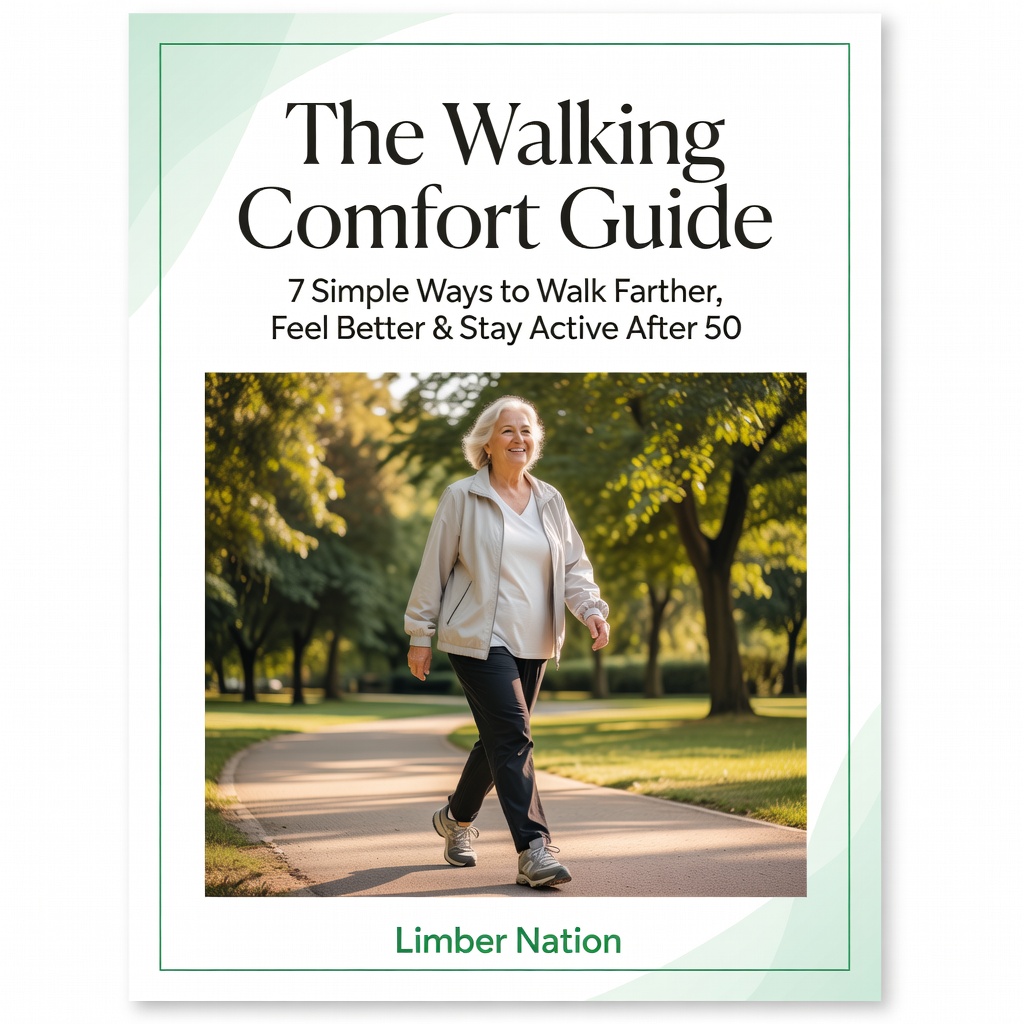
Check Your Walking Pattern
If walking feels harder than it used to, posture may not be the real problem. The real issue is often hidden in your walking pattern:
These things are hard to see by yourself. Our assessment helps you understand:
Free · Takes about 2 minutes · No login required
Frequently Asked Questions
Walking posture problems are very common.
But they are usually fixable. Most people don't need to walk straighter — they need to move better.
"When the body moves better, posture usually fixes itself."
When movement improves, posture usually follows. The Walking Mobility Framework shows where to start.