

Lower Legs Ache After Walking? Here's Why — And How to Fix It
Why It Happens and What Your Walking Pattern Is Telling You
Lower legs aching after a walk is very common.
It can feel like tight calves, sore shins, or tired lower legs.
Sometimes it starts during walking.
Sometimes it shows up later when you sit or climb stairs.
Most people think it's just aging or circulation.
But in many cases, it's actually how you're walking.
Quick Answer
Lower legs usually ache because they are doing too much work.
This happens when:
- •Steps are too short
- •Ankles are stiff
- •Hips are not helping enough
- •You push off mostly with your calves
Walking should come from your hips and movement forward.
When it doesn't, your lower legs take over — and start to ache.
Free: The Walking Comfort Guide
Practical tips to help you walk further with less pain — put together specifically for adults 50+.
No spam. Unsubscribe anytime. We respect your privacy.
What Usually Helps (Quick Start)
Before we get into causes — here are five things that often reduce lower leg aching right away.
Walk slightly taller
Opens the hips and lets your legs swing more freely
Take slightly longer steps
Reduces how hard your calves have to push off
Let your back leg stay back longer
Allows the hip to do more of the pushing
Improve ankle movement
Stiff ankles shift extra load to the calves and shins
Avoid pushing off hard with your toes
Toe push-off overloads the lower leg — use your whole foot
��� These are quick wins. They won't fix everything — but many walkers notice a difference in the first few minutes.
Main Causes of Lower Legs Aching After Walking
Lower legs ache when they're forced to do more than their share of the work.
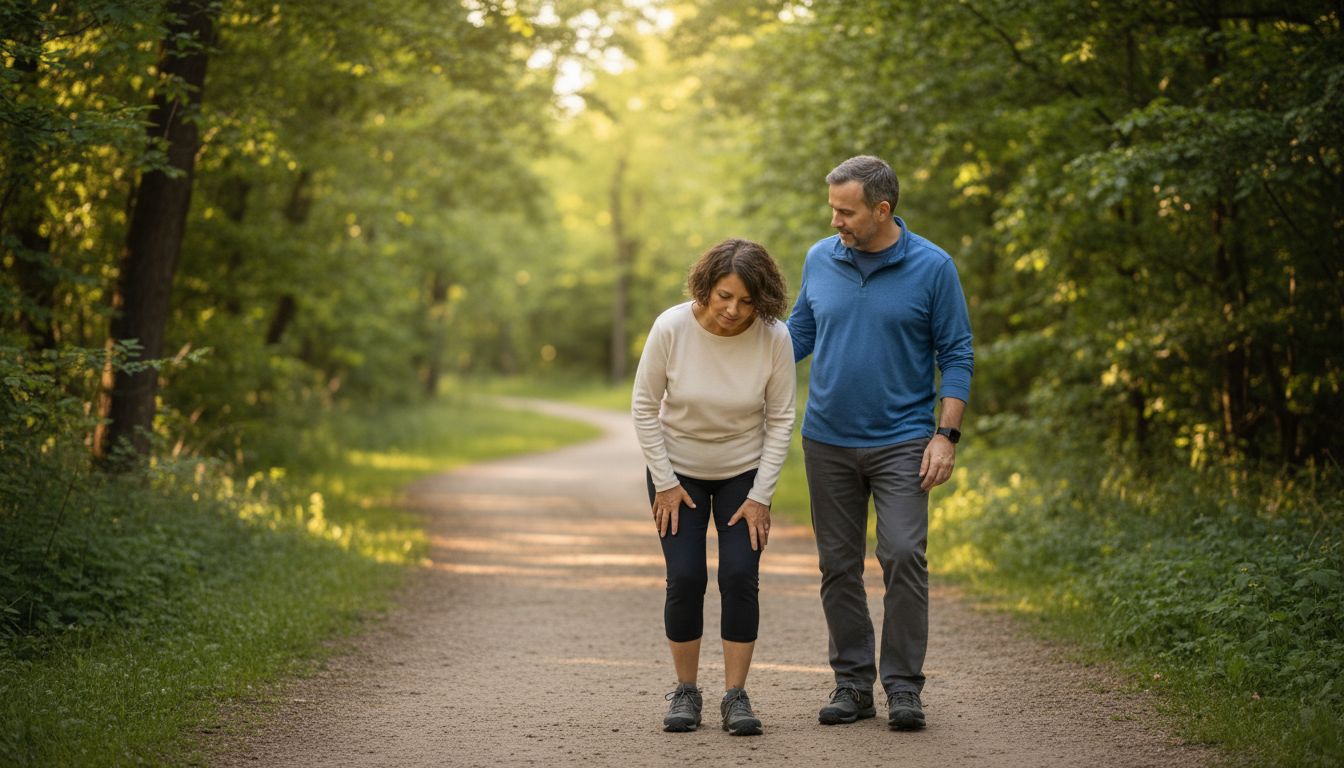
Should mostly use:
Hips, Glutes, Core, Ankles
Instead uses:
Calves, Shins, Calf Muscles, Feet
Short Steps = More Lower Leg Work
Short steps mean more push-offs per mile. Each push-off recruits the calves and shins. More steps = more calf work — it adds up fast.
👉 Try this first:
"Longer steps are more efficient — fewer push-offs means less lower leg fatigue."
Calf Push-Off Pattern
If your hips aren't driving you forward, the calves fill the gap. Every step becomes a toe push-off instead of a hip-driven stride. This turns walking into a calf workout.
👉 Try this first:
"Hips should move you — calves should just stabilize."
Stiff Ankles
Ankles need to flex forward as your weight passes over your foot. If they're stiff, your heel lifts too early and your calf stays contracted the whole step. Common in people who sit a lot.
"Stiff ankles = calves working overtime on every single step."
Forward Lean When Walking
Leaning forward from the waist puts your calves under constant tension just to keep you upright. They never fully relax between steps. Fatigue builds quickly.
👉 Try this first:
"Tall posture lets every muscle relax between steps — including your lower legs."
Walking Only On Flat Surfaces
Flat sidewalks use the exact same muscles in the exact same way with zero variation. Lower legs never get a break — the same motion repeats hundreds of times.
👉 Try this first:
"A little variety in surface and terrain distributes the load across more muscles."
Find Out What's Slowing Your Walking
Answer a few quick questions and get your free personal Walking Score — no login required.
How This Connects
Walking is a chain. When one part doesn't move well, the lower legs take over.
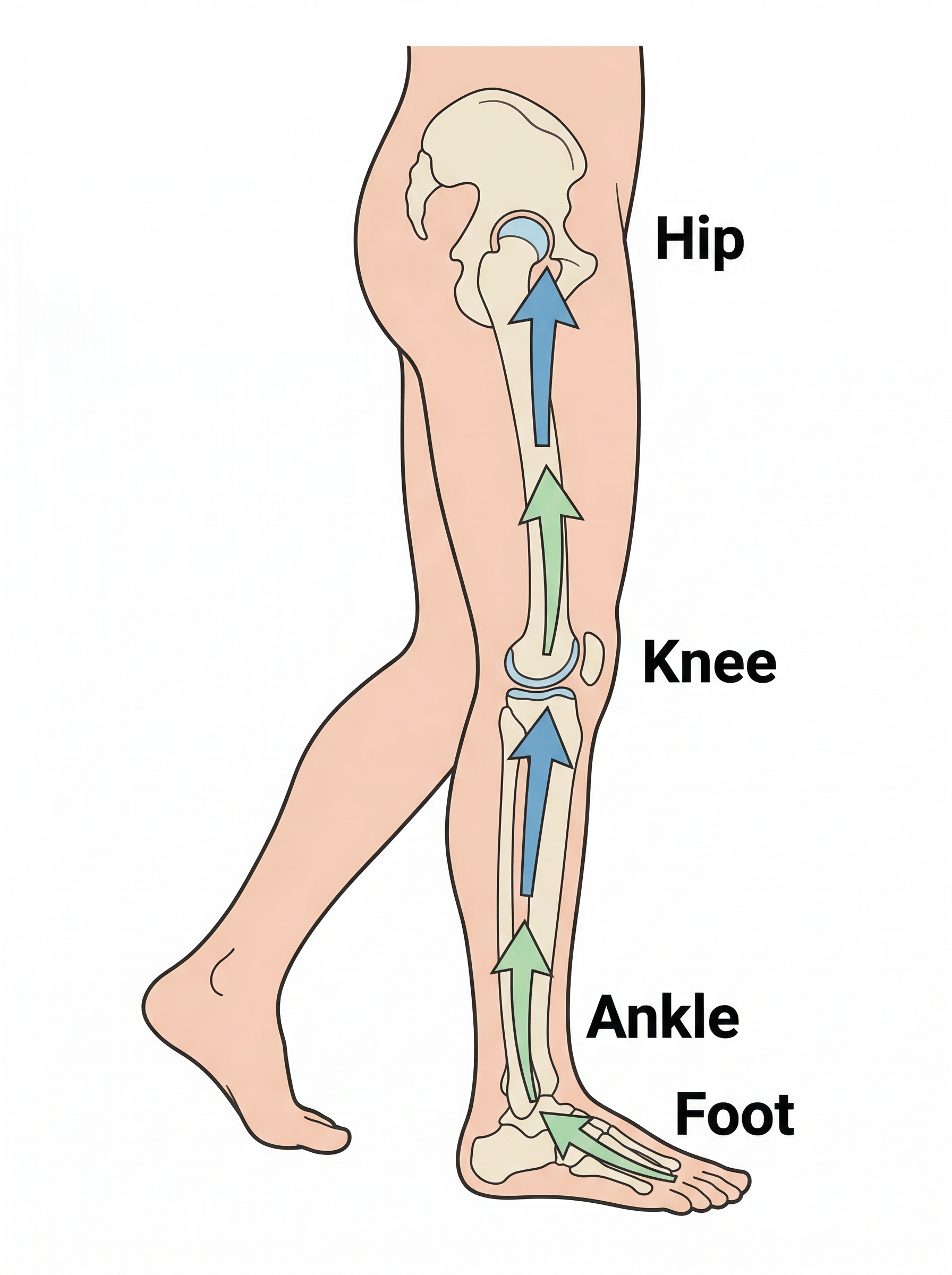
When one part of the chain is stiff or weak, the lower legs take on more load with every step.
Hips don't move well
Lower legs take over the push-off
Ankles are stiff
Calves work harder on every step
Lower leg pain is often a walking chain problem — not just a calf problem.
Signs This Might Be Happening To You
📋 Common Indicators
- •Lower legs ache after walking
- •Calves feel tight most days
- •Legs burn on hills
- •You take small steps
- •Feet get tired quickly
- •Ankles feel stiff
- •Walking feels like "pushing"
What Usually Helps
Here are simple things that help most people. Small changes in how you move can make a big difference.
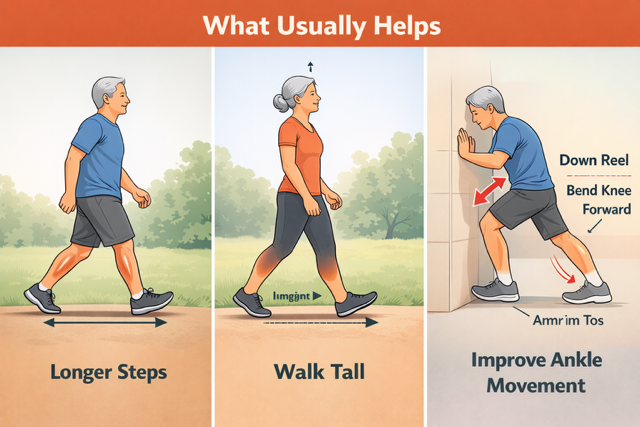
Simple changes in how you walk can reduce the strain on your lower legs significantly.
1. Take Slightly Longer Steps
- Reduces push-offs per mile
- Less calf recruitment
- Feels more natural quickly
2. Walk Taller
- Opens the hips
- Takes tension off calves
- Helps whole chain work better
3. Let Your Back Leg Stay Back Longer
- More hip drive per step
- Less reliance on calves
- Ankle cycles more fully
4. Improve Ankle Movement
- 10 ankle bends per side at a wall
- Reduces calf overtime
- Improves push-off efficiency
5. Walk Different Routes
- Spreads load across more muscles
- Mild hills change which muscles engage
- Surfaces reduce repetition fatigue
Tools That Help Reduce Lower Leg Strain
These tools don't fix everything — but they can make walking feel noticeably easier, especially on longer walks.
Compression Socks
Reduce fatigue and improve circulation during long walks.
Best for:
- Reduce fatigue feeling
- Help long walks feel easier
- Mild swelling or heaviness
Walking Shoes
Reduce push-off strain and improve stride efficiency.
Best for:
- Reduce push-off strain
- Improve stride
- Less calf overload
Insoles
Support your arch and improve alignment, reducing shin and calf fatigue.
Best for:
- Improve alignment
- Reduce calf overload
- Stabilize the foot
Foam Roller / Massage
Help recovery by reducing muscle tightness in calves and shins.
Best for:
- Helps recovery
- Reduces tightness
- Better walking next day
👉 These tools work best when combined with better walking habits and mobility.
The Walking Comfort Guide
7 simple ways to walk farther, feel better, and stay active after 50 — delivered free to your inbox.
Get My Free Guide
The Big Walking Insight
Your lower legs are not the problem — they are the backup system.
They work harder when:
- • Hips don't move enough
- • Ankles are stiff
- • Steps are too short
Fix the walking pattern → Lower legs stop overworking.
Find Out What Your Lower Legs Are Compensating For
If your lower legs ache after walking, your walking pattern is likely doing more than it should. The Walking Assessment shows exactly what your body is compensating for — and how to fix it.
🎯 What the Assessment Reveals:
Free · 2 minutes · See results immediately
FAQ — Lower Legs Aching After Walking
"Working harder than it needs to."
That's why lower legs ache. When you improve your walking chain, they finally get to rest.
Related Walking Problems
Other common issues that often come alongside lower leg aching. Understanding the full picture helps you find the right path to comfort.